

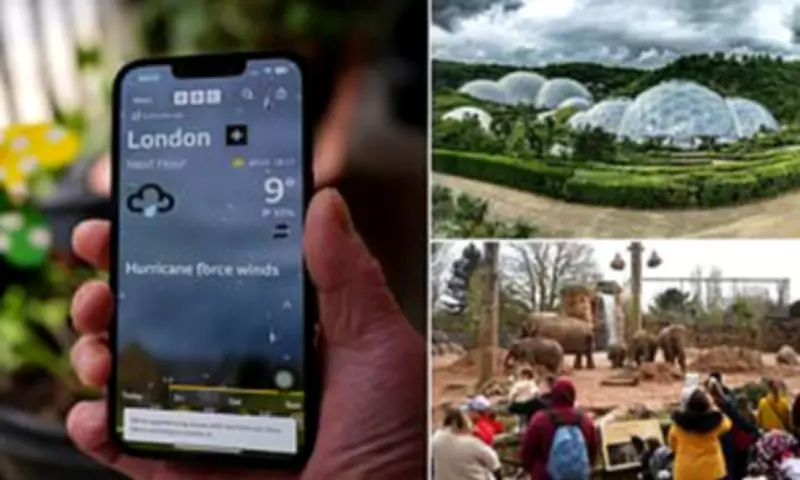
Major UK Attractions Launch Campaign Against Weather App Icons
A coalition of Britain's most prominent tourist destinations has launched a significant campaign targeting popular weather applications, alleging that their visual presentation of forecasts is causing substantial financial losses by discouraging potential visitors. Chester Zoo is at the forefront of this initiative, coordinating efforts on behalf of more than 80 outdoor attractions across the nation.
The Core Complaint: Misleading Visual Symbols
The group's primary grievance centers on what they describe as 'misleading' rain icons that summarise an entire 24-hour period with a single cloud symbol. Operators argue this creates a false impression of a complete washout, even when the majority of the day may be dry or only experience brief precipitation. They emphasise that they are not questioning the accuracy of meteorological data itself, but rather how this information is visually communicated to the public through third-party applications.
Dom Strange, Chief Operating Officer of Chester Zoo, stated: 'When families see a raincloud icon, many simply decide to stay home. The reality might involve nothing more than a brief shower at six in the morning, yet the symbol suggests relentless rainfall throughout the entire day.'

Quantifying the Economic Impact
The financial implications are reported to be severe. Some venues estimate losses reaching up to £137,000 on a single day due to cancelled visits prompted by unfavourable forecast icons. Industry analysis suggests approximately 70 percent of people consult weather forecasts before embarking on a day out, with attendance at certain sites dropping by as much as 30 percent following a pessimistic weather prediction.
Olly Reed, Marketing Director at tourism consultancy Navigate, provided supporting data: 'Across the diverse portfolio of sites we support—including heritage locations, gardens, zoos, and theme parks—we observe a consistent pattern. The appearance of an unfavourable weather icon correlates with an average attendance drop of around 30 percent. Bookings shift not just with the actual weather, but with how that weather is framed visually.'
A Broad Coalition of Attractions
The campaign represents a wide spectrum of the UK's visitor economy. Notable participants include the Eden Project in Cornwall, various Royal Horticultural Society Gardens, the iconic Blackpool Pleasure Beach, and the historic Blenheim Palace. This collective approach underscores the sector-wide concern regarding the economic consequences of forecast presentation.
James Cox, Director of Marketing, Sales & PR at Blackpool Pleasure Beach Resort, explained the modern consumer's mindset: 'In the current economic climate, families view a leisure day out as a considered investment. They wait for all deciding factors to align to guarantee the best possible experience. The impact of the weather forecast is therefore intensified, particularly for outdoor attractions like ours, where a significant portion of bookings occur within 24 hours of the visit.'
Proposed Solutions for Clearer Communication
The group is calling upon the Met Office, government bodies, and major weather application developers to collaborate on practical improvements to how forecasts are displayed. Their suggestions aim to provide families with greater clarity and confidence when planning excursions.
- Implementing separate daytime and overnight weather icons to distinguish between periods of precipitation.
- Including clearer written summaries, such as 'showers early, brighter later,' to add context.
- Introducing visual indicators that show the proportion of expected dry hours during a forecast period.
The campaign stresses that with contemporary data and technology, there exists a significant opportunity to present meteorological information in a manner that more accurately reflects how the day will genuinely feel for visitors on the ground, thereby supporting the stability of the wider visitor economy and the thousands of jobs it sustains.






