A Trek to Morocco's Toubkal: Hiking North Africa's Highest Peak
Setting off from the village of Imlil, guide Hussein and I navigate a steep footpath, stepping aside for a laden mule. Looking back, the wooded lower slopes of the valley are dotted with clusters of tall houses, some emitting plumes of wood smoke. Amidst the sounds of birdsong and human voices, the hum of a concrete mixer cuts through the cool mountain air, signalling ongoing building work, much of it to repair damage from the 2023 earthquake. Turning south, the austere and aloof Atlas mountains loom ahead, with snow patches on the upper slopes. Our destination is the summit of Toubkal, standing at 4,167 metres, the highest peak in North Africa.
Cultural Shifts in the Valley
Hussein, a lifelong guide in this beautiful Moroccan valley, explains the transformation over the years. "Most people here work in tourism now," he says, waving to a muleteer clutching his animal's tail for stability on the steep track. "Twenty years ago, everyone grew walnuts and subsistence food. Now we've still got walnuts, but we've also planted apple trees as a cash crop. It leaves time for the tourist work." When asked if all this change is good, he nods confidently. In a country like Morocco, where half the population is under 30, there's less nostalgia for the past, making adaptation easier.
Journey Through Sacred and Surprising Sites
As we ascend, we pass the holy shrine of Sidi Chamharouch, where cafes sell freshly squeezed orange juice. The tumbling river appears almost pristine, but discarded plastic bottles mar its beauty. Hussein and two other guides join me in wading into the cold water to clean up, complaining about "city people." I note that in a holy place, one might expect more cleanliness, prompting laughter from one man who shares a local legend: "My grandfather told me the shrine used to be an animal shelter, and they built the dome over a dead donkey." This bracing honesty is characteristic of Morocco, where even market haggling involves face-to-face negotiations that arrive at a mutually agreeable price.

Basecamp at Kasbah du Toubkal
The previous evening, I stayed at the Kasbah du Toubkal, a stunning boutique hotel perched on a rock plug, a 15-minute walk from the nearest road. Once a citadel belonging to a notorious feudal chieftain, it fell into ruin before being discovered in the 1970s by British traveller Mike McHugo, his brother Chris, and local guide Hajj Maurice. They transformed it into a celebrated haven, hosting school and university groups to experience Moroccan culture. Mike's passion for the place endures, and he's often found in the dining lounge, chatting with staff and guests.
Reaching the Summit and Hidden Histories
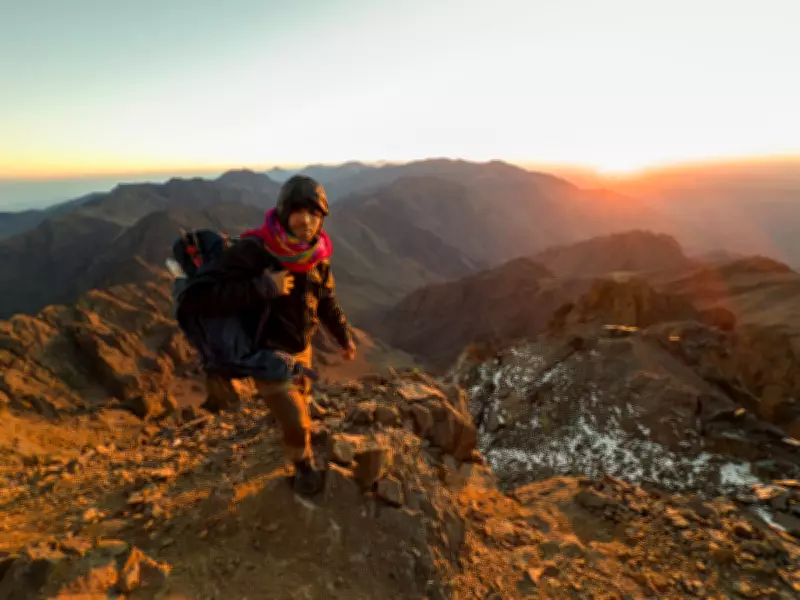
On the mountain, Hussein and I reach Les Mouflons, an overnight hut complex built to accommodate rising tourist numbers. Toubkal has become an Instagram-famous peak, attracting many visitors. Hussein, pragmatic as ever, sees the benefits: "Lots of guides and muleteers needed." For those who dislike crowds, he suggests alternatives like Ouanoukrim, a nearby peak just a few metres lower than Toubkal with fewer people. At 4 am the next morning, we join a snail trail of head torches for the final ascent. The wind, cold, and altitude are challenging, but the summit is large enough for everyone, offering panoramic views of the Atlas range.
On the descent, Hussein leads me to a rocky col where we scramble up to a second mountain at 3,900 metres. Here, an aircraft engine is embedded in the peak, marking a tragic piece of African history. In November 1969, a Lockheed Constellation aircraft from Portugal crashed into Tibhirine peak while en route to Biafra, a war-torn region of Nigeria, killing all eight on board during a famine relief mission.

Post-Trek Reflections and Traditions
Back at Kasbah du Toubkal, the hammam provides blissful relief. The hotel, rebuilt after the earthquake, now features a swimming pool and underfloor heating, yet retains its convivial atmosphere. It continues to support education through a levy on visitors, improving girls' school opportunities in remote villages. In Imlil, change is evident with second-hand mountain equipment for sale, but traditions persist. I buy more amlou, a mix of almonds, honey, and argan oil, from a familiar trader and wander through pine forests to a minor summit. Sitting alone, listening to echoes from below, I feel a sneaking regret for not choosing Ouanoukrim, vowing to return for that adventure.