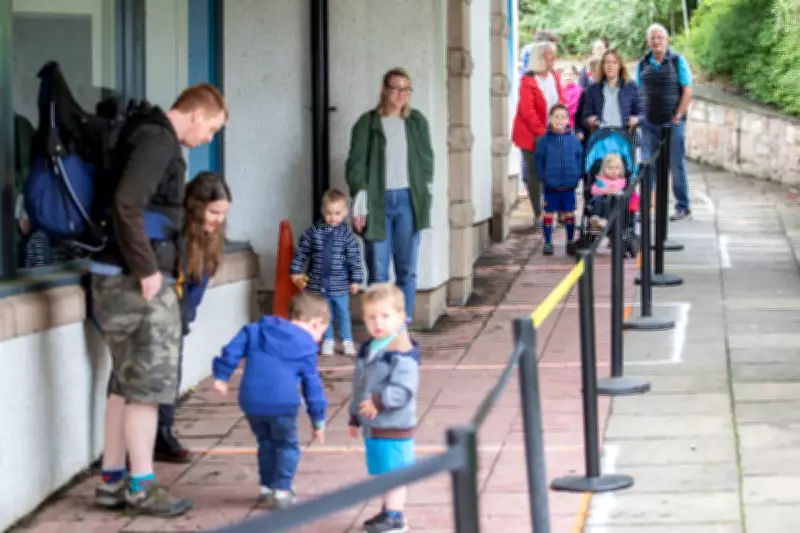
Weather App Forecasts Cost UK Zoo £40k Daily Amid Calls for Reform
The charity operating Edinburgh Zoo has issued a stark warning about the financial impact of misleading weather forecasts on popular mobile applications. The Royal Zoological Society of Scotland (RZSS) claims that inaccurate or overly simplistic weather icons are costing them up to £40,000 in lost revenue each day, with visitor numbers plummeting by as much as 30% during unfavourable forecasts.
The Problem with Quick Glance Forecasts
RZSS deputy chief executive Ben Supple explained the core issue facing outdoor attractions across the United Kingdom. Many widely used weather applications display a single rain icon for an entire day, even when precipitation is only expected for a brief period in the early morning or late evening. This creates what Supple describes as a "misleading impression" that deters potential visitors who rely on quick glances at their phones to plan daily activities.
"During school holidays, this can reduce visitor numbers at Edinburgh Zoo and Highland Wildlife Park by 2,000 people in a single day," Supple revealed. "That loss represents enough funding to feed all our penguins for more than a year, significantly impacting our conservation efforts."

Research Reveals Significant Impact
The charity's concerns are supported by research indicating that unfavourable weather forecasts can result in a substantial 30 per cent decline in visitor numbers across both Edinburgh Zoo and Highland Wildlife Park. This pattern highlights a broader challenge for outdoor attractions throughout Scotland and beyond, particularly those dependent on family visits and tourist footfall.
RZSS has now joined forces with the Association of Scottish Visitor Attractions (ASVA) to campaign for meaningful changes in how weather information is presented to the public. Their goal is to initiate discussions with the Met Office, government officials, and major weather application developers to explore practical improvements.
Proposed Solutions for Better Forecasting
The campaign outlines several potential enhancements to current forecasting methods. These include splitting weather icons into separate day and night conditions, adding concise summaries such as "showers early followed by brighter weather," and implementing indicators showing how many hours of dry weather are expected throughout the day.
Michael Golding, chief executive of ASVA, emphasised the importance of accurate weather information for visitor planning. "There is a clear link between weather and people visiting zoos, wildlife parks, and other outdoor attractions," Golding stated. "It is vital the public does not receive mixed messages, particularly for families, older visitors, and people with additional needs who often must plan further ahead."
Met Office Response and Industry Collaboration
Tabitha Aldrich-Smith, Met Office associate director for communications and engagement, responded to the concerns by highlighting their commitment to accessible forecasting. "Our weather forecasts offer a variety of ways for people across the UK to stay informed about the weather," Aldrich-Smith said. "We are committed to providing accessible forecasts tailored to make the most of the UK weather."
She acknowledged the importance of supporting the outdoor industry, stating: "Recognising that days out are an integral part of our culture, we aim to support the outdoor industry, from attractions to festivals, as they prepare for the season ahead. We look forward to ongoing collaboration with the tourism sector."
The financial implications extend beyond immediate revenue loss, affecting vital conservation work funded by visitor admissions. Every lost visitor represents reduced support for initiatives such as Scotland's wildcat preservation efforts, making accurate weather communication a matter of environmental significance as well as economic necessity.