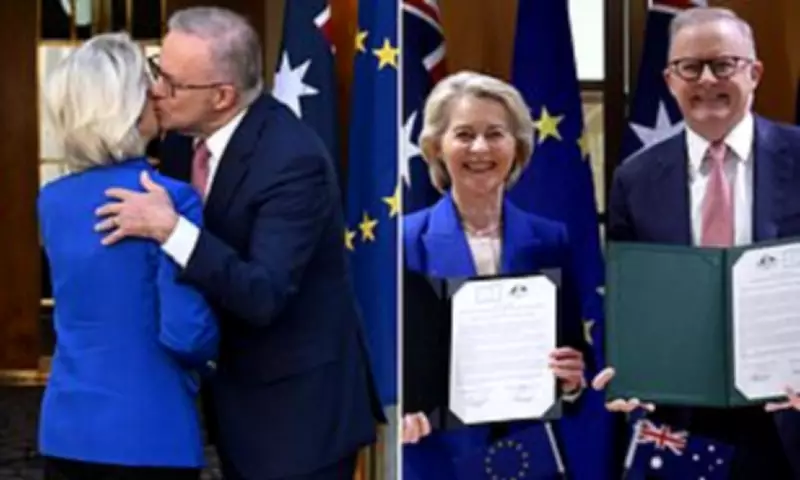
Australia and the European Union have successfully concluded a historic and comprehensive agreement spanning trade, defence and innovation, marking the culmination of almost a decade of complex and at times challenging negotiations. This landmark pact is set to significantly reshape economic and strategic ties between the two regions.
A New Era of Trade Relations
Under the newly minted agreement, both parties have committed to substantial tariff reductions, fostering expanded trade across a diverse range of sectors. For Australian consumers, this translates to lower prices on imported European goods. Specifically, Australia will eliminate its five per cent tariff on a wide array of European imports.
This tariff removal will benefit major car manufacturers like BMW and Mercedes-Benz, as well as producers of fashion items, food products and beverages, making these goods more affordable in the Australian market.

Reciprocal Benefits for Australian Exports
In a reciprocal move, the European Union will abolish tariffs on imports of numerous Australian products. This includes critical minerals, various manufactured items and a significant portion of dairy goods, providing a substantial boost to Australian exporters seeking access to the vast European market.
However, the deal includes specific provisions regarding product naming conventions. Australian winemakers will be permitted to continue using the term 'prosecco' for domestic sales, but must phase out its use on exports to the EU over the coming decade. Similarly, domestic manufacturers retain the rights to use names like 'parmesan' and 'kransky', but other cheese designations, including feta, romano and gruyere, will eventually be discontinued for products sold in Europe.
Agricultural Sector Expresses Profound Disappointment
Despite these advancements, the agreement has been met with fierce criticism from Australia's red meat industry, which has labelled it the nation's worst free-trade agreement to date. The sector's frustration stems from what it views as meagre increases in export quotas.
The pact grants market access for an additional 30,600 tonnes of beef and 25,000 tonnes of sheep meat annually. Industry representatives argue these figures fall far below the minimum concessions offered to competitor nations, such as New Zealand, and represent a significant setback.
'Australia's red meat sector has been profoundly let down by this outcome,' stated Andrew McDonald, chair of the Australia-EU red meat market access taskforce. 'To land a deal so far below what other suppliers have secured is genuinely bewildering.'
Strategic and Innovation Dimensions
Beyond trade, the agreement encompasses strengthened defence and security cooperation. Both sides have committed to enhancing military collaboration, with a focus on critical areas like cyber security and counter-terrorism efforts. Additionally, a separate accord has been struck to boost research and innovation ties, fostering greater scientific and technological exchange between Australia and the EU.
Leadership Hails a 'Win-Win' Outcome
Prime Minister Anthony Albanese heralded the deal as a 'win-win' for both Australia and Europe, describing it as a defining moment in their bilateral relationship. 'This is a significant moment for our nation as we secure an agreement with the world's second-largest economy,' he told reporters in Canberra.
European Commission President Ursula von der Leyen, standing alongside Mr Albanese, emphasised the pact's role in providing stability amid global uncertainty, partly driven by former US President Donald Trump's tariff policies. 'Countries are longing for stability and predictability, and this is what the European Union is offering,' she said. 'You have a free-trade agreement and both sides are winning. It's enhancing the business sectors on both sides, and it benefits the people on both sides.'
The comprehensive Australia-EU pact, therefore, represents a multifaceted achievement, though one tempered by significant discontent from key agricultural stakeholders, setting the stage for its implementation and future economic impact.