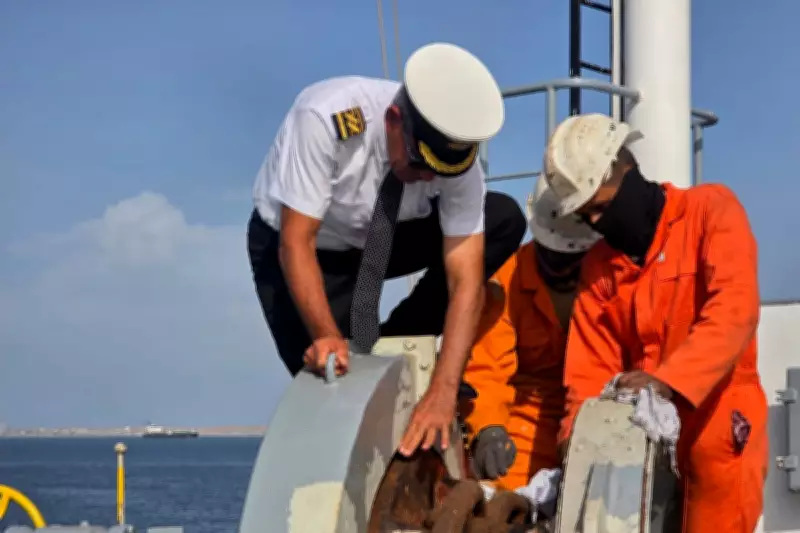
Oil Tanker Captain Navigates Perilous Waters Amid US-Iran Tensions
Iraqi Captain Rahman Al-Jubouri continues to steer his vessel through some of the world's most treacherous maritime corridors, where the volatile standoff between the United States and Iran has transformed routine oil shipments into high-stakes missions. Operating aboard the Palau-flagged Sea Moon, Al-Jubouri has spent the last four months navigating the Gulf of Oman and the Strait of Hormuz, critical chokepoints that have become flashpoints in regional conflicts.
Decades of Experience in Conflict Zones
As a veteran mariner since 1984, Captain Al-Jubouri is no stranger to regional upheaval, having endured the Iran-Iraq War and the 1991 Gulf War. Today, he faces renewed dangers as sporadic military strikes threaten commercial vessels in vital waterways like Bab el-Mandeb and the Persian Gulf. "Work has become a real risk; we don't know when we might be bombed. We're sailing over a ball of fire," he told The Associated Press by phone during his current voyage from the Gulf of Aden towards the Gulf of Oman to unload oil at Yemen's Ras Isa port.
Commercial Vessels Caught in Crossfire
The Washington-Tehran standoff over the Strait of Hormuz has intensified regional conflicts, leaving tankers increasingly vulnerable to attacks by Iranian forces and allied groups. Intermittent disruptions and threats to close this global oil chokepoint have resulted in vessels being delayed, rerouted, or stranded across the Gulf. In a recent escalation, American military forces forcibly seized an Iranian-flagged cargo ship attempting to circumvent a naval blockade near the strait, marking the first such interception since the blockade began last week.

Safety Drills and Past Attacks
To mitigate risks, Captain Al-Jubouri's crew undergoes regular safety drills to prepare for potential attacks. "We've trained them on how to respond if the ship comes under fire, God forbid," he explained. Last year, while docked at a Yemeni port, his vessel came under bombardment, forcing him to cut ropes, prepare engines, and depart at his own risk to protect the crew and ship. Shrapnel struck the tanker during escape, causing minor damage, but the crew emerged unharmed, and operations later resumed.
Crew Shortages and Psychological Toll
Not all sailors can withstand the dangers, however. Al-Jubouri's team has dwindled from 27 to 17 members, with fear driving many away. The psychological strain is compounded by prolonged periods at sea; for four months, Al-Jubouri has been separated from his family, grappling with homesickness like many mariners. "We suffer from being away from our families and our homelands," he admitted, noting that while internet access helps maintain contact, the distance feels stark amid wartime pressures.
Adapting Under Pressure
Despite these challenges, basic supplies such as food and bottled water remain steady, with no major shortages reported during port replenishments. Drawing on four decades of seafaring experience, Captain Al-Jubouri adapts under pressure, continuing his vital role in global trade even as tensions simmer. His story underscores the human cost of geopolitical conflicts in one of the world's most volatile maritime regions.