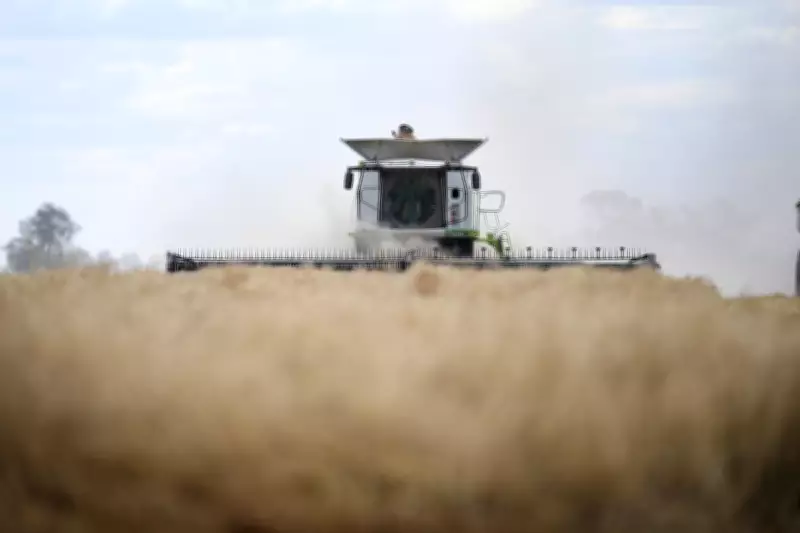
Independent fuel retailers across regional Australia are grappling with severe supply challenges, as major companies restrict allocations amid soaring diesel prices and heightened demand from farmers. Distributors report that agricultural businesses have proactively brought forward their diesel orders in response to market volatility triggered by recent geopolitical tensions, including bombings in Iran by the US and Israel.
Farmers Respond to Soaring Prices and Perceived Shortages
Paul McCallum, a rural fuel distributor operating Inland Petroleum in western New South Wales, observed a significant shift in farmer behavior at the start of the month. As wholesale refined product prices surged by 70 cents per litre, farmers requested an additional 1.5 million litres of diesel, described as "a boisterous but not over the top" increase. McCallum noted that this move was driven by immediate concerns over price hikes and availability, rather than panic-buying as suggested by government warnings.
Allocation Issues from Major Fuel Companies
McCallum, who manages around a dozen retail petrol stations, highlighted difficulties in securing fuel from major importers such as Mobil, BP, Ampol, and Shell, which is operated by Viva Energy in Australia. He explained that these companies have implemented allocation systems, prioritizing select retail service stations and leaving independent distributors and smaller branded sites without adequate supplies. "We actually cart fuel for some branded service stations – both Ampol and Shell – and they've told us we can't pick up today because they haven't got any allocation," McCallum stated.

Nathan Falvo, a petrol station owner in Robinvale, Victoria, echoed these concerns after his store ran out of unleaded and diesel fuel for approximately 10 hours. Falvo typically sells between 12,000 and 18,000 litres weekly but faced periods with no allocation for either fuel type, disrupting normal operations and highlighting the broader supply chain issues.
Government and Industry Responses to the Crisis
The federal government has repeatedly assured the public that there are no fuel shortages, urging against panic-buying despite dozens of service stations running dry. Prime Minister Anthony Albanese announced a snap meeting of national cabinet to address fuel supply, acknowledging that a surge in demand, particularly for diesel, has led to regional shortages. In response, the government has directed fuel companies to release nearly one-fifth of reserve supplies, relaxed fuel standards, and promised to crack down on price-gouging by retailers.
Impact on Regional Industries and Calls for Action
Roy Butler, the Barwon MP representing nearly half of New South Wales, emphasized that regional industries are bearing the brunt of the supply crisis. He advocated for federal government facilitation of bulk diesel storage plans, noting that supply restrictions disproportionately affect independent outlets, often the only available option in remote areas. "A supply interruption now can have financial repercussions well into the future," Butler warned.
The Australian Institute of Petroleum, representing major suppliers, confirmed that its members lack sufficient inventory to support businesses reliant on spot markets, leading to prioritization of regular customers. This has exacerbated challenges for independent distributors like McCallum, who operate outside the major company networks.
Economic Implications and Farmer Perspectives
Graham Gilmore, a NSW sheep farmer, defended agricultural stockpiling as a prudent business decision, citing diesel price increases from $1.76 to $3 per litre within days. "It would be a very poor decision for any business to not buy it at the lower price," Gilmore argued, emphasizing that such actions are strategic rather than panicked. He calculated that on 10,000 litres, the price difference amounts to $12,000, underscoring the financial stakes for farmers dependent on fuel for operations.
As the crisis unfolds, the spotlight remains on Australia's fuel industry dynamics, with ongoing discussions at state and federal levels aiming to mitigate shortages and stabilize prices for regional communities.