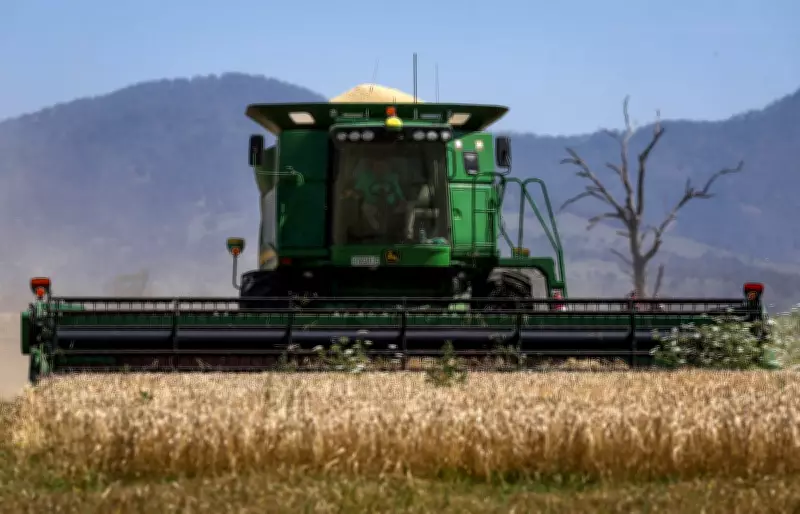
A severe fertiliser shortage in Australia is sending shockwaves through global food markets, with experts warning that bread prices could rise sharply in the coming months. The crisis has been exacerbated by ongoing geopolitical tensions in the Strait of Hormuz, a critical chokepoint for global fertiliser trade.
Supply Chain Disruption
Australian farmers are reporting acute difficulties in securing adequate supplies of nitrogen-based fertilisers, which are essential for wheat and other grain production. The shortage stems from a combination of factors, including reduced production in key exporting nations and logistical bottlenecks caused by heightened military activity near the Strait of Hormuz. Approximately 30% of the world's seaborne urea fertiliser passes through this narrow waterway, making it vulnerable to disruptions.
Impact on Farmers
For Australian growers, the timing could not be worse. The planting season for winter crops is underway, and without sufficient fertiliser, yields are expected to drop significantly. John Smith, a fourth-generation farmer in New South Wales, described the situation as dire. “We are looking at a potential 20% reduction in our harvest if we cannot get the fertiliser we need. Costs have already tripled compared to last year,” he said.

The Australian Bureau of Agricultural and Resource Economics and Sciences (ABARES) has revised its crop forecast downward, noting that the fertiliser crunch could slash national wheat output by 15% this season. This would be the worst shortfall in over a decade.
Global Bread Price Ripple Effect
Australia is the world's fourth-largest wheat exporter, and any reduction in its output has immediate implications for global food prices. International grain markets have already reacted, with wheat futures rising by 12% in the past month. Analysts predict that bread prices in the UK and Europe could increase by 10-15% within the next six months if the situation does not improve.
“This is a perfect storm,” said Dr. Emily White, an agricultural economist at the University of Sydney. “We have supply constraints on one side and geopolitical instability on the other. The result is a significant threat to food affordability worldwide.”
Geopolitical Context
The Strait of Hormuz has become a flashpoint in recent weeks, with Iran and Gulf states engaging in naval posturing. Insurance premiums for vessels transiting the strait have soared, leading many shipping companies to avoid the route entirely. This has delayed deliveries of fertiliser from major producers in the Middle East to Asian markets, including Australia.
The Australian government has urged restraint and is exploring diplomatic channels to ensure safe passage for commercial shipping. Meanwhile, the Department of Agriculture is considering emergency measures, including temporary subsidies for domestic fertiliser production and the release of strategic reserves.
Long-Term Solutions
Industry experts are calling for greater investment in domestic fertiliser manufacturing to reduce reliance on imports. Australia currently imports about 70% of its fertiliser needs, leaving it vulnerable to external shocks. Proposals include reviving mothballed ammonia plants and expanding local production capacity using natural gas reserves.
“We cannot continue to depend on volatile global supply chains for something as fundamental as fertiliser,” said Mark Davis, CEO of the Australian Fertiliser Industry Association. “This crisis should be a wake-up call for policymakers.”
In the short term, farmers are being advised to use fertiliser more efficiently through precision agriculture techniques, but these measures may only mitigate, not eliminate, the impact. With no immediate end to the Strait of Hormuz tensions in sight, the global food system remains on edge.