Critical Maritime Chokepoint Faces Prolonged Closure
The Strait of Hormuz, a vital 24-mile-wide waterway connecting the Persian Gulf to the Gulf of Oman, remains under the firm control of Iran's battered regime three weeks into the Middle Eastern conflict. This strategic corridor, flanked by Iran to the north and the United Arab Emirates to the south, serves as the exclusive sea route for oil-rich Gulf states to access international waters. Approximately 20% of global oil shipments traverse this narrow passage, earning it the designation as the world's energy artery.
Simulations Reveal Catastrophic Supply Chain Impacts
A team of Austrian researchers has conducted comprehensive simulations demonstrating that an extended closure of the Strait of Hormuz could trigger devastating consequences for global supply chains. Their findings indicate that exports worth up to $1.2 trillion (£893.5 billion) would be affected if Iran maintains the blockade for a prolonged period. While disruptions lasting approximately two weeks would have limited effects, blockages extending beyond four weeks could initiate cascading issues throughout international trade networks.
Dr. Jasper Verschuur of Delft University of Technology, a co-author of the study, emphasized the unique vulnerability of this maritime passage: "What is unique about the Strait is that there are no alternatives to reroute goods. This makes it distinct from other strategic maritime passages like Suez, Malacca and Taiwan that handle large volumes, but have rerouting alternatives."

Britain's Significant Vulnerability Exposed
The research reveals that the United Kingdom possesses the greatest exposure to supply chain shocks from a Hormuz closure among all European nations. Britain imports approximately $12 billion (£8.9 billion) worth of goods annually through this critical waterway, creating what researchers describe as a "genuine vulnerability."
Key British imports through the Strait include:
- Qatari liquefied natural gas (LNG) and propane: $5.9 billion (£4.4 billion) annually
- United Arab Emirates exports (primarily gold and diamonds): $3.8 billion (£2.8 billion) annually
- Kuwaiti petroleum products: $2.9 billion (£2.2 billion) annually
Researchers warn that Britain would be unable to substitute its LNG supply in the short term, inevitably driving up energy prices for consumers and businesses alike.
Global Economic Consequences and Asian Exposure
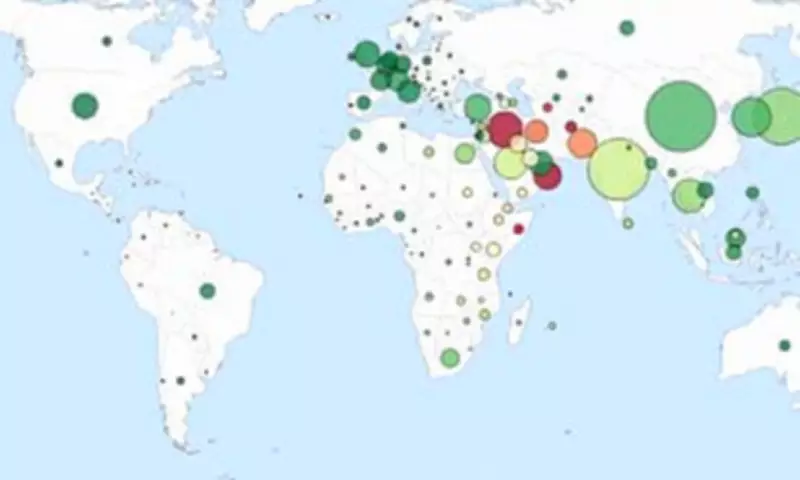
The study focused on five Gulf countries—Iran, UAE, Qatar, Kuwait, and Bahrain—that rely entirely on the Strait for maritime exports. Using sophisticated modeling of 10,000 tankers traveling between 1,315 ports worldwide, researchers determined that major Asian economies would bear the brunt of prolonged disruptions.
Annual imports through the Strait for key Asian nations:
- China: $97 billion (£72.3 billion)
- India: $74 billion (£55.2 billion)
- Japan: $63 billion (£46.9 billion)
Beyond energy products, the five Gulf states analyzed account for 8-10% of global fertilizer production, meaning agricultural sectors worldwide would face significant challenges from extended closures.
Current Situation and Escalating Tensions
Since Iran declared control of the Strait following the assassination of Supreme Leader Ali Khamenei on February 28, maritime traffic has effectively ground to a standstill. The UK Maritime Trade Organisation reports that only a handful of vessels have managed passage through the corridor, with at least 16 ships coming under attack since hostilities began.
Stefan Thurner, president of the Complexity Science Hub and study co-author, explained the timeline of impacts: "The Strait has been closed for about three weeks. Our study finds that a closure of two weeks is practically not relevant, but after that, the effects will become noticeable. After four weeks, cascading effects in the supply chains due to disrupted shipping in the Strait will appear. And this leads to disproportionate losses."

The modeling indicates that after 56 days of closure, delays in tanker traffic would intensify significantly due to missed port slots, port congestion, and rescheduled shipping routes. Researchers predict persistently higher energy prices and rising production costs would result from extended blockages, with impacts potentially lasting months even after reopening.
International Response and Military Developments
As the crisis deepens, former US President Donald Trump has called for American forces to open a new front against Iran, with reports of US A-10 Warthogs and Apache attack helicopters targeting Iranian ships and drones in efforts to reopen the vital waterway. Meanwhile, the Pakistani-flagged vessel Karachi recently became the first non-Iranian ship to transit the Strait with its automatic identification system activated since the conflict began, offering a glimmer of hope for resumed navigation.
Dr. Verschuur noted the unexpected rapid escalation: "Our modeling had pointed to the risk of a closure, but we certainly did not expect something so quickly and escalating as we see now." With global oil prices already spiking and shockwaves reverberating through international markets, the prolonged closure of this critical maritime artery threatens to reshape global trade patterns and energy security for the foreseeable future.