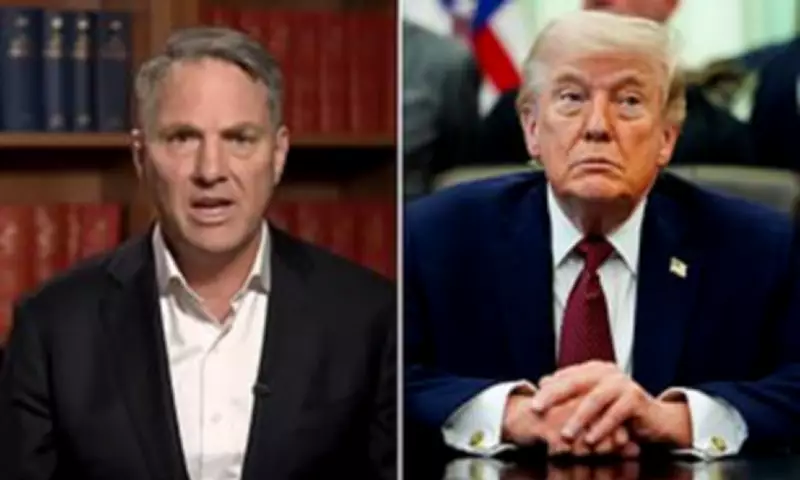
Deputy Prime Minister Richard Marles has described the renewed closure of the Strait of Hormuz as a 'disappointing development', intensifying pressure on US President Donald Trump to act quickly in reopening one of the world's most critical energy chokepoints. Speaking on ABC's Insiders programme on Sunday, Marles emphasised that the ongoing blockage presents a serious threat to global fuel supplies and has direct implications for Australia as a nation heavily reliant on trade.
Global Implications of the Blockade
On Friday, President Trump announced that a naval blockade of Iranian ports would remain in place until a peace agreement is reached between Washington and Tehran. The strait was briefly reopened on Saturday but was closed again on Sunday, highlighting the volatility of the situation. A two-week ceasefire currently in effect is scheduled to expire on 22 April, adding urgency to diplomatic efforts.
Marles Calls for Diplomatic Action
'Obviously, that is a disappointing development,' Marles stated during his television appearance. 'This remains a fragile ceasefire. What we need to see now is every diplomatic avenue pursued to turn what is temporary into something permanent, to reopen the Strait of Hormuz and return the global fuel supply chain to normality.'

Marles warned that the closure could disrupt energy markets worldwide, potentially leading to increased fuel prices and supply shortages. As a major trading nation, Australia faces significant risks from such disruptions, which could impact its economy and energy security.
Background on the Strait of Hormuz
The Strait of Hormuz is a narrow waterway between the Persian Gulf and the Gulf of Oman, through which approximately one-fifth of the world's oil passes. Its strategic importance makes it a focal point in geopolitical tensions, particularly between the United States and Iran. Previous closures have led to spikes in oil prices and global economic uncertainty.
Experts suggest that prolonged closure could exacerbate existing supply chain issues, affecting not only fuel but also other commodities transported through the region. The international community is closely monitoring the situation, with calls for de-escalation and diplomatic resolutions to prevent further instability.
More details are expected as developments unfold, with global leaders likely to address the crisis in upcoming talks.