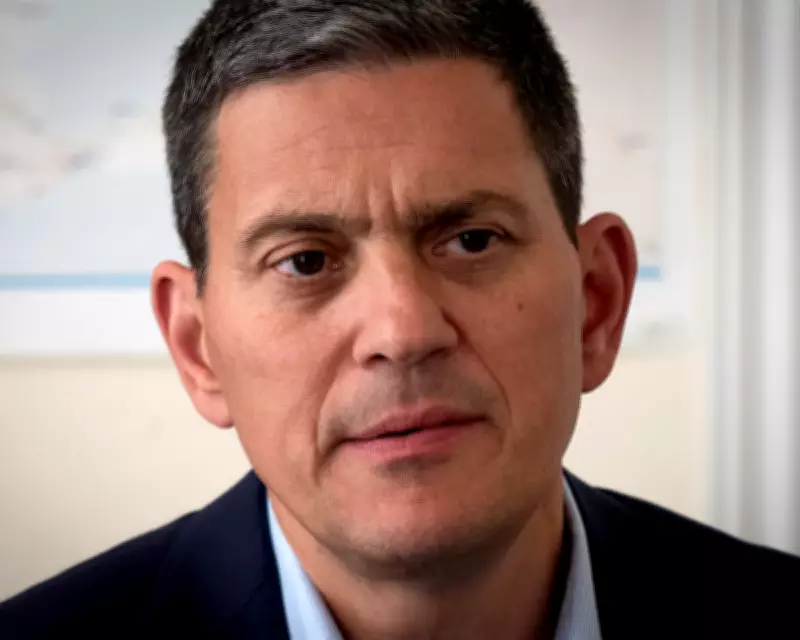
David Miliband Issues Stark Warning on Aid Cuts and Global Instability
In an exclusive interview with the Guardian, former UK foreign secretary David Miliband has raised serious concerns about the impact of reductions in overseas aid on global economic stability. Speaking at the International Monetary Fund and World Bank meetings in Washington, Miliband highlighted how the humanitarian crisis resulting from the Iran war could be exacerbated by such budgetary cuts.
Economic Shocks and Humanitarian Risks
Miliband, who currently serves as the head of the International Rescue Committee, argued that cuts to aid programmes, particularly by the United States under the Trump administration and the UK under Keir Starmer's government, risk stoking global economic instability. He emphasized that these actions could have far-reaching consequences for both poor and wealthy nations alike.
"An untended humanitarian crisis is an incubator of political instability," Miliband stated. "We are in a more connected world than ever before. The Iran war shows how connected we are, but the connections go the other way from poor to rich countries, too."

Impact on Poverty and Displacement
The former Labour minister pointed out that the conflict in the Middle East is likely to increase global poverty and displace millions of people. Drawing parallels to the 2016 European refugee crisis, he warned that conflict-driven migration could escalate without adequate international support.
Miliband also addressed what he termed a "food security timebomb" due to soaring energy and fertiliser prices following the closure of the Strait of Hormuz. This situation, he noted, has the potential to cause widespread hunger globally.
Evidence and Global Response
Citing recent figures from the Organisation for Economic Co-operation and Development, Miliband revealed that rich countries have cut aid spending by $174.3 billion in 2025, a decline of nearly a quarter from the previous year. He expressed regret over the UK's decision to slash its aid budget, arguing that supporting the world's poorest is not only morally right but also a "good investment for Britain."
"You could say there could hardly be a worse time to cut the aid budget," he remarked. "Because you have got very significant numbers of people in extreme poverty. We have also got more and more evidence of what works in reducing poverty, and the evidence about the positive impacts of aid are in fact stronger."
US Leadership and Internationalism
Miliband criticized the Trump administration for abandoning its leadership role in global development, describing it as a "historic decision" with negative implications. He acknowledged that while the US has made mistakes, its aid policy has historically had a net positive impact as a global anchor.
Reflecting on Labour's internationalism, Miliband stressed its importance as a positive aspect of the party's offering to the public. He linked lower levels of British aid to rising fatalities worldwide, underscoring the need for alignment between words and deeds in foreign policy.
This warning comes as the United Nations reports that 32.5 million people globally could be plunged into poverty due to the economic fallout from the Iran war, with developing countries expected to bear the brunt of the impact.