Shipping Executives Demand Safe and Sustainable Passage Through Strait of Hormuz
Top shipping executives are urgently calling for guaranteed safe and sustainable passage through the strategically vital Strait of Hormuz, warning that global oil and cargo traffic will remain suspended until security is firmly established. This demand comes as fears over oil supply disruptions intensify following recent hostilities and Iranian warnings about maritime threats in the region.
Industry Leaders Voice Grave Concerns at Singapore Conference
Jotaro Tamura, chief executive of Japan's Mitsui O.S.K. Lines (MOL), one of the world's largest shipping firms and a major owner of oil and LNG tankers, expressed deep concern during Singapore Maritime Week. Speaking to Reuters, Tamura revealed that initial hopes following a temporary ceasefire had been dashed by the ongoing lack of safety for vessels.
"Two weeks ago when the ceasefire, said to be temporary, came into picture, we thought there was hope," Tamura stated. "But in reality, the agreement was not translated into the safety and passage of the vessels."

The situation has been further complicated by warnings from Iran's Islamic Revolutionary Guard Corps about mines being present in the area surrounding the strait. Tamura emphasized that even if the waterway reopens, fundamental safety questions would persist.
"It's a question of the definition of open. Is it really open, or is it half open? Is it open, but there is risk?" Tamura questioned. "At some point in time voyages will resume, and normalisation comes into picture. But it's hard to foresee how reality would be."
When specifically asked whether MOL would pay toll fees to Iran if requested, Tamura clarified that his company's position was to adhere strictly to international law, which guarantees freedom of passage through the strait.
Uncertainty Paralyzes Maritime Operations
Alexander Saverys, CEO of Belgium's diversified maritime company CMB.Tech, which operates a fleet exceeding 250 vessels, echoed these concerns from the sidelines of the same Singapore conference. Saverys emphasized that his company was essentially forced into a waiting game due to the unpredictable situation.
"We cannot hedge. We just need to wait for what is going to happen in the Middle East," Saverys explained. "It is creating a lot of uncertainty."
The executive stressed that concrete reassurance was completely absent at present, and that confidence would only return once ships could transit without encountering problems.
"We need to be confident that we can transit without having any issues," Saverys asserted. "Today we have no reassurance whatsoever. We will only get the reassurance once we see that ships can pass through the straits in a safe and sustainable way."
Regarding the potential for toll payments, Saverys maintained that "The Strait of Hormuz is a free passage where normally no toll should be paid. If that would change in the future, we will investigate." He declined to comment on how many of CMB.Tech's vessels might be stranded inside the Gulf.
Vital Trade Artery Remains Paralyzed
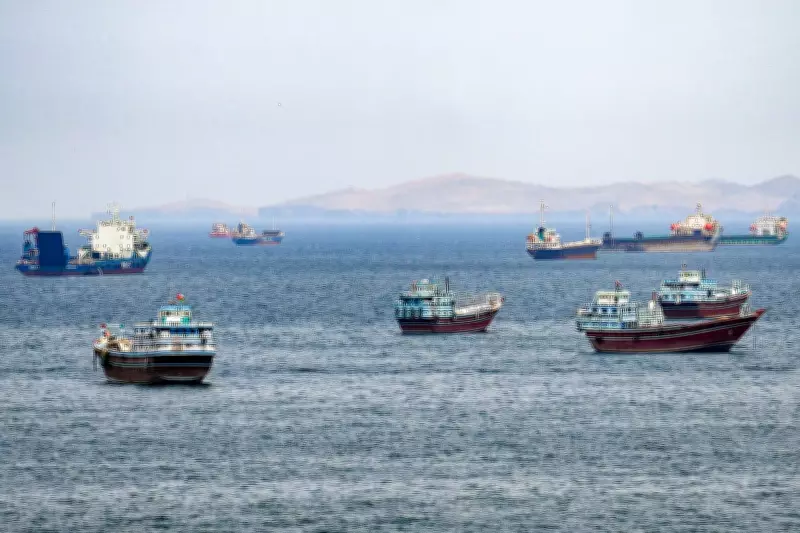
Shipping traffic through the Strait of Hormuz has been at a virtual standstill since conflict between the United States and Iran erupted on February 28, severely disrupting energy supplies originating from the Gulf region. This paralysis has created significant bottlenecks in global trade networks.
The strategic waterway typically handles approximately:
- 130 vessels daily entering and exiting the Gulf
- 20 percent of the world's daily oil supply
- Substantial volumes of global liquefied natural gas shipments
Saverys confirmed that his company remains in communication with various governments to ensure vessel navigation safety, but acknowledged that "right now, as you know, the situation is not safe yet." The collective industry stance underscores that without demonstrable, sustainable security guarantees, the resumption of normal maritime operations through this critical chokepoint remains impossible, prolonging global energy supply concerns.