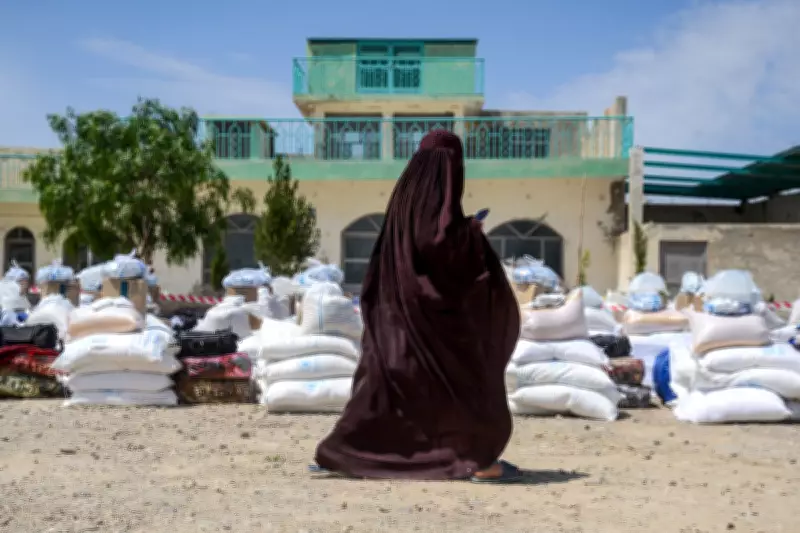
The ongoing crisis in the Strait of Hormuz is triggering a global food emergency, with the United Kingdom's overseas aid spending dropping to its lowest level since 1970. The closure of this critical waterway is preventing food and fertiliser from reaching vulnerable populations, exacerbating an already dire situation for millions of displaced people relying on the World Food Programme (WFP), warns Jean-Martin Bauer, the WFP's Director of Food Security.
Escalation in the Middle East and Its Global Impact
Since the escalation in the Middle East began nearly two months ago, global attention has focused on geopolitical tensions, military confrontations, and economic repercussions. However, for millions of hungry people worldwide, the situation was already desperate before the conflict erupted. Over the past year, famines have devastated parts of Sudan and Gaza, tearing apart families who struggle to find their next meal. The Global Report on Food Crises, released today by leading food security experts, reveals that the number of people facing food insecurity has nearly doubled in the past decade, with hunger becoming more frequent, severe, and entrenched.
The current escalation has pushed the world to the brink of a catastrophic hunger crisis, with perilous ripple effects across the globe. According to recent WFP analysis, an additional 45 million people could be pushed into acute food insecurity if the escalation continues beyond June and gas prices remain above $100 per barrel.

Disruption to Humanitarian Supply Chains
Across WFP operations, this represents the largest disruption to humanitarian supply chains since the COVID-19 pandemic and the onset of the Ukraine war. Global supply chains are now more fragile than in previous years, with two critical maritime corridors—the Strait of Hormuz and Bab-el-Mandeb—disrupted. This has increased humanitarian shipping costs by up to 20%, spiking fuel prices and soaring insurance costs. These increases directly impact the number of people going hungry, forcing WFP to tighten its belt. Already, the organisation has reduced the number of people it can serve by 1.5 million, a figure that could rise to as many as 9 million if conditions do not improve.
In the region, Lebanon faces tremendous challenges. While a ceasefire was welcome news, hundreds of thousands remain displaced and live precariously, with many fleeing across the border to Syria. In Iran, Afghan refugees in the east endure dire conditions. In Gaza, where food prices remain high and peace is fragile, the ongoing escalation risks reversing hard-won gains. Countries further afield, such as Myanmar, are also feeling the impact, with food basket costs rising over 20%. Signs of instability have emerged, including fuel riots in Haiti and Kenya.
Fertiliser Crisis and Agricultural Impact
Fertiliser flows through the Strait of Hormuz are virtually at a standstill. Previously, 20-30% of global fertiliser passed through this waterway, but those flows have now been choked off. The knock-on effects will be severe in countries like Sudan, Somalia, and Afghanistan. For many sub-Saharan African nations, this is planting season; without fertiliser, yields will drop, food prices will rise, and more people will face severe hunger. An estimated 100,000 metric tons of WFP-managed seaborne cargo have been impacted by delays and increased costs—enough to feed around 5.8 million people for a month. Shipments of critical food assistance from India to Port Sudan are being rerouted, adding 9,000km and 25 days at sea, prolonging acute hunger for many.

WFP's Response and Challenges
To date, WFP has responded by rerouting cargo ships, expanding overland routes, and activating the Lapis Lazuli Corridor, with trucks travelling through Turkey, Georgia, Azerbaijan, across the Caspian Sea, and Turkmenistan to reach operations in Afghanistan. Routes through Turkey, Jordan, and the UAE have been leveraged to reach communities in the Levant, and aid has been diverted through Egypt's ports and the Suez Canal. However, this crisis is unfolding at the worst possible moment. Last month, the UK government announced plans to cut overseas development assistance to 0.3% of gross national income by next year—the lowest rate since 2008. Actual spending, after deducting refugee support costs, is expected to reach just 0.24%, the lowest level of UK aid since 1970.
The World Food Programme can change and save lives if it has the resources and acts early. Millions of people are relying on it. The time to step up is now.