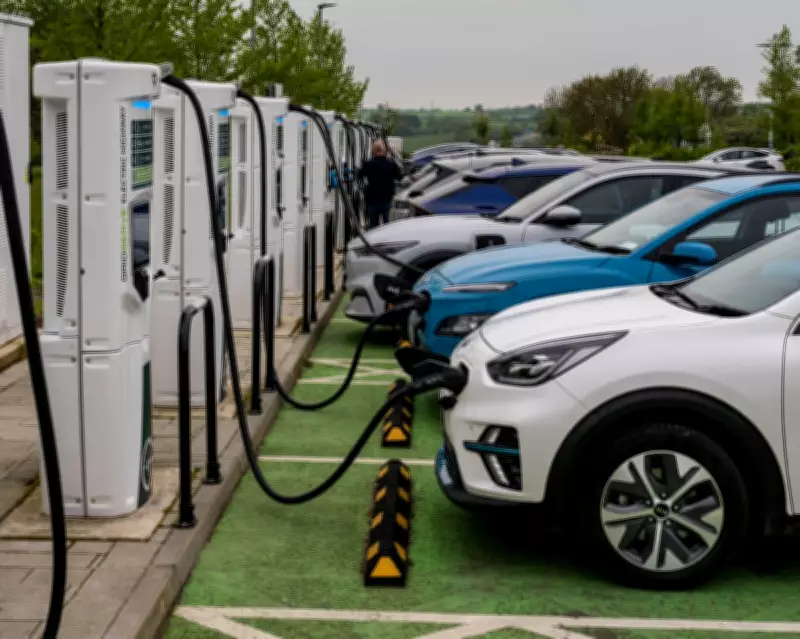
UK Tax Authority Appeals Against VAT Reduction for Public EV Chargers
HM Revenue and Customs (HMRC) has confirmed it will appeal a London tax tribunal ruling that would slash VAT on all public electric vehicle (EV) chargers from 20% to 5%. This decision comes despite the tribunal finding that the tax authority has been overcharging for years under current law, potentially holding back the transition to cleaner transport.
Impact on Electric Car Drivers and the Environment
Charge point operators have expressed dismay, arguing that the appeal will penalise EV owners who rely on public charging, particularly those without off-street parking. Currently, drivers charging at home pay only 5% VAT on electricity, while public chargers attract the higher business rate. This disparity costs some electric car drivers significantly more, disincentivising the shift away from petrol and diesel vehicles.
Will Maden, a director at Charge My Street, the not-for-profit charging company that brought the successful case, stated: "About 40% of the UK population don't have drives. Transitioning to EVs is a huge problem. Adding 20% makes a huge difference. My personal view is we should be making the transition to EVs as cheap as we can. This is an environmental issue."

Financial Implications and Government Stance
The VAT difference generates an extra £85 million annually for the Treasury, according to calculations by Zapmap, a charger map company. This figure is projected to rise to £315 million by 2030 and billions thereafter as EV adoption increases. The government faces fiscal pressures, including the Iran war and plans to abandon a fuel duty increase, making the potential loss of revenue a concern.
If the ruling is upheld, it could force the Treasury into a difficult position, especially as it commits to introducing pay-per-mile taxes on electric cars. John Lewis, chief executive of charge point operator char.gy, criticised HMRC's appeal as a "deeply disappointing decision, and one that sends entirely the wrong signal to the millions of people who rely on public charging." He pledged to immediately pass on any VAT cut to customers.
Legal Basis and Industry Response
The case hinges on interpreting the VAT Act, which states electricity is "always for domestic use" if one person uses no more than 1,000 kilowatt hours per month at a single premises—enough to recharge a Tesla Model Y 16 times. Accountancy firm Deloitte discovered this discrepancy and worked pro bono with Charge My Street.
After three days of arguments focusing on minutiae like the words "a month" and "premises", Judge Harriet Morgan ruled that applying the 20% rate would be a "strained construction." Although the ruling currently applies only to Charge My Street, other operators are prepared to lodge claims for overpaid VAT if the appeal fails.
An HMRC spokesperson defended the appeal, stating: "We're appealing this case, as our position is that standard rate VAT applies to electricity supplied through public EV charging infrastructure." This move has sparked criticism from industry leaders who argue it undermines government pledges to accelerate EV adoption.