UK Trade Minister Advocates for Comprehensive EU Reset Beyond Incremental Steps
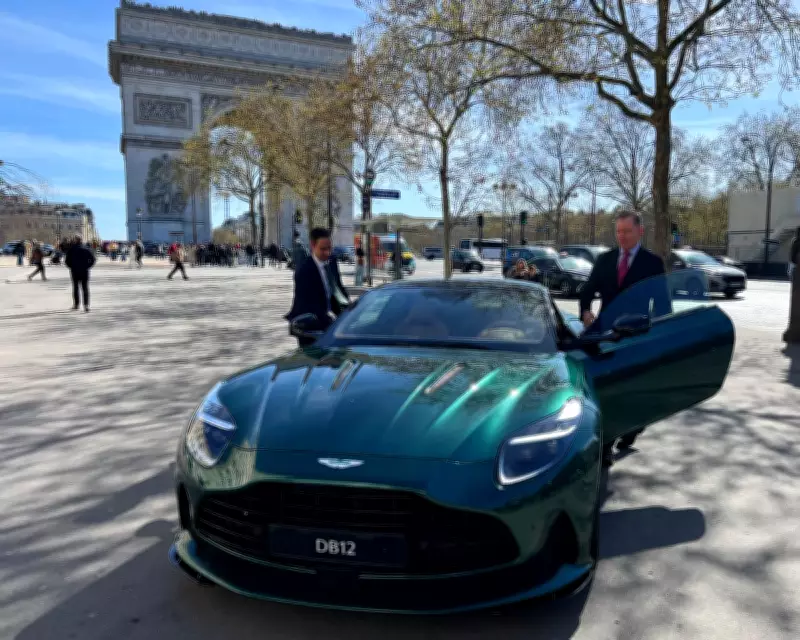
Trade Minister Chris Bryant has issued a stark critique of the current "piecemeal" strategy governing post-Brexit relations between the United Kingdom and the European Union. During a diplomatic visit to Paris, where he symbolically sampled a British Aston Martin, Bryant emphasised the urgent need for a more ambitious and holistic vision to rejuvenate cross-Channel ties.
Frustration Mounts Over Slow Progress in Reset Talks
The call for greater ambition comes amid evident frustrations on both sides regarding the sluggish pace of reset negotiations. Earlier in the week, European Commissioner for Trade Maroš Šefčovič and UK Minister for EU Relations Nick Thomas-Symonds met in Brussels, projecting unity but acknowledging underlying challenges. Šefčovič notably reminded attendees that a comprehensive Swiss-style framework agreement, previously offered to Boris Johnson, remains a viable long-term option.
Bryant, appointed in September, expressed his dissatisfaction with the incremental approach he inherited. "I think we need to lift our eyes to the distant horizon and think in a much bigger, more ambitious way about what is possible," he stated. He highlighted the potential benefits of sectoral regulatory alignment in areas such as medical devices and chemicals, which could significantly boost exports for both the UK and EU.

Labour Figures Echo Calls for Deeper Integration
Bryant's sentiments were reinforced by other prominent Labour figures. Chancellor Rachel Reeves spoke of a "strategic imperative for deeper integration between the UK and the EU," while London Mayor Sadiq Khan urged the party to commit to rejoining the EU in its next election manifesto. This collective push indicates a growing momentum within Labour for a more substantive reset.
However, current negotiations risk stalling over specific issues. Talks on youth mobility have reached a deadlock due to EU demands for home fee status for its citizens studying in the UK. Similarly, discussions on a sanitary and phytosanitary (SPS) deal, initiated last May, have progressed slowly, with the European Commission only receiving its mandate from member states in November.
Proposals for a Unified Framework and Defence Cooperation
Bryant advocates for moving beyond isolated policy agreements. "Rather than this piecemeal, oh let’s do [a deal on] SPS, let’s do tuition fees, let’s do Erasmus... We are doing all these bits and pieces, policy by policy ... we need to be much more focused," he argued. Key priorities include mutual recognition of professional qualifications, solutions for touring artists, and alignment in sectors impacting public health.
He also proposed a shared defence procurement strategy, noting, "We need to take that seriously... we still haven’t got to the point where we will need to go to: defence procurement across the whole of the EU." On the potential for a Swiss-style overarching deal, Bryant expressed openness but cautioned that models must be tailored, stating he favours "one overarching something" with the EU.
Political Pressure and Future Directions
With the second post-Brexit EU-UK summit scheduled for July, immediate pressure exists to finalise agreements on youth mobility and SPS. Beyond that, Labour faces internal pressure to pursue broader integration. Fabian Society pamphlets feature calls from MPs like Stella Creasy for a Swiss model and from business committee chair Liam Byrne for cooperation on critical minerals and energy.
Discussions may even extend to a customs union, though Prime Minister Keir Starmer has currently ruled this out to protect trade deals with the US and India. EU sources suggest willingness to offer favourable terms to offset any trade losses for the UK.
Reflecting on the challenges, Bryant urged a shift in perspective, comparing the current approach to a tightrope walker overly focused on each step. "I think we’re a bit like the tightrope walker, we’re a bit obsessed with walking foot by foot [instead of focusing on the end of the rope]. And that doesn’t work. That’s when you fall off," he concluded, advocating for a visionary reset to transform the UK's economic opportunities.