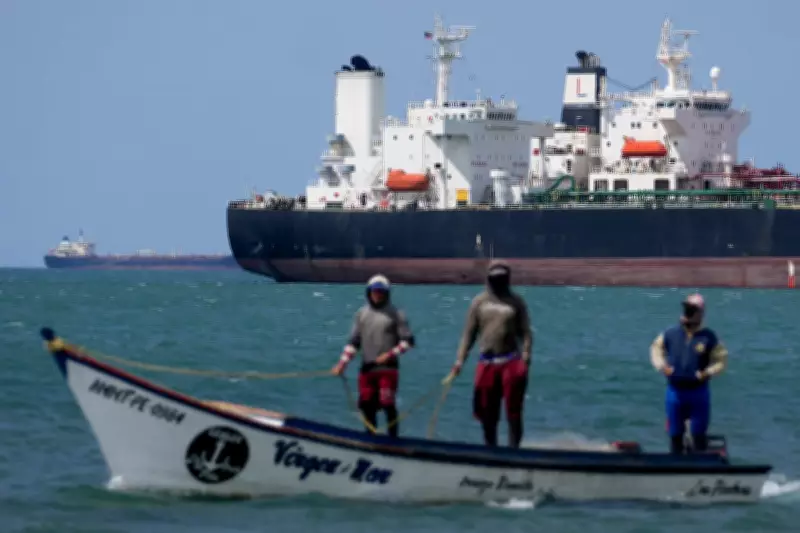
The Treasury Department has announced a significant easing of sanctions on Venezuela's state-owned oil and gas company, Petróleos de Venezuela S.A (PDVSA), with specific limitations, as the Trump administration seeks to increase world oil supplies during the ongoing war with Iran. This move, effective from Wednesday, 18 March 2026, marks a major policy shift after years of stringent restrictions on dealings with Venezuela's government and its oil sector.
Strategic Shift in US Policy
Under the new authorization, US companies are now permitted to engage in business with PDVSA, enabling direct sales of Venezuelan oil to American firms and on global markets. This decision is driven by mounting pressure on the Republican administration to address soaring oil prices, exacerbated by the conflict with Iran, which has no clear end in sight. Global oil prices have surged since Iran disrupted traffic through the Strait of Hormuz, a critical chokepoint for one-fifth of the world's oil shipments from the Persian Gulf.
Incentivizing Investment and Controlling Cash Flow
A Treasury official, speaking anonymously, stated that the action aims to incentivize new investment in Venezuela's energy sector, benefiting both the US and Venezuela while boosting the global oil supply. However, the license provides targeted relief rather than a complete lifting of sanctions. It allows companies that existed before 29 January 2025 to purchase Venezuelan oil and conduct transactions previously banned under US sanctions, reopening trade for this major oil producer.

Key limitations include a prohibition on direct payments to sanctioned Venezuelan entities like PDVSA; instead, funds must be directed to a special US-controlled account, ensuring the US manages cash flow. Additionally, deals involving Russia, Iran, North Korea, Cuba, and certain Chinese entities are not permitted, nor are transactions related to Venezuelan debt or bonds.
Economic and Political Implications
The license is expected to provide a substantial boost to Venezuela's oil-dependent economy, encouraging hesitant companies to invest. This forms part of the Trump administration's phased plan to revitalize Venezuela, following the ouster and arrest of former President Nicolás Maduro in a US military operation in January. President Donald Trump has previously asserted that the US would effectively "run" Venezuela and sell its oil.
Criticism and Humanitarian Concerns
Critics of the acting Venezuelan government argue that this move rewards leadership loyal to Maduro and the ruling party, despite ongoing repression, corruption, and human rights abuses. Venezuela's economic crisis persists, with public sector workers surviving on roughly $160 per month and private sector employees earning about $237 annually, as reported by the central bank. Annual inflation soared to 475% last year, pushing food costs beyond the reach of many citizens.
Venezuela possesses the world's largest oil reserves, which once fueled Latin America's strongest economy. However, corruption, mismanagement, and US sanctions have caused production to plummet from 3.5 million barrels per day in 1999, when Hugo Chávez took power, to less than 400,000 barrels per day in 2020. In 2019, the Treasury Department under the first Trump administration sanctioned PDVSA, locking Venezuela out of world oil markets as punishment for Maduro's government's activities, forcing discounted sales to buyers like China and acceptance of payments in Russian rubles or cryptocurrency.
The new license explicitly prohibits payments in gold or cryptocurrency, including the petro token issued by Venezuela in 2018, reinforcing US control over financial transactions.