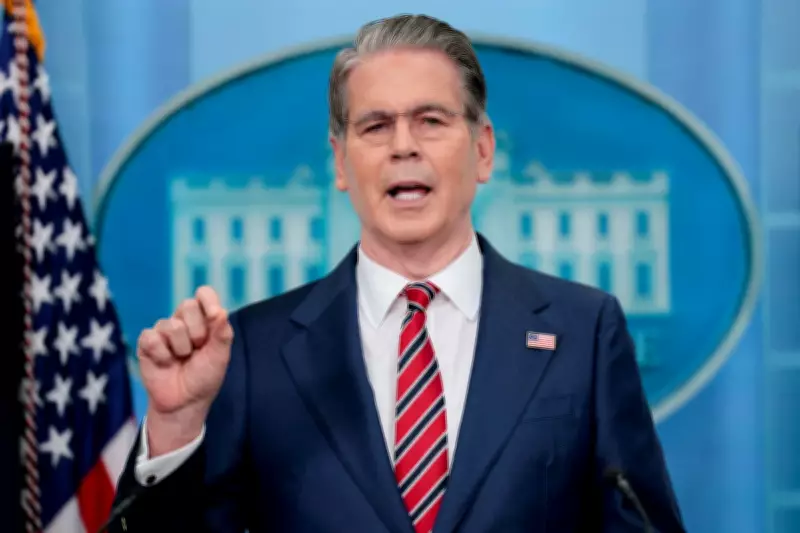
The United States Treasury Department has executed a surprising policy reversal by extending a temporary waiver on sanctions targeting Russian oil shipments. This decision comes merely two days after Treasury Secretary Scott Bessent publicly committed to not renewing such exemptions, highlighting the complex geopolitical pressures influencing Washington's energy strategy.
Contradictory Announcement Sparks Confusion
On Wednesday, Secretary Bessent stated unequivocally at the White House that the administration would not be renewing the general license on Russian oil, nor would it renew a similar license for Iranian oil. However, by Friday, the Treasury Department issued a new 30-day waiver, creating a stark contradiction that has left observers questioning the administration's consistency and strategic direction.
Details of the Extended Waiver
The newly issued general license temporarily exempts Russian oil that was loaded onto tankers as of Friday from US sanctions. This extension effectively prolongs a similar 30-day waiver that was initially granted in March for oil loaded by March 11. The continuation of this policy underscores the ongoing challenges in balancing energy market stability with geopolitical sanctions enforcement.

The administration has yet to provide an immediate explanation for this sudden policy shift, leaving many to speculate about the underlying motivations and potential internal disagreements within the government.
Geopolitical Context and Market Implications
This extension highlights how the fallout from the conflict in Iran is inadvertently boosting Moscow's ability to profit from energy exports. Since Russia's invasion of Ukraine, its energy exports have been significantly restrained by international sanctions. However, the current situation in Iran has created potential shortages that the US is attempting to mitigate through this waiver.
The decision reflects the delicate balancing act between maintaining pressure on Russia and ensuring global energy supply stability. By allowing these shipments to continue, the US aims to prevent market disruptions that could exacerbate economic tensions and affect consumers worldwide.
Broader Implications for US Energy Policy
This policy reversal occurs against the backdrop of broader claims about US energy production. Recently, there have been assertions that US oil production now surpasses that of Russia and Saudi Arabia combined. However, the need to extend sanctions waivers suggests that production capacity alone may not be sufficient to address immediate geopolitical and market challenges.
The extension raises important questions about:
- The long-term sustainability of current sanctions regimes
- The impact of Middle Eastern conflicts on global energy markets
- The consistency of US foreign policy announcements versus implementation
- Potential vulnerabilities in global energy supply chains
As the situation continues to evolve, market analysts and policymakers will be closely monitoring how this decision affects both diplomatic relations and energy prices in the coming weeks. The lack of immediate explanation from the administration only adds to the uncertainty surrounding future policy directions in this critical area.