Air New Zealand's Economy Skynest Sleep Pods Set for Launch on Ultra-Long-Haul Routes
In a groundbreaking move for the airline industry, Air New Zealand is preparing to launch its innovative Skynest sleeping pods, specifically designed for economy passengers on ultra-long-haul flights. From May 2026, travellers on the Auckland-New York route will have the option to book a four-hour session in these bunk-bed style pods, available for an additional fee starting from NZ$495 (approximately $292 or £215).
World-First Sleeping Pods Integrated into Boeing 787-9 Dreamliner
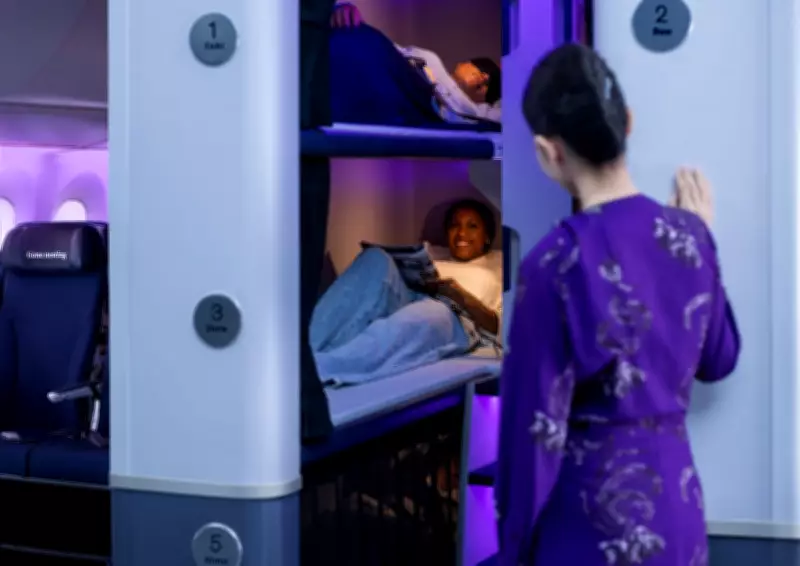
Air New Zealand claims a world first with the introduction of six full-length, lie-flat sleeping pods, ingeniously squeezed into the aisle of the new Boeing 787-9 Dreamliner. Each Skynest pod comes equipped with fresh bedding, a privacy curtain, ambient lighting, and a comfort kit that includes eye-masks, skincare products, earplugs, and socks. This initiative aims to enhance passenger comfort during the gruelling 17-hour flight.
Both premium and economy passengers will still be required to purchase traditional seats for the journey. However, they can opt to book a four-hour session in the Skynest pods, with two sessions available per flight initially. Passengers are restricted to booking one slot each, ensuring fair access to this unique amenity.

Guidelines and Restrictions for Skynest Users
Those choosing to sleep in the pods will be in close proximity to other napping passengers and will not have room to sit up. The airline has established clear guidelines: "double-bunking" is strictly prohibited, as is eating snacks or attempting to smuggle in children. Passengers are also advised to "go easy on perfumes and potions" to avoid overwhelming others, with a light-hearted note that "not everyone dreams in vanilla-sandalwood-cloud-musk."
Interestingly, snoring is deemed acceptable. The guidelines state, "statistically, someone's going to do it. It might be you. That's okay. Earplugs are provided for everyone, just in case." This relaxed approach underscores the airline's focus on practicality and comfort in a shared sleeping environment.
Enhancing Travel to Remote New Zealand
Nikhil Ravishankar, Air New Zealand's chief executive, emphasised the importance of the journey for a remote country like New Zealand. He noted that enticing travellers to this far-flung nation "depends on travellers' willingness to spend long hours in the air to get here." By offering more people the chance to rest properly on ultra-long-haul flights, the airline aims to make travel to and from New Zealand more manageable and appealing.
Air New Zealand first announced the development of Skynest in 2020, and bookings will open from 18 May for services starting in November 2026. This addition complements the airline's existing Skycouch option, where families or passengers who book out a row of seats can request special footrests to create a makeshift bed for an extra fee.
Industry Trends and Economic Challenges
Air New Zealand's announcement comes as other airlines explore perks for economy passengers on long-haul routes. For instance, United Airlines plans to allow passengers to turn a row of three seats into a lie-flat space from 2027, while Qantas will introduce a "wellness zone" on its Sydney-London flight, set to be the world's longest commercial route starting in June.
However, the effectiveness of these added perks—often at additional cost—in enticing passengers back to air travel remains uncertain. In the UK, demand and spending have fallen for the first time in five years, attributed to rising fuel costs and disruptions from geopolitical conflicts, according to Barclays bank.
In March, Air New Zealand suspended its full-year earnings outlook and raised fares due to volatility in jet fuel markets and Middle East tensions, making it one of the first carriers to announce price increases. Subsequently, in April, the airline cut around 4% of its flights, affecting 1% of its passengers. This article was updated on 15 April to clarify that Skynest sessions will cost from NZ$495, not NZ$500-$600 as previously stated.