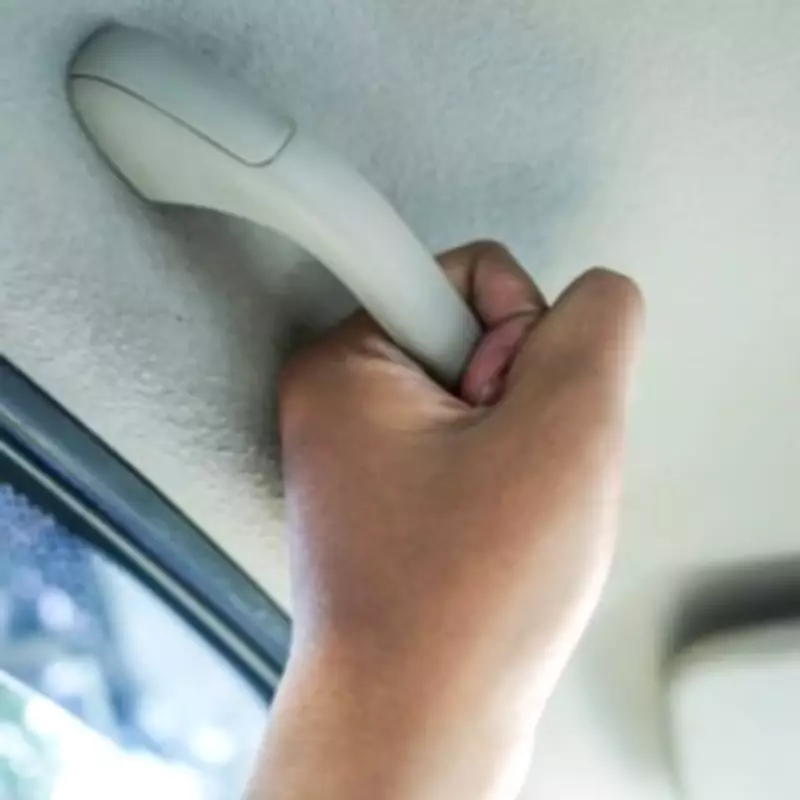
Drivers across the United Kingdom are experiencing a collective moment of revelation as they learn the true purpose of a familiar feature found in nearly every petrol and diesel vehicle on the road. The grab handles positioned above passenger doors, often assumed to be simple grips for stability during motion, actually serve a vital accessibility function that has been misunderstood by countless motorists for years.
The Accessibility Function Revealed
While many road users have casually used these handles for support while the car is moving, their genuine design purpose is to assist drivers and passengers with disabilities in entering and exiting the vehicle. This revelation has been spreading rapidly through automotive communities and social media platforms, with YouTube channel Bright Side playing a significant role in educating the public through a viral video that has garnered millions of views.
Common Misconceptions and Alternative Uses
The automotive experts at Bright Side humorously referred to the feature as the "oh no" handle, suggesting it provides something to grip "when your grandma decides to go full NASCAR." However, they quickly clarified the serious accessibility purpose behind the design. Many drivers have confessed in online comments that they've been using the handles for entirely different purposes, including hanging suits and laundry from dry cleaners to prevent wrinkling during transportation.

One commenter revealed: "Your 'Oh no' handle is just called fear handle. And the way I usually use it is by hanging suits that are supposed to look somehow when I arrive." Another added practical insight: "They come in handy for hanging your laundry from the cleaners," while a third confessed to childhood antics: "When I was younger, I used to swing on the two car handles!"
Expert Analysis and Practical Applications
Motoring specialists at Driven Car Guide have provided detailed explanations about how these handles function across different vehicle types. In larger vehicles, they offer essential leverage for hoisting oneself up and lowering safely, preventing awkward jumps that could lead to injury. Conversely, in smaller cars, the grab handles provide crucial support to ease the descent onto pavements and roadside surfaces.
This feature proves particularly beneficial for multiple demographic groups, including people with disabilities, older adults, and pregnant individuals who require additional support during vehicle entry and exit. The steering wheel typically serves as the driver's equivalent grab handle, which explains why driver-side doors usually lack this feature—a safety consideration to prevent drivers from grabbing handles while operating the vehicle.
Broader Context of Mobility Support
This automotive revelation comes at a time when mobility support systems are receiving increased attention across England. Recent Department for Transport data reveals that approximately one in twenty people now hold a Blue Badge disabled parking permit, representing 3.07 million authorized holders as of March 31 last year—an 8% increase from the previous year.
The regional distribution shows significant variation, with the North East having the highest percentage of badge holders at 6.1% of the population, while London records the lowest at 3.5%. Since 2019, eligibility for Blue Badges has expanded beyond visible disabilities to include those with non-visible conditions such as Parkinson's disease, dementia, and epilepsy, reflecting growing recognition of diverse mobility needs.
Addressing System Integrity and Future Considerations
Local authorities responsible for issuing these vital permits have been called upon to tackle fraudulent use, with advocates emphasizing that Blue Badges represent a "lifeline" for those genuinely in need. The permits, which require renewal every three years, enable people with disabilities or health conditions to park closer to essential services for everything from social engagements to critical health appointments.

This combination of automotive design features and official support systems highlights the ongoing evolution of accessibility considerations in transportation. As awareness grows about the proper use of vehicle grab handles, manufacturers may consider more explicit labeling or educational materials to ensure these features serve their intended purpose for all road users who benefit from additional mobility support.