High-Tech Car Features Under Fire for Safety Risks
From sleek touchscreen consoles to concealed door handles, contemporary vehicles are brimming with futuristic innovations. While these advancements might evoke a sense of high-tech luxury akin to a spy movie, car safety experts are now issuing stark warnings that many of these features can prove lethal on the roads.
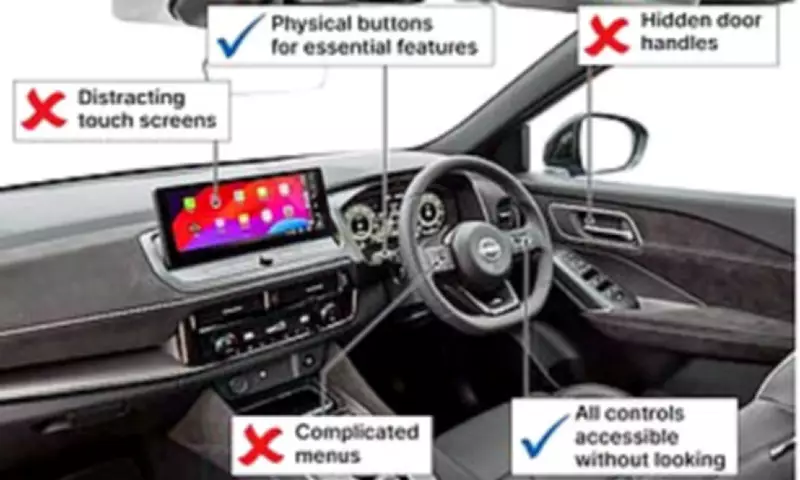
The Dangers of Hidden Door Handles
Among the most concerning trends are pop-out door handles, which have been banned by authorities in China this week due to fears they could trap occupants inside a vehicle after an accident. These handles, which sit flush with the car body and only extend when activated, rely on electronic mechanisms rather than traditional mechanical levers.
Professor Milad Haghani, a car safety expert at the University of Melbourne, explained to the Daily Mail that such designs demand visual attention and often require glance durations exceeding safe thresholds, which can be deadly. The issue is compounded if a crash damages the car's wiring, potentially rendering the handles inoperable from both inside and out.

While most cars with hidden locks include a backup mechanical switch, these are frequently difficult to locate. For instance, the Tesla Model 3 requires removing a plastic panel and pulling a hidden cord—a process that could delay escape in an emergency. China's ban, effective from January 1, 2027, mandates that all new cars must allow manual operation of door releases from any angle, a move other countries are considering following tragic incidents where rescue efforts were hampered.
Touchscreen Dashboards: A Distracting Hazard
Touchscreen infotainment systems have also come under scrutiny. Unlike physical buttons or knobs, these screens force drivers to divert their eyes from the road, creating a dangerous distraction. Professor Haghani emphasises that essential features like temperature control, wipers, and lights should be accessible via quick tactile shortcuts.
However, carmakers are increasingly integrating these functions into touchscreen interfaces to declutter dashboards. For example, the Volvo EX30 EV requires navigating sub-menus to adjust mirrors or demist windows, and the Volkswagen ID.7 replaces conventional air vents with a digital display controlled solely through the screen.
Research supports these concerns: a recent study found that drivers' reaction times worsened by over 50% when using touchscreens, surpassing the impact of texting or phone calls. A 2022 simulation showed that touchscreen use led to significantly delayed braking distances at motorway speeds.
Calls for Simplification and Regulatory Action
Safety advocates are urging a return to simpler designs with physical buttons and dials. Distraction in driving involves visual, manual, and cognitive elements, and touchscores combine all three, whereas buttons primarily cause manual distraction without requiring visual or mental focus.
Professor Haghani asserts that intuitive, simple dashboards enhance safety. Consumer sentiment aligns with this view; an RAC survey revealed that nearly a quarter of drivers consider infotainment systems a top safety concern, and 26% admitted to making errors while interacting with touchscreens.
Nicholas Lyes of IAM RoadSmart noted that over half of drivers find all-in-one screens negatively impact their ability to control basic functions. In response, some manufacturers are reinstalling essential buttons, and regulatory bodies are stepping in. Euro NCAP will require separate physical controls for five-star safety ratings, and ANCAP Safety in Australia and New Zealand plans to advocate for button returns from 2026.
As the automotive industry evolves, the push for safety may drive a shift away from high-tech gimmicks toward more practical, life-saving designs.