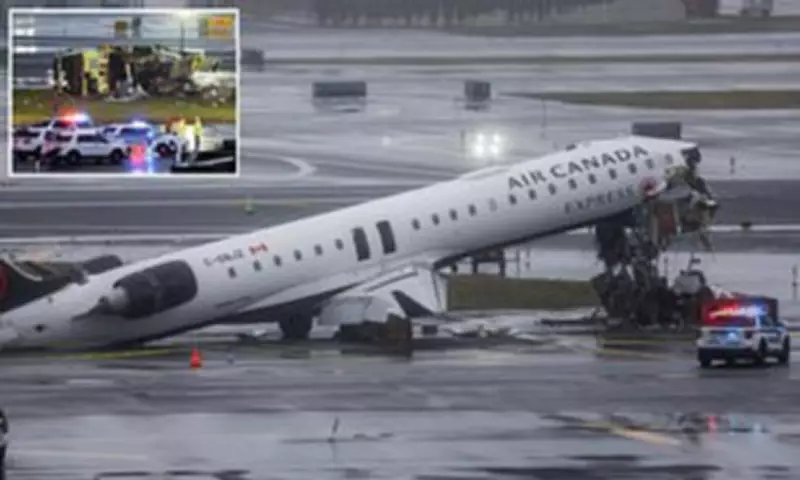
Investigators examining the fatal collision between an Air Canada jet and a LaGuardia Airport fire truck are focusing on the possibility that an air traffic controller stepped away from his desk moments before the crash. Sources familiar with the ongoing probe have revealed that officials are scrutinising an emergency call made from a separate United Airlines flight in the lead-up to the incident on March 22.
Multiple Factors Under Scrutiny
Insiders indicate that several potential mistakes and contributing factors are being considered, including operational procedures within the air traffic control (ATC) tower on the night of the collision. Moments before the crash, ATC received an emergency call from a United flight reporting a strange 'odor' in its cockpit.
When air traffic control workers took this emergency call, the layout of the control tower meant a staffer likely needed to leave their desk to reach a landline phone across the room. National Transportation Safety Board (NTSB) Chairwoman Jennifer Homendy confirmed there were only two controllers on duty for the late-night shift, increasing the risk that the staffer monitoring the relevant runway section was absent immediately before the crash.

Communication Breakdown and Emergency Response
The emergency call from the United jet prompted ATC to deploy a convoy of six fire trucks. However, the lead truck driver appeared not to hear a controller's desperate pleas to stop as the Air Canada jet crossed its path. Previously released audio captures a controller panicking as they witnessed the crash unfolding, shouting: 'Truck One, stop, stop, stop!'
The crash resulted in the deaths of two Air Canada pilots and hospitalised forty others, marking the first fatal accident at LaGuardia in thirty-four years. According to investigation sources speaking with the New York Times, officials are also questioning whether fire truck positioning, communication device malfunctions, and heavy rainfall played roles in the tragedy.
Investigative Focus on Driver Actions
Interviews have been conducted with numerous individuals involved, including the controllers on duty and firefighters from the lead truck who were hospitalised in the wreck. Investigators are examining whether the lead truck failed to brake at a stop line on the runway or if the driver missed instructions from air traffic control.
This could potentially be due to truck operators pressing a microphone key simultaneously with ATC giving orders, effectively 'bleeping out' the instructions. The extensive data collected by the NTSB is being used to reconstruct the driver's line of sight immediately before the crash, determining whether visibility was obstructed from seeing the oncoming jet.
Landline Use Complicates Procedures
Questions about ATC staff potentially walking away from their desks emerged alongside revelations that the United jet's call included an 'emergency' report from the cockpit requiring immediate action. While ATC staff typically use dedicated radio frequencies for such calls, LaGuardia officials opted for a landline that night because United pilots couldn't reach airport operations personnel.
Sources indicate that using the landline may have drawn an ATC staffer away from their desk, complicating air traffic processes already strained by stormy weather and a high volume of arriving flights. This included an air traffic controller instructing half a dozen other planes in the minute before the fire truck requested runway crossing permission, while simultaneously managing reports on a separate runway.
Collision Details and Aftermath
The loss of focus may have proven fatal, as surveillance footage shows the Air Canada jet slamming on its brakes while careening into the fire truck during the late-night collision. The plane was travelling at approximately 150mph when it struck the fire truck amid heavy rainfall, with footage capturing a massive splash of water as the collision sent the truck flipping across the runway.
Audio from air traffic control reveals workers yelling 'stop, stop, stop!' seconds before impact. Addressing the plane moments later, the air traffic controller stated: 'JAZZ 646, I see you collided with the vehicle. Just hold position. I know you can't move. Vehicles are responding to you now.'

Controller's Admission and Pilot Identities
The pilot of a nearby Frontier plane then asked if they should return to their gate, commenting: 'We got stuff in progress for that man, that wasn't good to watch.' The controller responded: 'Yeah, I tried to reach out to them. We were dealing with an emergency, and I messed up,' before the Frontier pilot attempted reassurance, saying: 'No, you did the best you could.'
The pilots killed in the crash were identified as MacKenzie Gunther, 30, and Antoine Forest, 24, described by officials as young, competent professionals 'at the start of their careers.' Forty others were hospitalised, including flight attendant Solange Tremblay, who miraculously survived being thrown 330 feet from the crash while still strapped into her seat.