Easter 2026 Travel Chaos: Storm Dave and EU System Disrupt Air, Rail, and Sea
As the Easter 2026 travel rush intensifies, travellers across the United Kingdom and Europe are bracing for significant delays and widespread disruption affecting air, rail, road, and sea journeys. The convergence of severe weather conditions, extensive engineering work on railways, and operational challenges with the new EU entry-exit system is creating a perfect storm of travel woes during this critical holiday period.
Storm Dave Brings Severe Weather Disruption
Storm Dave, the fourth named storm of 2026, is unleashing travel chaos across northern and western parts of the UK from Saturday through Easter Sunday morning. The Met Office has issued amber warnings for Northern England and North Wales overnight on Saturday, with wind gusts potentially reaching 90mph and up to 20cm of snow expected in some Scottish areas. Yellow weather warnings for high winds, rain, and snow cover most of the UK from Saturday afternoon through Sunday morning, affecting regions north and west of a line from southwest Wales to Hull.
Transport for Wales has warned customers to expect disruptions as Storm Dave hits with very strong winds. Ferry services between Welsh ports and Ireland have already experienced a dozen cancellations, while Network Rail Scotland has implemented speed restrictions along the Ayrshire coast from 8pm on Saturday. Caledonian MacBrayne sailings face significant disruption due to both weather conditions and fleet availability issues, with services subject to last-minute changes or cancellations.

Rail Network Engineering Work Causes Major Disruptions
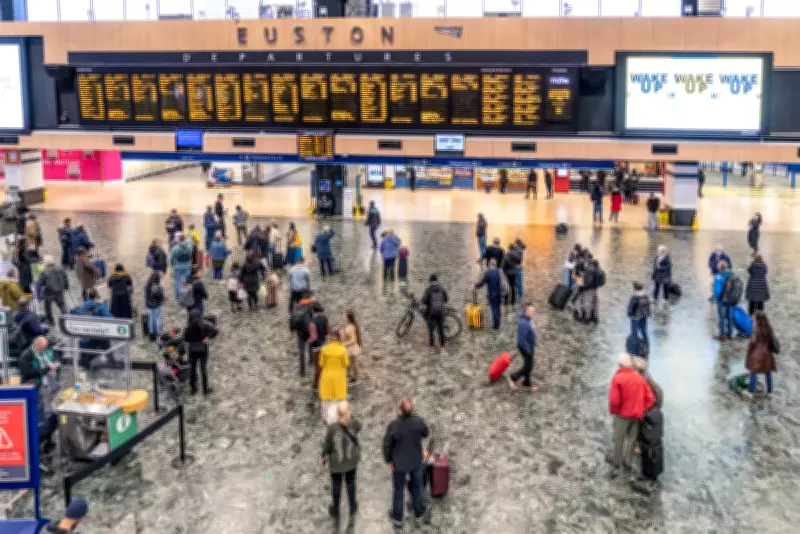
Beyond weather-related issues, widespread engineering work is creating substantial rail disruptions across Britain. The West Coast Main Line between London Euston and Milton Keynes, which normally carries over 100,000 passengers daily, is closed for six days from Good Friday through Thursday morning. This closure affects Avanti West Coast services to the West Midlands, northwest England, North Wales, and southern Scotland, with reduced services operating from Milton Keynes Central instead.
Rail replacement buses are running between Milton Keynes Central and Bedford, where passengers can connect to London St Pancras International via Thameslink and East Midlands Railway services. Further north, the West Coast Main Line faces additional closures between Preston and Oxenholme (serving the Lake District) and between Carlisle and both Edinburgh and Glasgow on Easter Saturday. The journey time between London Euston and Penrith in Cumbria will extend from the normal three hours to approximately seven hours on Easter Sunday, requiring at least four changes and departure from London King's Cross or St Pancras International.
Other significant rail disruptions include:
- South Western Railway main line closures between Winchester and Southampton throughout the bank holiday weekend
- Great Western main line closure between Westbury and Taunton from Good Friday evening through Easter Monday morning
- Reduced Heathrow Express and Elizabeth line services on Easter Sunday
- Multiple line closures in Kent, East Sussex, Cambridgeshire, and Yorkshire with extensive rail replacement bus services
EU Entry-Exit System Creates Border Control Delays
Airline passengers face additional challenges from the new EU entry-exit system (EES), which began its rollout in October 2025. European aviation leaders Olivier Jankovec (representing airports) and Ourania Georgoutsakou (representing airlines) have issued a joint statement warning that passengers entering the Schengen area are likely to experience extended waiting times at border control during Easter due to persistent operational challenges with the system implementation.
The aviation leaders report that waiting times at European airport border crossing points regularly reach up to two hours during peak traffic times, with some airports reporting even longer queues. They cite persistent shortages of border control staff, technical issues with self-service kiosks, and concerns about the reliability of the central EES IT system as contributing factors. The industry is calling for flexibility to suspend EES processes where operationally necessary throughout the 2026 summer season to prevent catastrophic operational disruptions.

A European Commission spokesperson acknowledged the aviation industry's concerns while noting that the system takes only 70 seconds to register an entry or exit when operating properly. The spokesperson emphasized that member states have fall-back solutions available to ensure border fluidity and should provide adequate resources at heavy-traffic border crossing points.
Air Travel Disruptions and Industrial Action
While airlines have not yet cancelled flights due to Storm Dave, easyJet and other carriers are warning of potential disruption from strong winds that could affect aircraft operations and ground handling services. Ryanair is advising passengers travelling to or from the UK on Saturday to check their app for flight updates, while Loganair is offering passengers booked on Easter Saturday or Sunday the opportunity to postpone trips by up to two weeks.
Additional complications arise from industrial action at 12 major Spanish airports, including Madrid, Barcelona, Alicante, Palma, Ibiza, Malaga, and the Canary Islands. Furthermore, capacity between the UK and destinations in Asia, Australasia, and Africa remains constrained due to the ongoing crisis in the Gulf region, with Emirates, Etihad, and Qatar Airways operating well below normal capacity levels.
Road and Ferry Travel Challenges
On the roads, National Highways has lifted 1,500 miles of roadworks from England's motorways and major A-roads until Easter Monday. The RAC predicts Easter 2026 will be the busiest on British roads since 2022, with most drivers undeterred by rising fuel prices caused by Middle East conflicts. Filling a typical diesel family car will cost at least £19 more than in 2025, with petrol nearly £8 dearer per tank.
Traffic is expected to peak between 10am and midday on Easter Saturday, with the M40 northbound between Gaydon Interchange and the M42 junction predicted to experience delays of almost an hour. On Easter Monday, the southwest will see the longest delays as motorists return from Devon and Cornwall, with hour-plus delays expected around noon on the M5 northbound between Taunton and the M4 north of Bristol.
Ferry services face significant disruption from Storm Dave, with P&O Ferries cancelling four sailings each way between Cairnryan and Larne from Saturday noon through Sunday morning. Stena Line has cancelled two round-trips on its Fishguard-Rosslare, Holyhead-Dublin, and Cairnryan-Belfast routes, while Irish Ferries has cancelled Saturday afternoon sailings between Dublin and Holyhead and Pembroke and Rosslare. Despite initial concerns, neither Dover nor Folkestone is implementing biometric checks for the EU entry-exit system, reducing potential hold-ups at these key departure points.
Port of Dover CEO Doug Bannister advises motorists to arrive no more than two hours before sailing, have passports ready for French passport control, and bring snacks, entertainment, and water for potential delays. Should passengers miss their ferry due to long queues, shipping lines will place them on the next available sailing without penalty.