Airlines Hike Flight Prices as Middle East Conflict Dries Up Jet Fuel Supplies
Airlines are beginning to significantly increase flight prices and baggage fees as jet fuel supplies dry up amid the ongoing conflict in the Middle East. The strategic Strait of Hormuz remains blocked, severely disrupting global fuel shipments and creating what industry experts describe as an 'existential challenge' for air carriers.
Trump's Dismissive Response and Industry Warnings
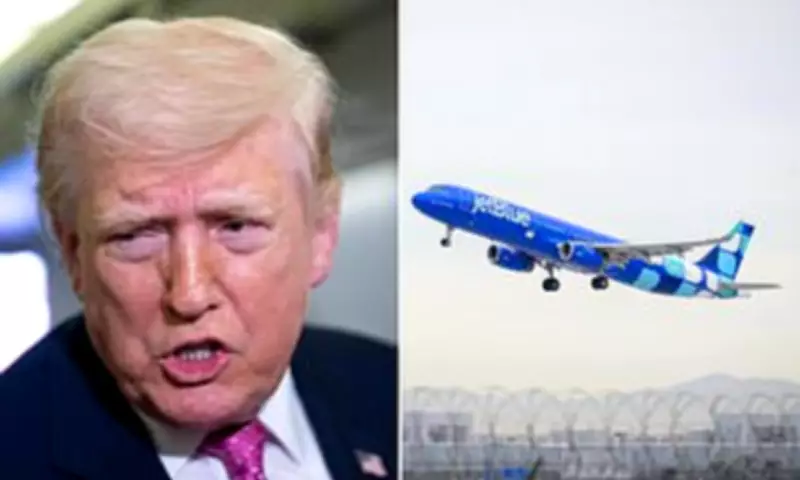
Former US President Donald Trump dramatically washed his hands of the crisis, telling the UK to 'go get your own oil' in a scathing social media post. Trump insisted he had already done 'the hard part' by launching the war against Iran on February 28, maintaining that the US has 'plenty' of jet fuel.
However, airline executives and analysts paint a starkly different picture. Rigas Doganis, former head of Olympic Airways in Greece, warned that airlines face a 'perfect storm' of weakening demand and soaring fuel costs. 'They will need to cut fares to stimulate weakening demand while higher fuel costs will be pushing them to increase fares,' Doganis explained.

Immediate Price Increases and Fee Adjustments
Several carriers have already implemented price hikes. A budget US airline increased its baggage fees by approximately £6.80, raising the minimum charge from $35 (£26.50) to $39 (£29.50) for off-peak flights. During peak times, the price now starts at $49 (£37.10), up from $40 (£30.30).
JetBlue attributed similar adjustments to 'rising operating costs.' A spokesperson stated, 'As we experience rising operating costs, we regularly evaluate how to manage those costs while keeping base fares competitive.' The airline emphasized that fee increases for optional services like checked baggage help maintain competitive fares while delivering valued amenities.
Critical Supply Shortages Looming
The UK faces an imminent jet fuel shortage, with the last known shipment from the Middle East expected to arrive within 48 hours. Data providers Kpler and Vortexa indicate the Libyan-flagged Maetiga vessel is due from Saudi Arabia on Thursday, with no other cargoes visible en route due to the Strait of Hormuz blockage.
Currently, the UK sources at least half its jet fuel from the Middle East, a dependency heightened by reduced domestic refining and halted Russian imports since the 2022 Ukraine invasion. Approximately 40% of Europe's jet fuel transits through the nearly closed Strait of Hormuz.
Financial Impact and Market Reactions
Jet fuel prices have skyrocketed, reaching $4.24 (£3.21) per gallon last Thursday compared to $2.50 (£1.89) before the initial US-Israeli strikes on Iran. Aviation analyst Alex Macheras noted the US Jet Fuel Index surged 72% in one month since the war began, 'massively outpacing even brent crude's rise.'
Industry experts fear supply issues could severely impact airlines by the end of next month if the conflict persists. Scandinavian Airlines System (SAS) has already cancelled hundreds of flights, citing the 'sharp and sudden increase' in jet fuel costs. The carrier is consolidating capacity on shorter Scandinavian routes where alternative travel options exist.
Broader Economic Consequences
The crisis extends beyond aviation, affecting multiple sectors. Diesel and petrol prices have hit their highest levels since 2022, with projections suggesting typical energy bills could rise by £288 in July. Food costs may surge as fertilizer supplies are choked off, and the region's aluminium production is disrupted.
Some cruise lines, including StarCruises and Dream Cruises under the Resorts World Cruises brand, have implemented new fuel surcharges for bookings from March 20, 2026 onward. The companies cited 'recent geopolitical developments in the Middle East' leading to significantly higher oil prices.
Government Response and Public Guidance
While countries like Australia, Spain, and Poland have temporarily cut fuel duty, significant UK government support for motorists or households appears unlikely despite Treasury windfalls from higher energy taxes. Prime Minister Sir Keir Starmer is set to hold another emergency Cobra meeting following Trump's remarks, as Britons begin feeling the economic impact.

The government maintains that Britons should book holidays as normal and not fret about supply issues, even as the aviation industry braces for prolonged turbulence. Experts anticipate expensive tickets will continue for months, even if the conflict dwindles, due to sustained supply chain disruptions and increased operational costs.