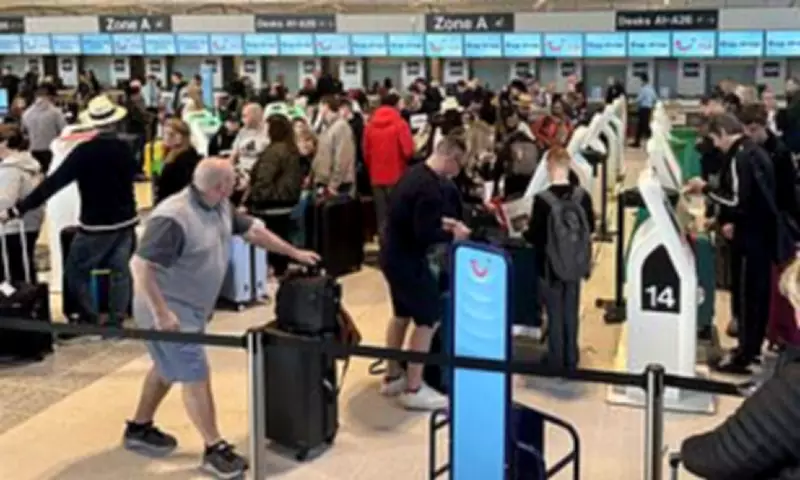
British Travellers Confront Four-Hour Queues at European Airports Amid EES Rollout Disruption
British holidaymakers have been issued a stark warning to brace for serious travel disruption, including queues stretching up to four hours, at European airports throughout the summer season. This chaos stems from the ongoing and problematic implementation of the European Union's new Entry/Exit System (EES).
Aviation Bodies Demand Immediate EU Action Over 'Significant Delays'
Major aviation industry groups, including ACI Europe, IATA, and Airlines for Europe (A4E), have urgently called for an immediate review into the 'significant delays' currently plaguing passengers at aviation hubs across the continent. In a joint statement, these bodies highlighted a 'complete disconnect' between EU institutions' perception that the EES is working well and the operational reality faced by travellers.
The new biometric border control system mandates that non-EU nationals, including UK citizens, provide fingerprints and facial photographs upon entering the Schengen Area. This zone encompasses most EU nations plus Iceland, Norway, Liechtenstein, and Switzerland. Although the automated IT system was first launched in October 2025, airports and ports were initially given until April 2026 to fully implement the technology as a mandatory requirement.

Flexible Timeline Fails to Alleviate Mounting Summer Travel Fears
Last week, the European Union decided to grant the 29 participating countries a more flexible timeline for the system's introduction, extending the deadline until early September. Despite this adjustment, fears are intensifying regarding the impact on summer travellers, with passengers already encountering substantial delays and processing times reportedly 70 percent longer in some instances.
Long, slow-moving queues have been documented at popular Schengen area airports, accompanied by persistent technical malfunctions, such as crashing gates witnessed in locations like Gran Canaria. In extreme cases, these disruptions have led to passengers missing their flights, with concerns escalating over the potential for queues to extend to five or six hours during the peak season.
Core Issues Compounding EES Delays Identified by Industry
In a letter to EU Commissioner for Internal Affairs and Migration, Magnus Brunner, aviation bodies demanded immediate action to prevent 'excessive' delays. They pinpointed three fundamental issues exacerbating the EES rollout problems:
- Chronic understaffing at border control checkpoints.
- Unresolved technical malfunctions with the new biometric systems.
- Very limited uptake of the Frontex pre-registration application by Schengen states, which would allow travellers to complete checks before arrival.
The groups warned starkly: 'Failing immediate action to provide sufficient flexibility, severe disruptions over the peak summer months are a real prospect, with queues potentially reaching four hours or more.' They emphasised that the EES implementation must be 'flexible to react to operational realities' to 'safeguard the reputation of the EU as an efficient, welcoming and desirable destination.'
Contrasting Views and Mitigation Efforts Amid Travel Chaos
According to reports, the European Commission maintains that the new system is operating 'largely without issues.' However, aviation representatives counter that non-EU travellers are enduring 'massive delays and inconvenience.' To minimise travel chaos this summer, the industry coalition hopes the European Commission will permit Schengen member states to partially or totally suspend the EES until the end of October.
This situation follows recent mitigation efforts, such as at Lisbon's Humberto Delgado Airport, where soldiers were deployed as trained border guards to reduce waiting times after security flaws prompted a temporary suspension of the EES digital border rollout last month. In January, 24 members of Portugal's National Republican Guard were stationed in the arrivals area under government approval to address the crisis.

As the gradual rollout continues, the aviation industry stresses the urgent need for realistic planning and robust solutions to handle the doubled airport traffic anticipated during the peak summer months, ensuring that British and other non-EU travellers do not face unprecedented holiday disruptions.