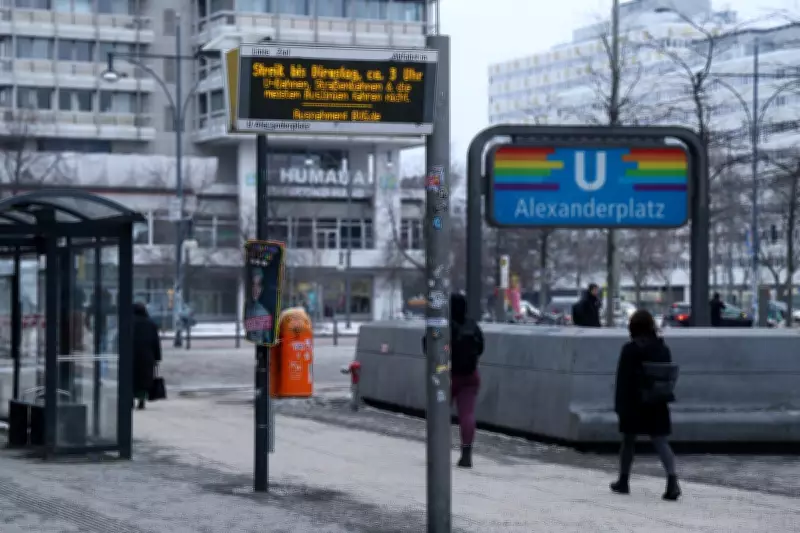
German Public Transport Grinds to Halt Amid Major Nationwide Strike
Public transport services across Germany have been brought to a complete standstill on Monday as a widespread strike orchestrated by the Verdi trade union paralysed bus and tram networks in most major cities. The industrial action, involving close to 100,000 transport workers, has left commuters facing freezing temperatures and deserted platforms, with significant disruption expected to continue throughout the day.
Union Demands and Negotiation Breakdown
The strike follows the collapse of talks last week between Verdi and municipal and state employers over working conditions. The union is pushing for substantial improvements, including shorter shifts, longer rest breaks, and higher remuneration for night and weekend work. These demands come at a challenging time for many cities, which are grappling with significant budget constraints and financial pressures.
Serat Canyurt, Verdi's leading negotiator, confirmed to rbb radio that the strike began as scheduled, describing it as one of the largest coordinated actions in the local transport sector for years. He emphasised that public transport operators are now expected to return to the negotiating table with meaningful concessions.

Widespread Disruption Across Germany
The industrial action affects approximately 150 municipal transport companies across all but one of Germany's 16 federal states. Key cities experiencing complete service halts include Berlin, Hamburg, Bremen, Stuttgart, Karlsruhe, and Freiburg, where services will remain suspended for the entire day.
Commuters have been particularly affected by freezing temperatures that fell below zero across much of the country, worsening the situation for those forced to seek alternative transportation methods. The strike has created significant challenges for daily travel, with many workers and students struggling to reach their destinations.
Rail Services Continue Unaffected
Despite the widespread disruption to local transport services, Deutsche Bahn has confirmed that its urban railway S-Bahn trains in cities including Berlin, Hamburg, Munich, and Stuttgart will operate normally on Monday. Long-distance rail services are also running as scheduled, as these staff members are not represented by the Verdi union involved in the current dispute.
Tense Negotiations and Future Action
Talks between Verdi and employer associations have been particularly tense in recent weeks, with union leaders accusing municipalities of seeking to cut benefits and lengthen shifts. In Berlin specifically, Verdi negotiators have claimed that operators wanted workers to fund improvements themselves by giving up sick pay and flexible working arrangements.
The next round of negotiations is scheduled for 9 February, with union leaders warning that further industrial action could follow if employers do not offer significant concessions. Verdi stated clearly on Friday that "it is safe to assume that public transport will come to a standstill in the affected transport systems," confirming that close to 100,000 staff have been called to participate in the walkout.
The situation represents a significant challenge for Germany's public transport infrastructure and highlights ongoing tensions between workers' rights and municipal budget constraints in the current economic climate.