

Global Travel Chaos as Iran Conflict Disrupts 'Once-in-a-Lifetime' Trips
The escalating conflict between the United States, Israel, and Iran has plunged global travel into disarray, with tens of thousands of flights cancelled, rerouted, or rescheduled. This crisis underscores how rapidly a regional conflict can paralyze international aviation, driving up prices, squeezing capacity, and throwing holiday plans into chaos.
Financial Pain for Travellers Worldwide
Travellers across the globe are counting the financial cost of the war, which has led to the closure of much of the Middle East's airspace. Among those affected is accountant Natasha Earle and her family from Dardanup, Western Australia. Their five-week European holiday, booked last May with Emirates to visit London, Paris, Berlin, Vienna, and Rome, has been upended, costing roughly an extra A$10,000 as they reroute to avoid drone and missile fire.
"We've spent tens of thousands of dollars on this holiday," said Earle, who is due to fly at the end of March amid the biggest disruption to global travel since the pandemic. "We should get at least half of that back from Emirates eventually."

Middle East as a Global Aviation Crossroads
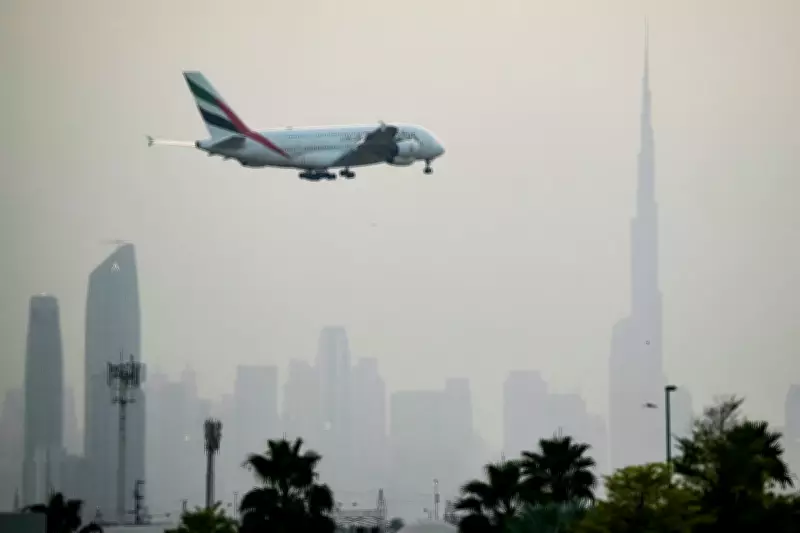
The Gulf region serves as a critical global crossroads for commercial aviation. Emirates, Qatar Airways, and Etihad Airways normally fly more than half of all passengers between Europe and Australia, New Zealand, and the nearby Pacific Islands, according to Cirium data. With drone and missile fire regularly forcing aircraft to circle near Dubai, Middle East tourism—worth approximately $367 billion annually to the region—is heavily impacted.
New Zealander Jacob Brown, 34, living in Doha, Qatar, experienced firsthand the travel nightmare. After his Qatar Airways flight to New Zealand was cancelled, he drove through the Saudi Arabian desert to Riyadh to catch a plane to London. A journey that should have taken less than 24 hours ended up taking several days due to closed airspace, additional flight chaos, delays, and lost baggage.
"It was pretty nerve-wracking flying out of Riyadh just considering that that morning, there had been a few missile interceptions south of the capital," he said.
Dream Holidays Turn into Nightmares
For many, long-planned dream holidays have turned into stressful nightmares. Australian Kellee Smith's European trip with her husband and two children, planned 12 months ago, has left her roughly A$5,500 out of pocket. "I've had many sleepless nights as I was stressed thinking I’m going to lose my dream holiday ... and all the money we paid," said Smith, who is waiting for a refund from Emirates after securing backup flights with Cathay Pacific and Qantas.
Aditya Kushwaha, an Australian disability support worker living near Sydney, faces a dilemma with his family holiday to London and Paris booked from April 13 to 29 via Emirates through Dubai. He estimates losing over $10,000 if he cancels and would only afford it again in a few years. "We are very much in a dilemma of what to do," Kushwaha said.
Wider Aviation and Economic Impacts
The war has narrowed an already-slim flight corridor for long-haul flights between Europe and Asia, complicating operations for global carriers and sending ticket prices soaring. Concerns over jet fuel costs and supplies are weighing on airlines, with many raising fuel surcharges and some, like Air New Zealand, cutting flights.
The International Energy Agency has stated the war is creating the biggest oil supply disruption in history, with analysts warning airlines could run out of jet fuel within weeks. Vietnam has indicated it could face aviation fuel shortages as early as April due to the conflict.
Passengers Reroute to Avoid Middle East
In response to the disruptions, travellers are increasingly avoiding the Middle East. In Bath, UK, John Moore, 81, and his wife Pauline—self-described "travel virgins"—paid extra to switch their Qatar Airways flights to Brisbane with Qantas, transiting through Singapore instead. "We decided we'd rather pay the extra to book via Singapore, which is no guarantee, but clearly it's likely to be safer than the current route," Moore said.

Sumit Sharma in Sydney changed his Etihad Airways family trip to Dubai after securing a refund, opting for Cathay Pacific to Hong Kong instead. Similarly, Shobana Gopal, a senior consultant in Sydney, switched her family's travel plans to China rather than flying through Dubai to Austria.
Airline Responses and Market Shifts
Airlines are reporting significant shifts in demand. Qantas noted more passengers choosing routes to Europe via the US, other Asian cities, and Johannesburg. Hong Kong's Cathay Pacific observed "drastic changes in terms of demand patterns due to the Middle East situation," while Ryanair highlighted a surge in bookings to European destinations as travellers avoid the Middle East.
Lufthansa reported a surge in demand for routes through Europe, with 12-month forward bookings for direct flights to Asia up 75% year-on-year. Aviation specialist Hans Joergen Elnaes explained, "The large Middle Eastern airlines like Emirates and Etihad can't fly the routes they should, and therefore the European and Asian airlines have to pick up that traffic."
As the conflict enters its third week, the global travel industry remains in turmoil, with passengers worldwide facing uncertainty, financial losses, and the harsh reality of how interconnected modern aviation has become.





