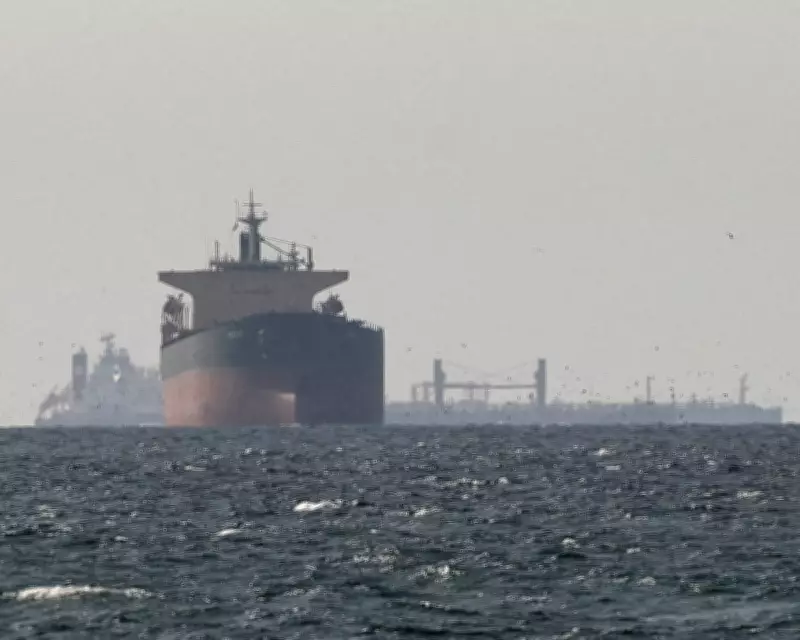
Economist Warns Iran's Strait of Hormuz Transit Fees Could Lead to De Facto Nationalisation
Neil Shearing, the chief economist at Capital Economics, has issued a stark warning regarding Iran's proposed plan to impose transit fees on ships passing through the strategic Strait of Hormuz. According to Shearing, while such fees would have only a modest impact on global energy prices, they would effectively amount to a de facto nationalisation of the shipping route. This development comes amid ongoing talks between the United States and Iran, based on Tehran's 10-point framework, which Washington has reportedly accepted as a starting point. The negotiations are scheduled to commence in Islamabad on Friday, but significant hurdles remain before any ceasefire agreement can translate into a lasting end to the conflict.
Challenges in Ceasefire Negotiations
The proposed framework contains several contentious provisions that are likely to prove difficult for both sides to accept. These include Iran's demand for continued uranium enrichment, the lifting of US and Western sanctions, and the withdrawal of US forces from all bases in the region. Shearing emphasised the complexity of these issues, stating, It is difficult to see these points being agreed to in full. Some compromise will be required and, without it, there's a good chance the agreement will fall apart and the conflict resumes. If a deal is reached, it could align outcomes closer to Capital Economics' baseline forecast, which assumes a de-escalation of the conflict by the end of this month and a resumption of energy flows through the strait.
Impact on Global Energy Markets and Prices
Turning to the specifics of the transit fees, Shearing noted that reports suggest charges of around $1 million to $2 million per oil tanker. Given that tankers typically carry 1 million to 2 million barrels of crude, such fees would add approximately $1 per barrel to the cost of oil transported through the Strait of Hormuz. This would result in a modest increase in global energy prices, but in practice, it could signify a partial nationalisation of the shipping route. In the baseline scenario, oil prices are projected to decline, with Brent crude averaging around $95 per barrel in the second quarter before easing towards $80 by the fourth quarter. However, even with a ceasefire, some economic damage is expected, particularly in the region directly affected, where GDP could contract by around 10%.

Broader Economic Implications and Inflation Concerns
The economic repercussions extend beyond the immediate region. Inflation in major advanced economies is anticipated to rise further, with peaks of around 4.5% in the UK and between 3.5% and 4% in the US and the euro-zone. US inflation data due later this week will provide an early indication of how quickly these pressures are building. Additionally, the rate hikes currently priced into financial markets may prove excessive if energy prices stabilise and growth holds up better than feared. Central banks are unlikely to deliver the tightening now anticipated, which could flatten the front end of yield curves. Equity markets, such as the S&P 500, are expected to fluctuate based on developments in the talks over the next couple of weeks, but a recovery in risk appetite could push the index above 7,000 by mid-year.
Long-Term Damage and Regional Disparities
Despite the potential for a ceasefire, long-lasting damage is anticipated, particularly to LNG facilities in Qatar, which could be disproportionately affected. Oil and natural gas prices, although having fallen sharply recently, are likely to remain elevated compared to earlier in the year. The overall economic damage outside the conflict region is projected to be limited in the baseline scenario, but the situation remains fluid as negotiations progress. Shearing's analysis underscores the delicate balance between diplomatic efforts and economic stability, highlighting the critical importance of the Strait of Hormuz as a global shipping chokepoint.