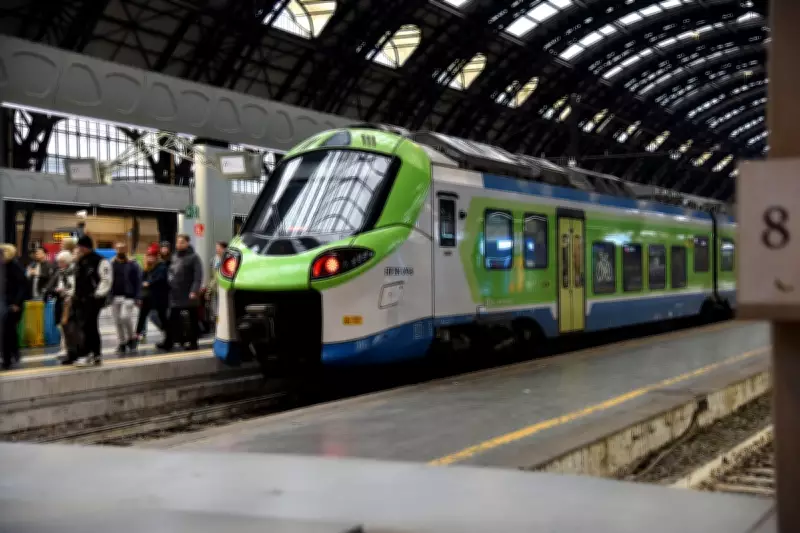
A significant 24-hour train strike across the Lombardy region and Milan is causing major travel disruption for spectators heading to the 2026 Winter Olympics, with Italian rail operator Trenord warning of widespread service changes and cancellations.
Strike Details and Service Impact
The industrial action, organised by the ORSA trade union, commenced at 3am on Monday, 2 February 2026, and is scheduled to continue until 2am on Tuesday, 3 February. This timing critically coincides with the final preparations and initial travel for the Milano Cortina 2026 Winter Olympics, which officially opens on Friday, 6 February.
Trenord has confirmed that regional, suburban, long-distance, and airport rail services it operates across Lombardy may experience significant alterations or be cancelled entirely during this period. The strike is reducing train availability precisely when increased public transport capacity is most needed for the global sporting event.

Guaranteed Service Windows and Contingency Plans
Despite the widespread action, rail services will operate in guaranteed time slots between 6am to 9am and 6pm to 9pm. For airport connections affected during the strike, replacement bus services are being provided to mitigate the impact on international travellers arriving for the Games.
The official Milano Cortina 2026 website had previously indicated that during the Olympics, public transport—including trains, metro, and local services, especially in Milan—was expected to run with extended hours and increased frequency. This strike directly contradicts those planned enhancements.
Union Demands and Historical Context
The ORSA trade union is striking over several unresolved issues, including:
- Pay disputes and wage negotiations
- Working conditions and staff safety concerns
- The renewal of collective labour agreements
This is not the first transport disruption to affect Olympic preparations. In 2025, a strike during an official test event for the Milan-Cortina Olympics forced organisers to negotiate with trade unions. Furthermore, last February, Milan's entire metro, bus, and tram system operated by Azienda Trasporti Milanesi (ATM) ground to a halt, requiring emergency buses to transport spectators.
Organiser Response and Future Hopes
Following the 2025 test event disruption, Milan-Cortina CEO Andrea Varnier commented, "It was interesting to have a test like that and have to come up with an emergency plan." He added, "But we're hoping that there's goodwill between everyone involved during the games so that there are no strikes." This latest industrial action suggests those hopes are being tested as the Games approach.
The 2026 Winter Olympics are scheduled to run from 6 to 22 February at various sites across Lombardy and northeast Italy, making reliable transport infrastructure crucial for the event's success and spectator experience.