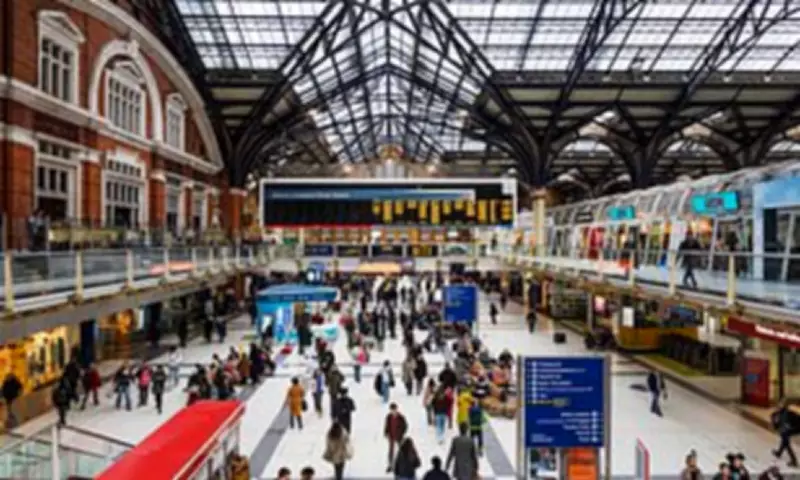
Britain's Busiest Railway Station Braces for Summer Strike Chaos
London Liverpool Street, the nation's most heavily used railway station, faces potential paralysis this summer as train drivers prepare to ballot for industrial action. Greater Anglia workers are set to vote on whether to strike over pay disagreements, with sources revealing a letter from Aslef, Britain's train drivers' union, outlining the options: full strike or action short of a strike.
Ballot Over Broken Commitments
The ballot, closing in mid-May, centres on Greater Anglia's alleged failure to deliver on commitments tied to restructuring negotiations, as agreed in the 2025 pay agreement. This follows a stalemate between Aslef and the operator, with the union claiming a clause in the 2025 deal has been breached.
The contentious clause states: 'Recognising the particular circumstances which have meant that Greater Anglia driver salaries have not progressed to the degree of those of neighbouring operators, upon successful conclusion of the drivers 2025 pay award, Greater Anglia is committed to further engage in meaningful pay and productivity discussions with ASLEF representatives.'

It continues: 'The joint aim will be to identify ways in which base salary levels can be improved to be more competitive with neighbouring operators, while providing appropriate value to Greater Anglia by way of enhanced service resilience, or cost reductions through productivity.'
Discussions were intended to cover the 2026 and 2027 pay anniversaries, with a commitment to start by 1 September 2025 and conclude by 31 January 2026, followed by approvals with the DfT and Treasury.
Union Accuses Operator of Withdrawing from Talks
An Aslef spokesperson told the Daily Mail that two meetings occurred in November to discuss productivity talks, but since then, Greater Anglia has withdrawn, citing a lack of authority from the Department for Transport. The union labelled this 'clearly unacceptable.'
A Greater Anglia spokesperson responded: 'We will be looking to engage with the RMT to try and find a way forward and avoid any disruption or inconvenience for our passengers.' Notably, this statement references the RMT union, though the ballot involves Aslef drivers.
Impact on Critical Transport Hub
If strikes proceed, commuters and tourists using Liverpool Street Station, Britain's busiest for three consecutive years, will face significant chaos. Greater Anglia operates major services across the East of England, handling over 100 million passengers annually, including the key London Liverpool Street to Norwich commuter route.
According to Office of Rail and Road data, Liverpool Street saw an estimated 98.0 million entries and exits in the year to March, up 3.7% from 94.5 million the previous year, outpacing stations like Waterloo, Paddington, and Tottenham Court Road.
Historical Context and Industry Reactions
This dispute echoes 2024, when Greater Anglia workers joined wider Aslef walkouts over a prolonged pay dispute. At that time, Aslef cited members lacking a pay rise for five years and accused the government of 'giving up' on resolution.
A Rail Delivery Group spokesman apologised for 'wholly unnecessary strike action' that disrupts journeys and damages an industry receiving up to £54 million weekly in taxpayer support post-Covid.
A Department for Transport spokesperson emphasised: 'The Transport Secretary and rail minister have already facilitated a pay offer that would take train drivers' average salaries up to £65,000 - almost twice the UK average salary.' They added that Aslef is the only union still striking after government deals with others, urging the union to put the offer to members instead of causing disruption.