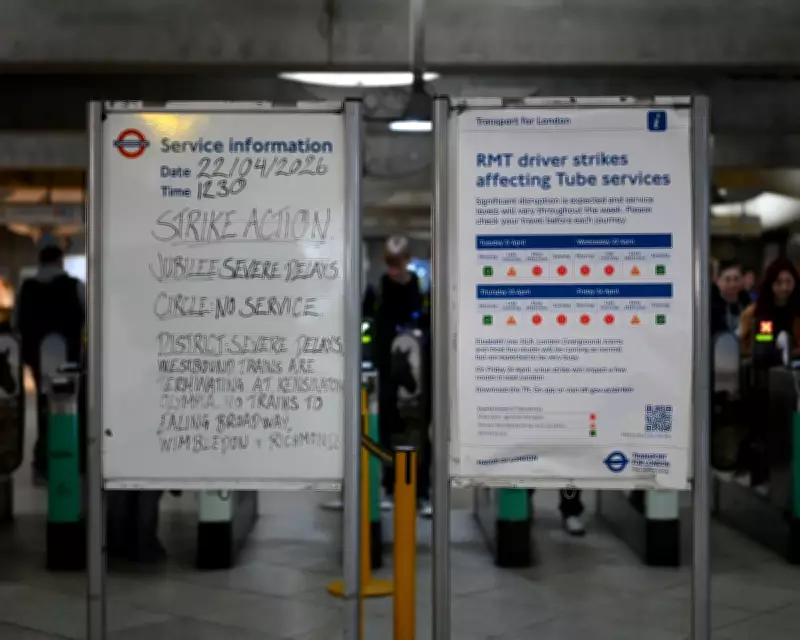
London Faces Second Tube Strike Amid Four-Day Week Dispute
Commuters in London are bracing for further disruption as a second 24-hour tube strike commenced at midday on Thursday, following an initial strike that began on Tuesday. The industrial action, led by drivers from the RMT union, is in protest against London Underground's proposals for a voluntary four-day working week. No negotiations have occurred to resolve the dispute, leaving services significantly reduced across the network.
Reduced Services and Alternative Transport Options
During the strikes, tube services have been curtailed but not entirely cancelled on most lines. Transport for London (TfL) managed operations by starting services at 7:30 am on Wednesday to minimise overall impact. Early commuters were forced to seek alternative transport methods, with many turning to cycling, walking, or other rail services.
Notably, disruption levels have been markedly lower compared to strikes in September last year. This reduction is attributed to companies in the capital relaxing rules to permit more remote work, coupled with fine weather encouraging active travel options. Some passengers reported quieter than usual trains on operational lines, though most still endured long waits and crowded conditions.

Surge in E-Bike and Bike Rentals
TfL data revealed a significant increase in alternative transport usage. Santander bike hires surged by 60% on Tuesday morning, while Voi, an operator of e-scooter and e-bike rentals in London, recorded a 52% rise in rides compared to the previous week, with many new users signing up. This shift highlights how Londoners are adapting to the strike-induced transport challenges.
Service Disruptions and Future Strike Plans
Passengers are advised to check travel updates for Thursday and Friday, as services will be reduced from midday to 8 pm during strike hours, with first trains resuming at 7:30 am on Friday. Key lines such as the Piccadilly, Waterloo & City, and Circle lines are expected to have no service, along with sections of the Metropolitan and Central lines. However, other rail services including the London Overground, Elizabeth line, and DLR will continue operating.
The RMT has announced plans for four additional 24-hour strikes in May and June if the dispute remains unresolved, potentially prolonging the disruption for London commuters.
Union and TfL Perspectives on the Four-Day Week
The RMT union has voiced strong objections to the four-day week proposal, labelling it an "imposed, fake four-day week" and raising concerns about shift length and fatigue impacting safety. A spokesperson stated that strikes proceeded because TfL reneged on promises to negotiate all aspects of the proposal, failing to provide written assurances that members could retain current shift patterns and terms.
In contrast, Nick Dent, Director of Customer Operations for London Underground, emphasised that the changes would be voluntary, with no reduction in contractual hours, and drivers wishing to maintain a five-day week could do so. He urged the RMT to call off the strike and engage in discussions to avoid further disruption, noting that while more services ran than anticipated, significant issues are expected to persist.
Aslef union, representing over half of London's tube drivers, has supported the four-day week plan and did not participate in the strikes, contributing to the varied service levels across the network.