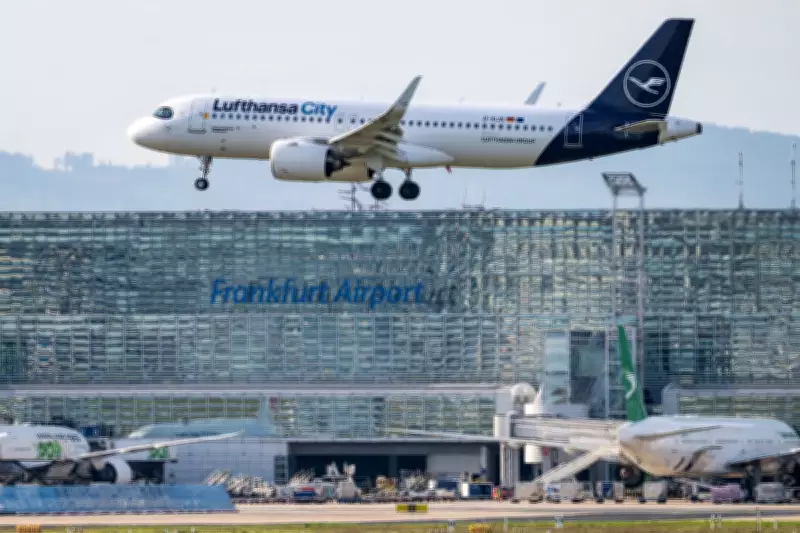
Lufthansa Grounds Planes as Iran War Sparks Global Aviation Fuel Crisis
The escalating conflict involving Iran has plunged the global aviation industry into a severe fuel crisis, with Germany's Lufthansa becoming the first major carrier to ground dozens of aircraft. This dramatic move comes as airlines worldwide sound urgent alarms about rapidly diminishing jet fuel supplies and skyrocketing prices, threatening to disrupt travel during the crucial Northern Hemisphere summer season.
Industry-Wide Disruption and Financial Strain
Since the U.S.-Israeli military campaign against Iran began on February 28, carriers have implemented multiple emergency measures including significant air fare increases, new fuel surcharges, and route reductions to preserve cash and manage costs. Lufthansa announced on Thursday that it will immediately ground up to 27 planes from its CityLine subsidiary along with four older Lufthansa-branded jets, a decision that has rattled employee unions already dealing with recent costly strikes.
British budget airline easyJet simultaneously warned that bookings are lagging behind last year's levels, with its shares falling as much as 9% during trading before closing 5% lower. Ryanair and Wizz Air also experienced substantial declines of 6% and approximately 3% respectively, reflecting widespread investor concern about the industry's fragile profit margins.

Critical Fuel Shortages and Regional Impacts
The aviation fuel crisis has reached critical levels in multiple regions, with Nigerian airlines warning they may cease all operations as soon as Monday unless prices decrease from their current levels, which have surged about 270% since late February. "Currently, airline revenues are insufficient to cover the cost of fuel alone," stated the Airline Operators of Nigeria in a dire assessment of the situation.
Even a temporary two-week ceasefire has provided minimal relief, as the ongoing closure of the strategic Strait of Hormuz continues to remove roughly one-fifth of global oil and liquefied natural gas supplies from the market. Compounding these challenges, refineries require substantial time to repair damage sustained during the conflict, further constraining fuel production capacity.
Changing Travel Patterns and Market Uncertainty
EasyJet CEO Kenton Jarvis revealed during a media call that travellers are now booking flights much closer to their departure dates, with an observable shift toward more domestic and city destination travel. "It's a later booking window...And if there is any shift, it's a little bit away from the eastern Mediterranean, a little bit towards the western Mediterranean," Jarvis explained, though he noted that travel to destinations like Cyprus, Egypt, and Turkey is showing gradual signs of recovery.
Despite launching new Asian routes to capitalize on shifting demand patterns, Lufthansa has committed to continuing its broad restructuring strategy with promises to investors of a more streamlined and cost-efficient operation. However, airlines acknowledge the extreme difficulty in predicting how consumer demand might evolve during the second half of 2026 as tourists remain apprehensive about potential travel turmoil and continued price increases.
Global Scramble for Alternative Fuel Supplies
The conflict has triggered international panic buying, strategic stockpiling, and intense diplomatic negotiations for jet fuel, though countries previously reliant on Middle Eastern supplies face significant challenges in compensating for the regional shortfall. The European Union is developing emergency plans to maximize refinery output while importing record quantities of jet fuel from the United States, acknowledging that approximately 75% of its jet fuel imports traditionally originate from the Middle East.
Australia's Prime Minister Anthony Albanese embarked on a Southeast Asian tour this week seeking to secure fuel supplies and cushion the economic impact, announcing that Australia has already obtained 100 million litres of diesel from Brunei and South Korea using newly expanded strategic reserve powers. These efforts come as a fire at Australia's largest oil refinery intensifies upward pressure on prices, adding to existing worries about national fuel security.

Analysts warn that further capacity reductions, additional aircraft groundings, and more surcharges appear increasingly likely as markets closely monitor airline financial results for indications of the conflict's full impact on an already strained industry. Dudley Shanley, head of aviation at Goodbody, noted that airlines will need to revise their profit outlooks downward, with slower bookings and reduced yields contributing to growing investor skepticism about the sector's near-term prospects.