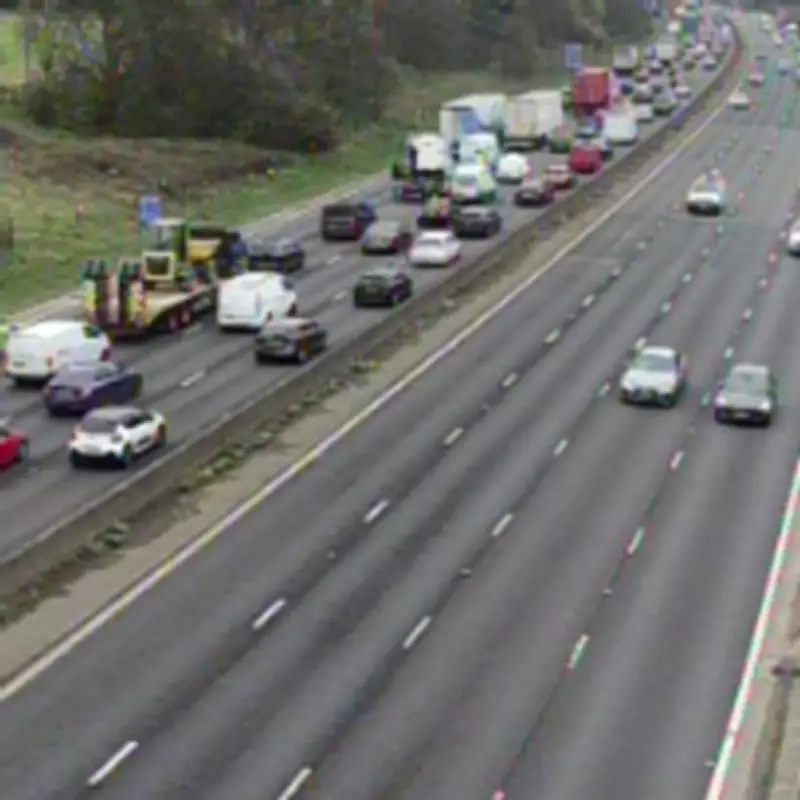
M56 Motorway Crash Blocks Eastbound Carriageway Near Manchester Airport
A major collision on the M56 motorway in Manchester has led to severe traffic disruption this morning, particularly affecting routes near Manchester Airport. The eastbound carriageway is partially blocked following the accident, which occurred after Junction 2 for the A560 at Sharston.
Traffic Chaos and Long Queues Reported
According to traffic monitoring service Inrix, the incident has resulted in slow-moving traffic and extensive queues. Reports indicate that congestion is tailing back to Junction 4 at Wythenshawe, a key area close to Manchester Airport. This has caused significant delays for commuters and travelers, with many facing extended journey times during the morning rush hour.
Emergency services are currently at the scene, working to manage the situation and clear the blockage. However, specific details about the nature of the crash, including any injuries or vehicle involvement, have not yet been confirmed by authorities. Motorists are advised to avoid the area if possible and seek alternative routes to minimize further congestion.

Impact on Local Transport and Airport Access
The blockage on the M56 eastbound is particularly disruptive due to its proximity to Manchester Airport, one of the UK's busiest airports. Travelers heading to or from the airport may experience delays, and airport officials have urged passengers to allow extra time for their journeys. Local roads in the surrounding areas, including Altrincham Road and Sharston, are also likely to be affected by increased traffic as drivers divert from the motorway.
Updates on the situation are expected throughout the day, with traffic authorities monitoring the scene closely. In the meantime, drivers are encouraged to check real-time traffic updates via official sources like Inrix or local news outlets for the latest information on road conditions and potential rerouting options.
This incident underscores the ongoing challenges of motorway safety and traffic management in busy urban areas, highlighting the need for prompt emergency response and effective communication during such disruptions.