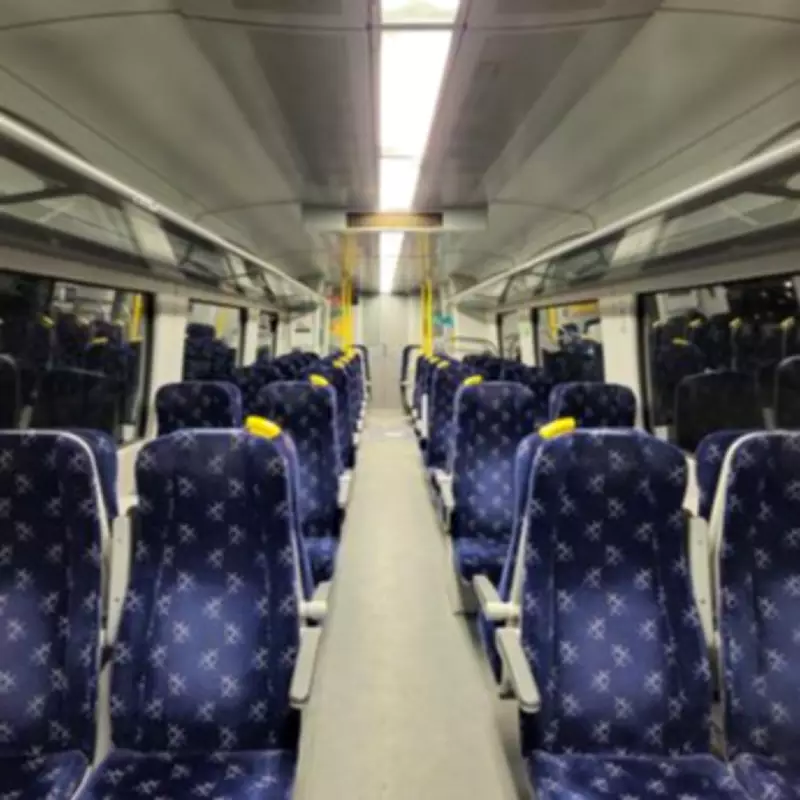
A curious train passenger was left utterly perplexed by the presence of 'odd shapes' adorning the aisle seats during a recent journey to London, prompting them to turn to social media in search of an explanation for their purpose.
The Puzzling Query That Sparked Widespread Debate
Have you ever settled into a train seat and found yourself pondering the function of that small, hard plastic disc or unusual form positioned on the top of the seat in front? This exact question occupied the thoughts of one traveller, who decided to seek clarity by posting on Reddit. "What are these 'shapes' on the train seats for?" they inquired, sharing two photographs of an empty carriage. "So I'm visiting London and my family and I cannot figure out what these different shapes are for on the seats. Some are circles, some shaped like cat ears." The passenger went on to speculate, suggesting they might be grips for stability while walking down the aisle or perhaps symbols denoting specific sections of the train.
The Overwhelming Consensus: Safety Handles for Commuters
The online query ignited a flurry of responses, with the predominant and most widely accepted explanation firmly rooted in passenger safety. One Reddit user elaborated, "Trains get very busy during rush hours, meaning passengers often have to stand, and at peak times the carriages can be packed to capacity. Without handholds, people would be stumbling and awkwardly grabbing at seats with every jolt of the train." Another commenter affirmed this view, stating, "I'm pretty sure they're just handles so you don't grab onto the person who's sat in the seat if the train jostles about when you're walking." A third contributor concurred, noting, "Just handles so when you're walking and we go around a sharp bend you don't fall over. Nothing fancy, even though they always look unusually shaped. Usually most common is an oval or rectangle or circle shape. But I've seen a triangular one once years ago."

Explaining the Variety of Shapes and Designs
A fourth Reddit participant echoed this perspective while offering insight into the diversity of shapes observed. "They're seat handles, for standing commuters to hold onto. As for the different shapes, they're because when the trains were ordered, the seating layout inside some of the carriages were changed mid-order, since there were more passengers than expected. More passengers equals more seats, so some of the cat-ear seating was replaced with circular-handled seats." This account suggests that practical adjustments during manufacturing and train configuration led to the assortment of designs, ranging from simple circles to more distinctive cat-ear forms.
A Secondary Historical Function: Reserved Seat Markers
However, other respondents highlighted an additional, though now largely obsolete, purpose for these fixtures. One individual explained, "If it has a slot in the top, it's where they used to put the paper markers to say which seats were reserved and which were available. If not, as many have said, probably just handle." Another observer noted, "They are handles that double as place marker holders for reserved seats." A third recalled, "They used to hold tickets for reserved seats, if you took a from above shot there would be a slit." This dual functionality served commuters in the era of paper ticketing, providing a practical means to display reservation status, though the rise of e-tickets has rendered this feature less common in contemporary rail travel.
Ultimately, the mystery of the train seat shapes has been resolved, revealing a blend of safety innovation and historical practicality that continues to support passengers on their journeys across the UK's rail network.