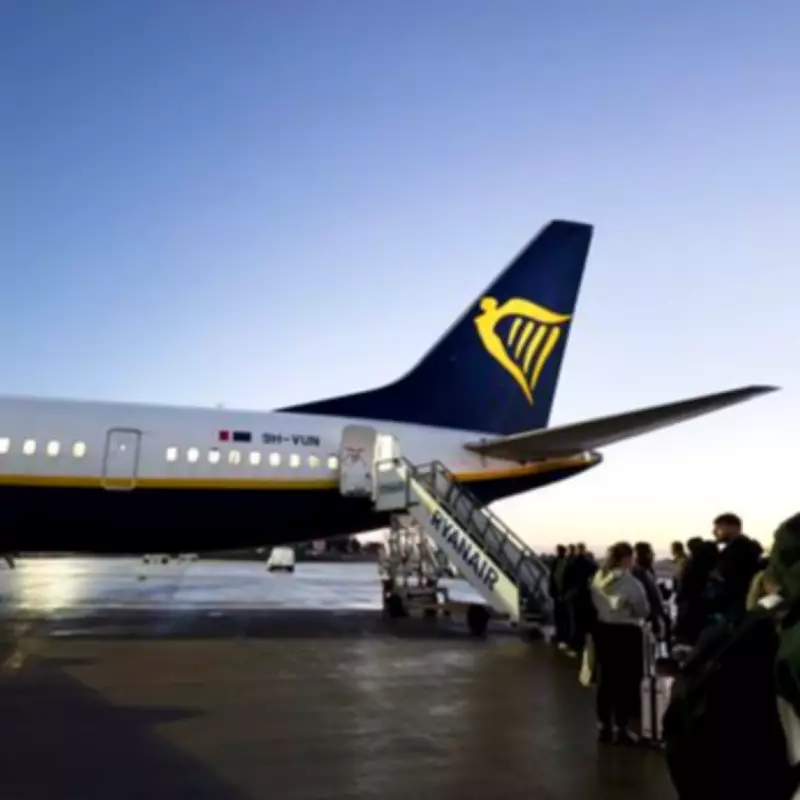
Ryanair and easyJet Brace for Significant Baggage Policy Shift Amid EU Regulatory Push
Passengers flying with budget carriers Ryanair and easyJet could soon benefit from more generous cabin baggage allowances under proposed European Union rule changes. However, industry experts and airline executives have issued stark warnings that these adjustments may lead to increased base fares and operational disruptions.
Details of the Proposed EU Regulatory Amendments
Currently, travellers on basic fares with these airlines are restricted to one small personal item, with any additional luggage incurring supplementary charges. Recent amendments to EU regulations have already compelled Ryanair to increase the permitted dimensions of its personal bags to 40 x 30 x 20cm, marking a 20% expansion from the previous 40 x 20 x 25cm limit. easyJet's personal bag specifications already comply with these updated requirements.
Now, further regulatory changes under consideration by the European Parliament could entitle passengers to bring both a cabin bag measuring up to 100cm in combined dimensions and a personal item without facing extra costs. The parliamentary proposal, which received decisive support in February, would grant all passengers the right to carry a small suitcase alongside the currently permitted free under-seat bags.

Potential Impact on UK Short-Haul Flights
The proposed legislation, which requires approval from the European Council to become law, would apply to all passengers travelling to or from an EU airport on an EU-based carrier. This directly affects the overwhelming majority of short-haul flights departing from the United Kingdom, fundamentally altering the baggage policies of prominent low-cost airlines.
Under the new framework, passengers would be permitted to bring on board, at no additional cost, one personal item such as a handbag, rucksack, or laptop, plus one small piece of hand luggage with maximum combined dimensions of 100cm and a weight limit of seven kilograms.
Airline and Consumer Advocacy Concerns
Despite the apparent benefits for travellers, industry analysts caution that mandating free hand luggage will reduce pricing flexibility, drive up base fares, and ultimately force many passengers to pay more for services they might not require. Zoltán Kész, Government Affairs Manager at the Consumer Choice Center, emphasised that consumers benefit when airlines can compete on price, service, and flexibility.
"Mandating bundled carry-on luggage is not a pro-consumer reform; it is a market distortion that increases fares for everyone, including travellers who purposefully choose more affordable tickets," Kész stated. "Political micromanagement of airline pricing does not improve transparency. If policymakers want consumers to make informed choices, the better approach is to require clearer disclosure of baggage fees and fare conditions, not to force a uniform product offering for every passenger."
Strong Opposition from Airline Leadership
easyJet has labelled the proposals to enforce free additional baggage a "lunatic idea" and similarly warned that fares are likely to rise as a consequence. Earlier this year, Kenton Jarvis, easyJet's chief executive, described giving all passengers the right to extra free carry-on baggage as "crazy European legislation" and "terrible for the consumer."
Jarvis added, "We would go back to the days of having to offload cabin bags and put them in the hold – it was one of the number one causes of delayed boarding in the old days."
Ryanair chief executive Michael O'Leary has also criticised the policy, arguing last year that the concept of everyone being entitled to two free bags on board is unimplementable due to space constraints on largely full aircraft. "About 50% of the passengers can bring a trolley bag and we do that using the priority boarding service," O'Leary explained. "Any rules that would alter that would be infringing EU rules guaranteeing the freedom of airlines to set pricing and policies, and we don't believe that will happen. I think it's unlikely to play out but there's clearly going to be some kind of negotiation between the parliament and the commission on passenger rights."

The ongoing debate highlights the tension between consumer protection initiatives and airline operational realities, with the outcome poised to reshape the travel experience for millions of passengers across Europe.