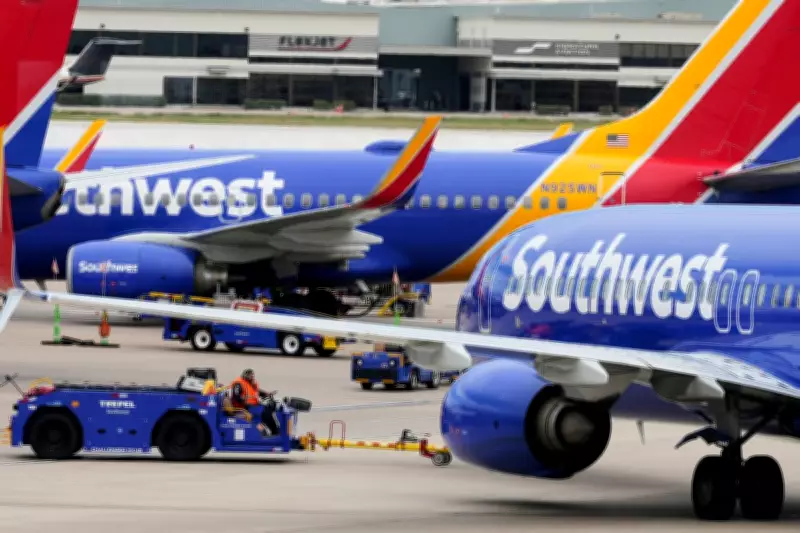
Southwest Airlines is implementing a significant new safety measure, restricting passengers to carrying only one portable device charger on its flights. The policy, set to commence on April 20, 2026, aims to mitigate the growing fire hazard associated with lithium batteries commonly used in these power banks.
Stricter Limits on In-Flight Chargers
According to an Associated Press report, Southwest announced the regulation on Tuesday. Passengers will be prohibited from storing portable chargers in overhead bins and will not be permitted to recharge them using the aircraft's power outlets. This builds upon the airline's existing requirement that such devices remain readily accessible to flight attendants during flights, allowing for swift intervention if overheating occurs.
Addressing a Clear and Present Danger
Portable chargers typically utilise lithium-ion batteries, which pose a unique threat in aviation. The U.S. Fire Administration notes that when these batteries ignite, they release toxic fumes—particularly hazardous in the confined space of an airplane—and can reignite even after being extinguished.

"We don't plan to search bags or confiscate chargers, but we will stress to customers the potential dangers of the batteries when they book flights and arrive at the airport," said Dave Hunt, Southwest's Vice President of Safety and Security, in a statement to the Associated Press.
Surpassing International Recommendations
The International Civil Aviation Organization (ICAO) published recommendations in March 2026 suggesting airlines limit passengers to two portable chargers. Southwest's new single-charger policy goes a step further, reflecting heightened concern.
Data underscores the urgency. The Federal Aviation Administration reported 97 lithium battery incidents in 2025, a figure that continues to rise annually. Jeff Marootian, CEO of UL Standards & Engagement, which sets guidelines for device manufacturers, told the AP his organisation hears of roughly two lithium battery-related incidents weekly, marking a 42 percent increase from 2024.
Recent Incidents Highlight Risks
Several alarming events have brought this issue to the forefront. In January 2025, an Air Busan plane in South Korea was evacuated after a fire, believed to be caused by a power bank's lithium battery, burned through the aircraft's roof. In February 2025, an Alaska Airlines flight returned to a Kansas airport when a power bank overheated and caught fire, requiring the crew to use a fire extinguisher and thermal containment bag.
Long-Term Solution: In-Seat Power
To alleviate passenger concerns about device battery life, Southwest concurrently announced that its entire fleet will be equipped with in-seat power outlets by mid-2027. The airline hopes this upgrade will reduce reliance on external chargers altogether.
"Access to onboard power will continue to expand. By mid-year 2027, our entire fleet will feature in-seat power, reducing reliance on portable chargers and supporting a more consistent, convenient inflight experience," Hunt stated in the airline's announcement.
The Independent has contacted Southwest Airlines for further comment on the new safety protocol.