Stonehaven Train Crash Inquiry Hears Death Toll Could Have Been Far Higher
A fatal accident inquiry into the devastating Stonehaven train derailment has been told the number of fatalities would likely have been significantly higher had the service been carrying a full complement of passengers. The sobering assessment was delivered as the formal hearing into the tragedy commenced at Aberdeen Sheriff Court.
The Derailment and Its Immediate Aftermath
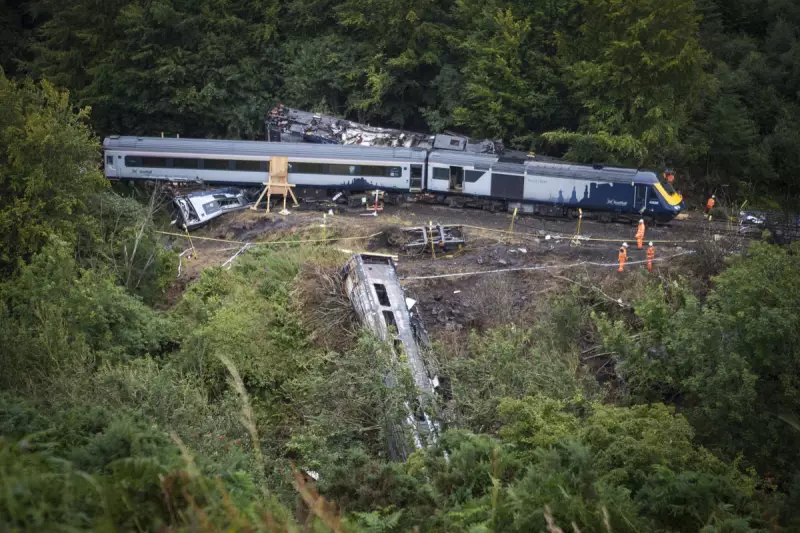
The 6.38am Aberdeen to Glasgow service derailed on August 12, 2020, after colliding with debris washed onto the track near Carmont, Aberdeenshire. The incident followed a period of exceptionally heavy rainfall. Of the nine people aboard the train, three lost their lives: driver Brett McCullough, 45; conductor Donald Dinnie, 58; and passenger Christopher Stuchbury, 62. The remaining six passengers sustained injuries.
Nick Bucknall, an inspector with the Rail Accident Investigation Branch (RAIB), provided detailed evidence to the inquiry. He stated that the passenger count was unusually low that day due to the Covid-19 pandemic, a factor that likely prevented a greater catastrophe. The damage to the high-speed train was very extensive, Mr Bucknall told the court. A significantly higher casualty toll would have been likely if the train had been heavily loaded with passengers.

Sequence of Events and Contributing Factors
The inquiry heard a minute-by-minute account of the crash. Data showed the train was travelling at 73mph, just below the normal line speed, when the driver's view of the debris was obstructed until less than 120 metres away. The emergency brake was applied roughly one second before impact.
Mr Bucknall described the violent derailment:
- The leading power car derailed left, deviating as the track curved right.
- After about 60 metres, it struck a bridge parapet, destroying part of it before falling off the bridge.
- The cab detached on impact with the ground and the power car caught fire.
- The following carriages were scattered, with one overturning, another running down an embankment and catching fire, and a fourth coming to rest on top of the first coach.
The central cause was identified as a faulty drainage system that failed under the intense rainfall, washing gravel and debris onto the tracks. The RAIB investigation concluded the drain, installed by contractor Carillion, was not built to the designer's specifications. Had the drainage system been installed in accordance with the design, it is highly likely to have safely accommodated the flow of surface water, Mr Bucknall stated. Carillion, which entered liquidation in 2018, is not a party to the ongoing FAI.
Systemic Failures and Safety Recommendations
The inquiry was told of further systemic issues. Despite awareness of safety risks linked to extreme rainfall, Network Rail staff were not required to, and did not, impose speed restrictions on the line that morning. The signaller and driver were not required to, and consequently did not, restrict the speed, Mr Bucknall explained.
He also highlighted that the protection of train drivers remains a safety concern, with the RAIB recommending the fitting of additional impact protection such as seatbelts and airbags.
Changes Implemented Since the Tragedy
The hearing was informed of several safety improvements enacted since the accident:
- A new, higher-capacity drainage system has been installed at the crash site to prevent future washouts.
- Guard rails have been fitted on the approach to the Carmont bridge to guide a partly derailed train away from the structure.
- Scotland's Railway has established a permanently-staffed weather desk to monitor conditions and advise on precautionary actions.
A Network Rail spokesperson said: We've made significant changes to how we manage the risk of severe weather since the accident and our work to make our network more resilient will continue. The company reiterated its commitment to supporting the inquiry and implementing the RAIB's recommendations.

The inquiry, before Sheriff Lesley Johnson, continues. Earlier testimony confirmed the three men who died suffered multiple blunt force injuries judged to be non-survivable, with death likely immediate.