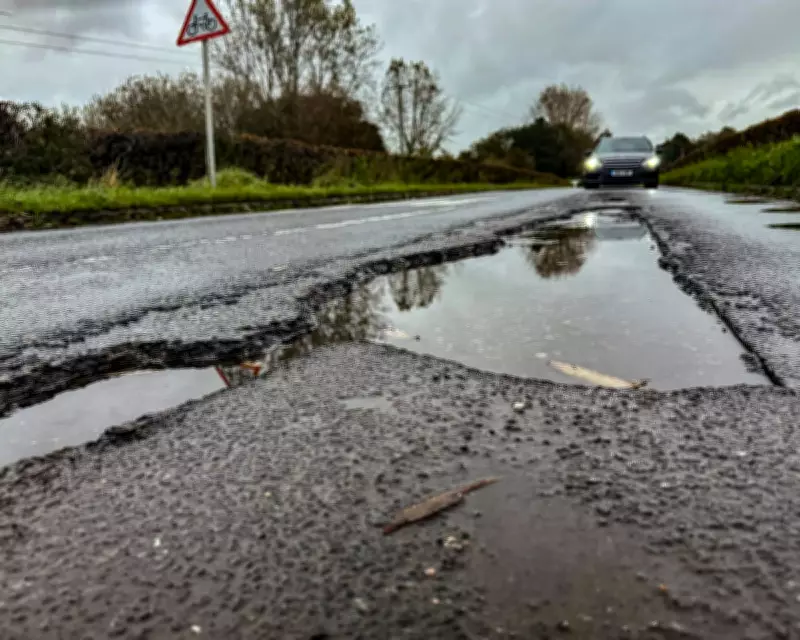
SUVs Worsen Britain's Pothole Crisis, Scientists Warn
Experts have issued a stark warning that drivers opting for SUVs are inadvertently compounding the pothole problem across Britain. New research indicates that hundreds of thousands of motorists have purchased larger, heavier vehicles specifically to navigate damaged road surfaces, yet this choice is contributing to the very issue they seek to avoid.
The Weighty Impact of Heavier Vehicles
Scientists highlight that the cumulative effect of increasing numbers of heavier vehicles is a significant factor in the deterioration of Britain's roads. SUVs accounted for more than half of the 2 million new cars sold in the UK last year, with a smaller but growing proportion of the 7 million secondhand cars sold also being SUVs. Recent polling by Opinium, conducted for Kwikfit, shows that almost one in eight drivers in regions such as London and Yorkshire chose to buy an SUV or heavier car partly due to concerns about road conditions. Nationwide, 6% of drivers reported being influenced to purchase an SUV primarily because of poor road conditions, a figure that doubled among those who had previously suffered vehicle damage from potholes.
Expert Insights on Road Wear
Dr Ali Rahman, an assistant professor of civil engineering at the University of Leeds, explained: "The rising prevalence of SUVs does exacerbate pothole formation, because higher axle loads increase surface stresses, crack initiation, and road wear. They contribute a secondary but growing share of the problem, especially in cities where the road network was not designed for heavier passenger vehicles." Prof Anna Goodman of the London School of Hygiene and Tropical Medicine added: "The typical SUV exerts around five times more force on the road than the typical passenger car. The dramatic shift to SUVs in the past 20 years – from 3% of cars on the road in England to over 30% – is expected to have played some role in increasing wear and tear damage."

Prof Christian Brand, emeritus professor in transport at Kellogg College, Oxford, noted that SUVs are typically 200-300kg heavier than hatchback or sedan cars. While a single truck can cause as much damage as many cars, "the rapid growth in SUVs means their cumulative impact, particularly on urban roads with lighter construction, may not be negligible and is increasingly relevant for local maintenance pressures." The Institution of Civil Engineers has also stated that heavier vehicles, including electric cars, are a factor in pothole formation and reducing road lifespan.
Policy Responses and Industry Estimates
In response to these challenges, London is considering imposing extra charges on large SUVs, primarily due to safety risks and space consumption. Transport for London is conducting studies on their effects on safety and congestion before announcing possible measures. A spokesperson for Mayor Sadiq Khan said: "As part of their research TfL will look at the full impact of the continued growth in size and weight of these large SUVs, including any impact they have on the state and condition of London's roads."
According to the Asphalt Industry Alliance, a road repair trade body, the cost of fixing all potholes and local roads across England and Wales has reached a record £18.6 billion. Steve Gooding, director of the RAC Foundation, commented: "Is it any wonder people are turning to rugged off-road oriented vehicles with the shocking state of many roads? Big wheels with all-terrain tyres are a better bet for bouncing over potholes but rarely come with the smaller, lighter cars that drivers might otherwise choose as perfectly suitable for the trips they need to make." Jack Cousens, head of roads policy at the AA, added: "Sadly, all vehicles are at the mercy of potholes – regardless of what someone is driving, potholes are causing damage."
While the primary cause of pothole formation remains the freezing and thawing of rainwater during wet winters, and the heaviest vehicles like lorries are likely to cause immediate damage, the growing weight of passenger cars is undeniably worsening road surfaces. This creates a vicious cycle where drivers buy SUVs to cope with poor roads, only to accelerate the degradation further.