

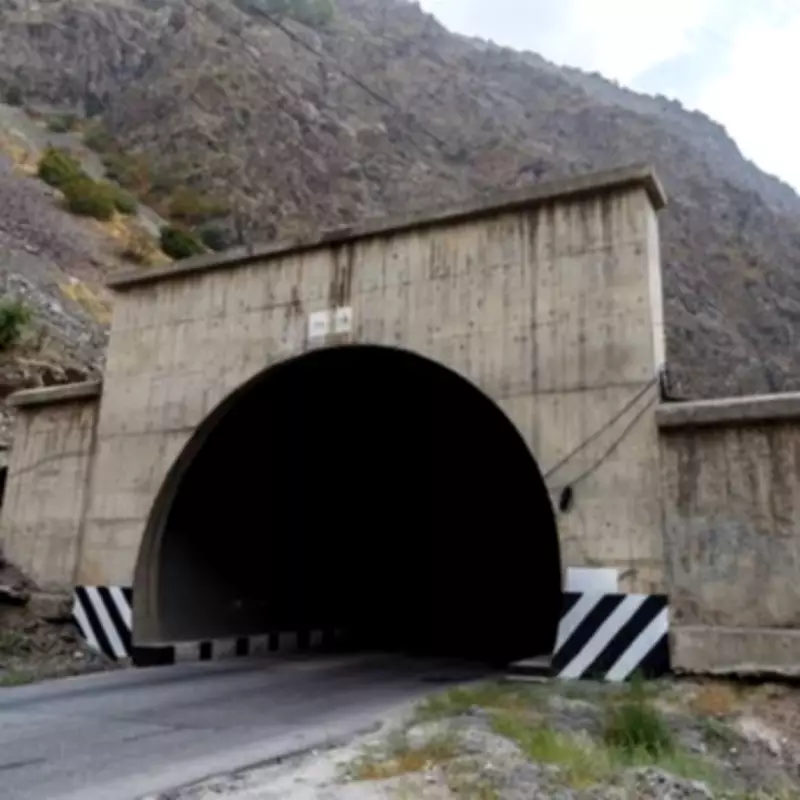
Deep within the mountainous terrain of Tajikistan lies a notorious passage that has earned the grim moniker "Tunnel of Death." The Anzob Tunnel, a critical but treacherous link on the M34 highway, presents a harrowing journey where breathing becomes a painful struggle and darkness reigns supreme.
A Dark and Suffocating Passage
Stretching five kilometres at an altitude of 2,700 metres, the Anzob Tunnel connects Dushanbe, the capital of Tajikistan, with Khujand, the nation's second-largest city. Constructed in 2006 to handle heavy traffic, this tunnel is alarmingly devoid of basic safety features. It lacks proper lighting and ventilation systems, plunging drivers into pitch-black conditions filled with thick, toxic exhaust fumes.
According to specialists at Dangerous Roads, the air inside is so polluted that breathing becomes "hard and painful due to the thick mixture of exhaust gases." The absence of ventilation means these dangerous gases accumulate, creating a suffocating environment. Reports indicate that only one solitary fan operates somewhere in the middle of the tunnel, providing minimal air movement that is utterly insufficient to disperse the poisonous atmosphere.

Engineering Flaws and Deadly Hazards
The perilous nature of the Anzob Tunnel extends beyond its air quality. The roadway is marred by massive, axle-snapping potholes that threaten to swallow vehicles whole. Adding to the danger, flooding is a frequent issue, with water accumulating due to engineering faults and transforming sections into treacherous tunnel ponds. In some areas, the flooding is so severe that an entire SUV could submerge if driven into the wrong spot.
Compounding these risks, the tunnel has no traffic signals to manage the thousands of vehicles that pass through daily. There are also no road markings, leaving drivers to navigate in complete darkness, often choosing the middle of the tunnel as a common, albeit risky, path. Oncoming cars and trucks suddenly emerge with flashing headlights, forcing others to scramble out of the way.
Human Cost and Partial Renovations
Locals have shared chilling accounts of fatalities within the tunnel, often resulting from traffic jams that trap people inside, where they succumb to carbon monoxide poisoning. The combination of poor air quality, darkness, and chaotic traffic flow has cemented the tunnel's deadly reputation.
In 2018, the tunnel underwent partial renovations, including the installation of drainage systems and repairs to some potholes. However, experts assert that substantial improvements are still urgently needed. The tunnel remains a dark and dangerous passage, with hardly any lights inside and ventilation that is critically inadequate.
Traveler Experiences and Scenic Rewards
Despite its dangers, some adventurous travelers have braved the Anzob Tunnel and lived to tell the tale. One visitor detailed their experience on Tripadvisor, noting, "We went through this tunnel twice with no ill effects other than fear!" They described the two-way traffic, darkness, and lack of ventilation as scary but survived the ordeal. The drive, they added, was scenic and fabulous, making it well worth the risk for those seeking thrill amidst peril.
Ultimately, the Anzob Tunnel stands as a stark reminder of the challenges faced in remote infrastructure projects. While it serves as a vital connection between two major cities, its condition poses serious risks to all who dare to traverse it, earning its place as one of the world's most dangerous roads.






