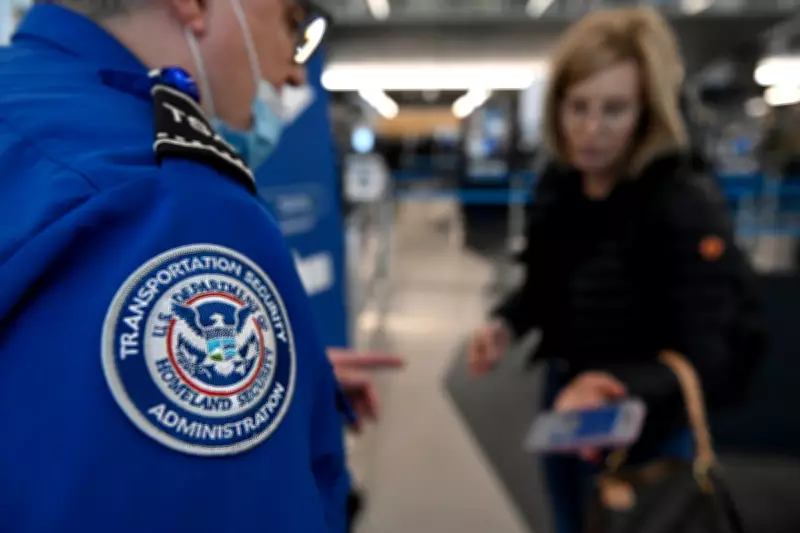
TSA Staffing Crisis Could Force US Airport Closures, Experts Warn
Problems at United States airports could escalate far beyond lengthy security queues and missed flights if Congress fails to resolve funding for Transportation Security Administration officers. Federal authorities have issued stark warnings that severe staffing shortages might necessitate closing certain smaller airports to both passengers and commercial air traffic.
Unprecedented Disruption Looms
While no specific airports have been publicly identified as potential closure candidates, Transportation Secretary Sean Duffy and acting TSA leadership anticipate increased absenteeism among airport screeners. This follows Friday's scheduled missed paycheck, marking the second full pay period without compensation since mid-February. TSA personnel have been mandated to work without pay since Department of Homeland Security funding expired on February 14.
"This level of disruption is unprecedented," declared Ha Nguyen McNeill, the agency's acting administrator, referring to the financial pressures causing high absentee rates among TSA workers. "We are being forced to consolidate lanes, and may have to close smaller airports if we do not have enough officers."

During a House committee hearing on Wednesday, McNeill declined to specify when closures might occur, describing TSA officer shortages as "a fluid, challenging and unpredictable situation."
Union Reveals Contingency Plans
The labor union representing TSA officers disclosed on Thursday that the agency has compiled a list of approximately 75 airports that could be shuttered to redirect officers to major hubs experiencing excessive security wait times. This strategy suggests that smaller airports located near larger facilities might be impacted, not merely tiny airports with minimal staffing.
"The agency has to look at it as, 'Wow man, at the end of the day, we still have to do essential work and protect the American people.' It becomes very difficult to do when you have this going on," explained Johnny Jones, secretary and treasurer for Council 100 of the American Federation of Government Employees.
Department of Homeland Security data indicates approximately 11% of officers nationwide missed scheduled shifts this week, with some airports experiencing absentee rates exceeding 40% on certain days. Massive security lines have overwhelmed terminal lobbies, extending outside doors at airports in Houston, New Orleans, and Atlanta.
Political Maneuvering and Emergency Measures
The White House proposed the extraordinary measure of declaring a national emergency to compensate TSA workers on Thursday, though concrete details remain unclear. Aviation security expert Sheldon Jacobson, whose research contributed to TSA PreCheck design, suggested administration officials might be floating airport closure possibilities to pressure Congressional funding negotiations.
"This is a situation that, once again, the politicians are trying to move the needle to get people to compromise by making threats. Are these threats realistic? Yes. Are they a good idea? No," Jacobson stated.
Experts noted that deploying federal immigration officers to assist with security staffing has proven ineffective. While the White House claimed ICE officers helped reduce lines through crowd monitoring and ID verification, TSA union leaders and critics argue these personnel lack necessary expertise and experience.
Vulnerable Airports and Systemic Risks
Larger airports with hundreds of officers can maintain operations by closing some checkpoints and TSA PreCheck lanes. However, the smallest among 440 US airports with security screeners lack this flexibility. Facilities with single checkpoints might require temporary shutdowns if insufficient officers report for shifts.
"Smaller airports have 'a smaller pool of people that you can draw from to keep the airport open,'" explained Eric Chaffee, a Case Western Reserve law professor specializing in risk management within aviation. "Larger airports, by contrast, are often 'much better able to absorb a handful of people calling out.'"

Chaffee warned that closures would likely be "uneven" across facilities ranging from minimal-gate airports to small regional hubs. Any temporary shutdown could cascade through the interconnected air traffic network, creating broader systemic disruption.
Economic and Community Consequences
Experts emphasized that airport closures would generate significant consequences for the entire aviation system and local economies.
"Every airport, no matter its size, has some impact to the National Airspace System," noted airport security expert Jeff Price.
Jacobson highlighted that airlines depend on passengers from small airports to fill flights at major hubs. Chaffee pointed to substantial disruptions for businesses and travelers, stating "Ultimately, if this does occur, having to drive a half hour to an airport is a lot different than having to drive three hours to an airport."
Flight suspensions at smaller airports could severely impact nearby communities and local economies, particularly hospitality and tourism businesses. Airport workers including janitors, restaurant staff, and retail employees could face job losses. Meanwhile, financial strains continue mounting for unpaid TSA officers.
With air travel contributing substantially to national GDP, Jacobson cautioned "We are playing with fire right now when we are threatening such a large contributor to our GDP."