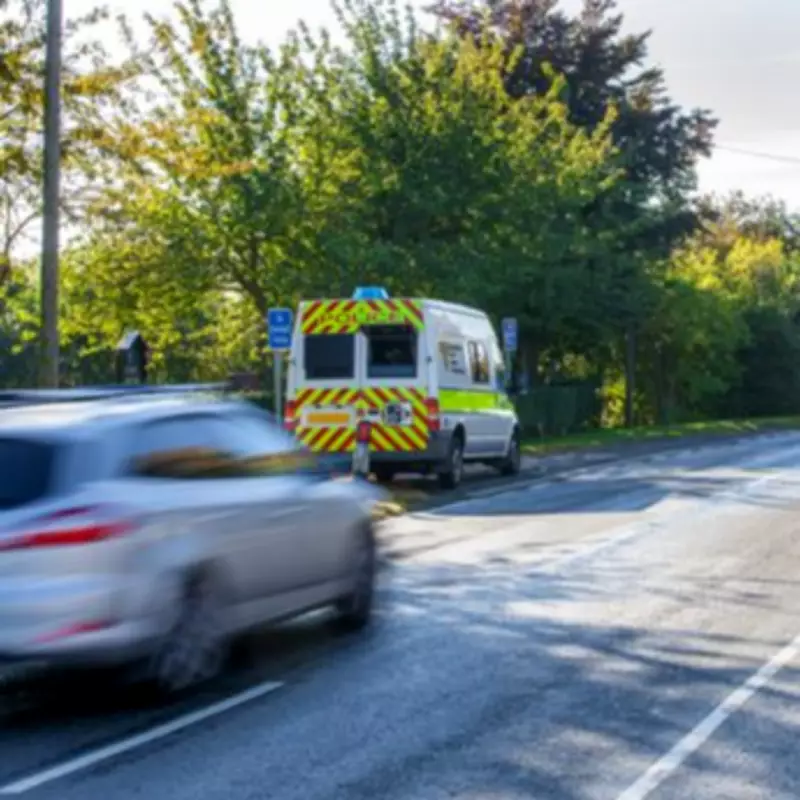
Government Reviews 60mph Speed Limit on England's Rural Road Network
The Department for Transport has confirmed it is actively exploring proposals that could lead to significant changes to speed limits across approximately 200,000 miles of England's rural roads. This substantial review comes amid growing concerns about accident rates and safety on these often narrow and winding routes.
Safety Statistics Highlight Rural Road Dangers
Recent figures reveal a stark contrast in road safety between different types of highways. Motorists are six times more likely to be killed or seriously injured on rural roads compared to motorways. The current default speed limit of 60mph applies to many of these rural routes, which frequently feature challenging layouts that pose risks to all road users including motorists, cyclists, and horse riders.
Lilian Greenwood, Parliamentary Under-Secretary of State in the Department for Transport, clarified the government's position in response to a parliamentary question from Liberal Democrat Dr Roz Savage. Ms Greenwood confirmed that guidance issued to local authorities is being revised, while new national guidelines are also under consideration.

Road Safety Strategy and Local Authority Powers
The government's Road Safety Strategy, published on 7 January 2026, commits to updating the best practice guidance titled "Setting Local Speed Limits." This document outlines how local authorities may introduce lower limits on rural roads where appropriate conditions exist. The strategy also examines whether proposed rural road categories are suitable for local implementation and assesses their potential for national application.
Ms Greenwood stated: "The most recent publicly accessible version of this guidance emphasises that local traffic authorities have the power to introduce speed limits lower than the national limit where local conditions justify this."
Vulnerable Road Users at Disproportionate Risk
The Road Safety Strategy document highlights that vulnerable road users – including pedestrians, cyclists, motorcyclists and children – remain disproportionately at risk of serious injuries and fatalities on rural routes. The strategy warns: "Some of the most high-risk roads in the country are rural single carriageways, with high speeds and limited infrastructure."
Statistical analysis reveals a concerning pattern. While the Strategic Road Network in England, comprising motorways and major trunk roads, represents the safest category with 1,931 killed or seriously injured casualties in 2024 (7% of England's total), rural roads present a different picture. In 2024, there were 959 fatalities on rural roads, accounting for 60% of all fatalities while carrying only 45% of traffic.
Rural Road Classification and Research
In 2023, the RAC Foundation published research by Agilysis examining the characteristics of rural roads. This study represented the first step in breaking down rural roads into several subcategories to better understand how to define these diverse routes. This segmentation approach aims to help target safety interventions more effectively, ensuring resources are allocated where they can have the greatest impact.
Bruce Walton, technical director of Agilysis and Road Safety Analysis, commented: "This study is an opportunity to tackle a long-standing challenge in road safety: how to address road danger on rural routes, which are easily overlooked because they are lightly trafficked or run through remote areas."
Steve Gooding, director of the RAC Foundation, added: "The question may seem simple: 'what is a rural road?' The answer turns out to be more complex than you might think when interpreting road safety statistics. This report suggests there are at least ten types of 'rural' road with specific characteristics."
Future Developments and Implementation
From early 2026, the government will explore whether the proposed rural road categories are appropriate at a local level and assess their potential for national application. The Road Safety Strategy also commits to updating current guidance on local speed limits and speed camera use, providing local authorities with clearer frameworks for decision-making.

The ongoing review represents a significant shift in approach to rural road safety, moving toward more nuanced categorisation and potentially revised speed restrictions based on specific road characteristics rather than blanket limits.