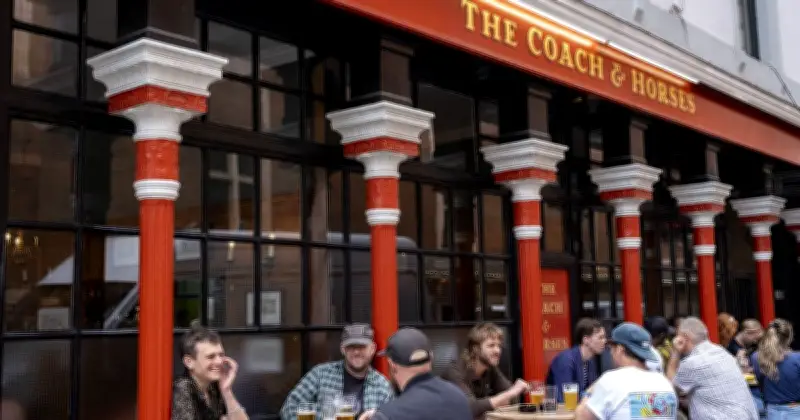
Camden London Borough Council has approved a Public Spaces Protection Order (PSPO) that comes into force in July 2026, targeting outdoor public drinking and anti-social behaviour. Anyone who refuses to comply faces a fixed penalty notice of £100, reduced to £60 if paid within 14 days. Failure to pay could result in prosecution.
What the PSPO entails
The PSPO gives authorities the power to intervene in cases of anti-social behaviour. Officers can require anyone engaging in such behaviour to stop drinking and surrender alcoholic drinks, including beverages believed to contain alcohol. Despite often being described as a "booze ban", the order does not prohibit drinking outdoors altogether. Residents and visitors can still enjoy alcoholic drinks in public, provided their behaviour does not become disruptive.
The order applies to public highways, pavements, council-managed estates and green spaces across the borough. However, it does not extend to Hampstead Heath, which is managed by the City of London Corporation. The PSPO will remain in place for the next three years.

Rising anti-social behaviour statistics
Camden recorded 9,117 incidents of anti-social behaviour between May 2025 and April 2026, according to council data. The new order is intended to help reduce those figures. Several other London boroughs already have similar restrictions in place, including Westminster, Wandsworth, Islington and Haringey. PSPOs can also apply to specific areas rather than entire boroughs. Croydon has an order covering its town centre, while Sutton has alcohol controls in selected parks.
Kent seaside towns follow suit
Thanet District Council has introduced a PSPO from July 1 covering several towns across the district. The three-year order covers Margate, Ramsgate, parts of Broadstairs, Westgate-on-Sea, St Peters and Cliftonville West. According to the council, the PSPO was introduced to tackle "alcohol-related disorder, public urination, and defecation" in the affected areas.
Polly Billington told the BBC: "It’s vital for our economy that people feel confident about keeping their doors open to their shops, and actually, [it’s vital] for the well-being of our residents and our visitors that everybody feels safe." Under the order, authorities can challenge people displaying anti-social behaviour and confiscate alcohol where necessary. Unpaid fines could ultimately lead to prosecution.
The PSPO was approved following an extensive public consultation in which many residents raised concerns about increasing anti-social behaviour. Last week alone, Kent Police reported fights on both Broadstairs and Margate beaches, while an assault was also reported at a railway station in Margate.
Background on PSPOs
PSPOs were introduced under the Anti-Social Behaviour, Crime and Policing Act 2014 to help local authorities address anti-social behaviour and protect public spaces. Orders remain in force for three years before they must be reviewed, and there is no limit to the number of times they can be renewed.
According to Camden Council, anti-social behaviour is defined as "behaviour which causes, or is likely to cause, harassment, alarm or distress to persons not in the same household". The following behaviours are all deemed to be anti-social and should be reported: drug-related ASB such as drug use or dealing; youth-related ASB and suspected gang activity; threatening behaviour, verbal and physical threats and abuse; vandalism and property damage; using a property to sell drugs or for any other illegal activity; harassment including incidents based on race, gender, religion, disability, or sexual orientation; dog-related ASB; graffiti or flyposting such as sticking posters on walls and other public property; littering or fly-tipping from an individual, business or vehicle on the streets, pavements or green spaces.