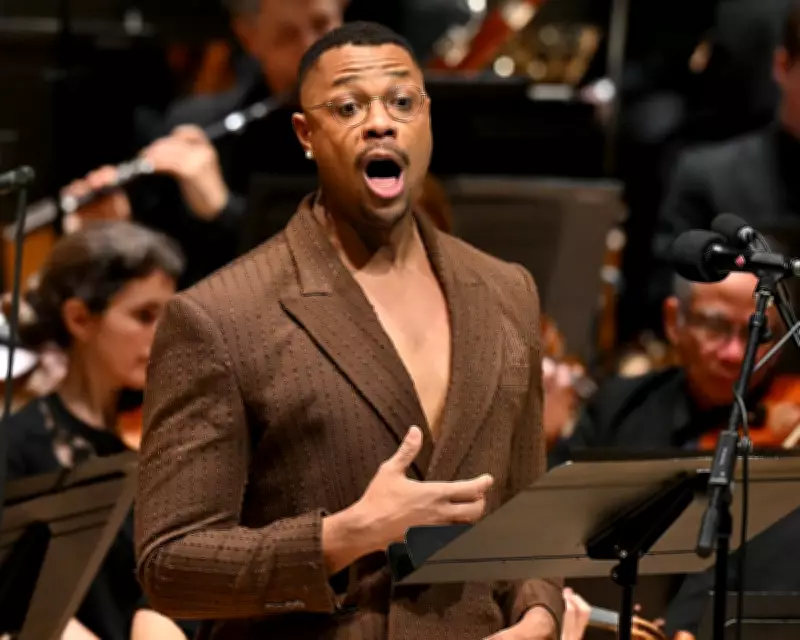
The Barbican in London recently hosted a profound exploration of American identity through music, as the BBC Symphony Orchestra, under conductor Daniele Rustioni, presented the UK premiere of Concerto No 2: Anthem. This collaborative work, featuring bass-baritone Davóne Tines, delves into the complex tapestry of United States history, reimagining nationhood through a lens of inclusion and the Black American experience.
A Stirring Reflection on American Society
Marking 250 years since the Declaration of Independence, the concert opened with Leonard Bernstein's West Side Story, a poignant plea for tolerance in a prejudiced society. The BBC Symphony Orchestra's brass and percussion sections shone brightly, with Rustioni initially holding back to avoid excessive sentimentality before the ensemble found its rhythmic stride in the energetic mambo.
Reimagining Patriotic Symbols
The centrepiece, Anthem, is a joint concerto by five US artists that critically examines the current state of America. Davóne Tines, serving as the Barbican's artist in residence, vocalised a powerful argument for societal transformation. He proposed a nation that moves beyond its violent past, built on the exploitation of immigrants and slaves, toward a more inclusive future inspired by contemporary Black culture.

In the brassy first movement, composer Michael Schachter's arrangement of The Star-Spangled Banner inflated the national anthem to a point of suffocating pomp, subtly critiquing modern patriotism. This was juxtaposed with poet Mahogany L Browne's haunting question, voiced in the performance, about the meaning of freedom when "the noose is still hanging from democracy's tree."
Musical Deconstruction and Advocacy
Caroline Shaw's segment dissected fragments of American musical heritage, ranging from the humble Simple Gifts to the racially charged minstrel song Pickaninny Heaven. Tyshawn Sorey contributed a discordant funeral march, leading into the uplifting Lift Ev'ry Voice and Sing, historically known as the "Negro national anthem" since 1919.
Despite Tines' rich and wide-ranging vocal tones, which should have made him an ideal advocate for this message, the performance faced technical challenges. The orchestrations often overwhelmed his voice, and inadequate amplification meant his contributions were frequently barely audible, detracting from the emotional impact.
An Unlikely Conclusion with Rachmaninov
The concert concluded with Rachmaninov's Third Symphony, written during the composer's exile in the US and filled with nostalgia for a romanticised Russia. Rustioni and the orchestra delivered a barnstorming rendition, though it felt somewhat disjointed, evoking the sensation of a Hollywood score in search of a narrative.
This event underscored the enduring relevance of questioning national identity and the power of music to challenge and inspire. Through its innovative blend of patriotic reframing and poetic critique, Anthem offered a compelling vision for an alternative America built on principles of inclusion and historical reckoning.