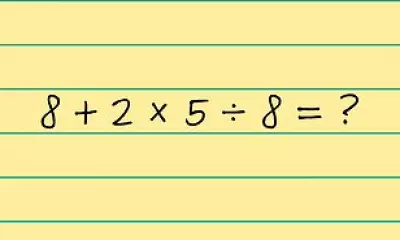
A new logic puzzle has emerged, captivating enthusiasts with its clever design and engaging premise. Titled 'Chapeau,' this puzzle presents a scenario involving hats, requiring players to use deductive reasoning to arrive at the correct solution.
The Puzzle Setup
In the 'Chapeau' puzzle, participants are presented with a situation where multiple individuals are wearing hats of different colors. The challenge lies in determining the color of one's own hat based on limited information and the observations of others. This setup encourages logical thinking and strategic analysis, as players must consider all possible combinations and eliminate inconsistencies.
Key Elements of the Challenge
The puzzle incorporates several key elements that make it both challenging and enjoyable. First, it relies on a clear set of rules that govern how information can be shared or inferred. Second, it often involves a twist or unexpected constraint that adds depth to the problem-solving process. For example, players might be restricted in how they can communicate or what they can see, forcing them to think creatively.

Such puzzles are not just for entertainment; they also serve as educational tools, helping to develop critical thinking skills. By engaging with 'Chapeau,' individuals can improve their ability to analyze complex situations, make logical deductions, and collaborate effectively with others in group settings.
Why Puzzles Like 'Chapeau' Matter
Logic puzzles like 'Chapeau' have a long history in mathematics and computer science, often used to teach concepts such as algorithms, game theory, and decision-making. They provide a hands-on way to explore abstract ideas, making them accessible to a wide audience. In today's fast-paced world, where quick thinking is valued, these puzzles offer a refreshing mental workout that can enhance cognitive flexibility and problem-solving abilities.
Moreover, the social aspect of puzzles cannot be overlooked. Many versions of 'Chapeau' are designed for group participation, fostering teamwork and communication. As players discuss strategies and share insights, they build collaborative skills that are valuable in both personal and professional contexts.
Tips for Solving the Puzzle
If you're tackling the 'Chapeau' puzzle, here are some tips to help you succeed. Start by carefully reading the rules and understanding all constraints. Break down the problem into smaller parts, and consider using visual aids like diagrams or lists to track possibilities. Don't be afraid to test hypotheses, but always check for contradictions. Remember, patience and persistence are key; sometimes, the solution emerges after multiple attempts.
Ultimately, whether you solve it quickly or take your time, the 'Chapeau' puzzle offers a rewarding experience that challenges the mind and sparks curiosity. So, did you solve it? If not, keep trying—the satisfaction of cracking the code is well worth the effort.