Factory Night Shift Poetry Reveals Human Depth Amidst Labour
In the book-length poem cycle plastic by Northern Irish poet Matthew Rice, time-stamped titles immerse readers in the relentless rhythm of a 12-hour factory night shift. This collection tracks the human moments within industrial confines, offering fragments of perception that seek fleeting freedom from the tyranny of clock-watching. Two selected poems, spaced four hours and over twenty entries apart, showcase distinct tones and structures, each highlighting how socio-economic positions frustrate the potential of individuals, whether collectively or alone.
Stargazing on Break: A Limited Perspective
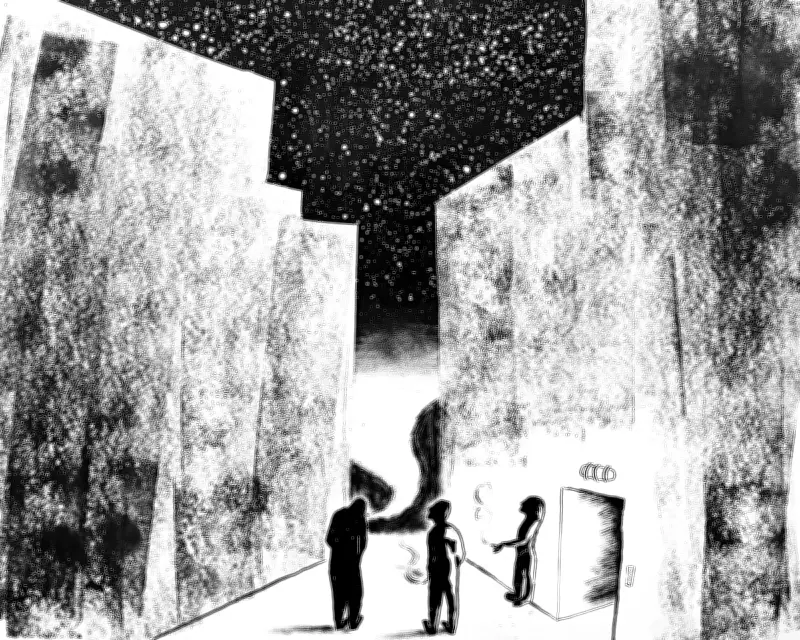
In the poem titled 01.29, workers on a break gaze at the stars, but their view is constrained by immediate reality. The nearest celestial bodies are likened to tobacco sparks, described as "the exhaled Milky Way of Bobby's Golden Virginia." Here, the Milky Way serves not as a cosmic wonder but as a mundane guide to navigating shift patterns, with no room for seismic truths or intellectual exploration. Factory routine has internalised laws that forbid imaginative speculation, forcing the speaker to tamp down possibility while acknowledging its latent power.
The phrase "insanity of depth" captures the dizzying risk of free-spirited mental navigation, yet the workers remain conspirators against such visions, grounded in despairing realism. Stars, distant and slow, mark time like a digital clock, but their light burns too slowly for those trapped in night shifts, contrasting with the ephemeral sparks of tobacco. This poem insists on denying grand truths, yet it subtly acknowledges the profound human depth that such denial cannot fully suppress.

Wee Gail's Birthday: A Glimpse of Alternate Lives
The second poem, 05.29, shifts focus to a single worker, "wee Gail," celebrating her seventieth birthday. She occupies a special seat throughout her shift, likely for ergonomic reasons under company regulations, but this mundane detail transforms into a symbol of her long service. The poem notes her hands, old at the task, skilled in sifting defective ring washers from those within tolerance, making light work of her labour.
In a romantic turn, the speaker envisions Gail's bench as a grand piano and her patch of floor as a stage, suggesting that "in another life," she could have been a concert pianist. Rice balances realism with admiration, dissolving the shadow of alternate possibilities in a glow of genuine affirmation. This direct and moving expression highlights repressed creative potential, echoing themes from Jacques Rancière's Proletarian Nights, which Rice cites in an endnote, advocating for workers' freedom from labour.
Broader Implications in the Digital Age
Rice's work resonates deeply in today's context, where AI and robotics threaten to replace human labour, even at white-collar levels. The decline of traditional jobs raises questions about how freedom for self-fulfillment will be inscribed and allocated by institutions. While these challenges loom, poems in plastic honour and transcend their factory setting, reminding us of the untapped gains in the dawning digital era. They serve as a poignant reminder of the human cost of labour treadmills and the haunting concept of repressed creativity.
plastic: A Poem by Matthew Rice is published in the UK by Fitzcarraldo Editions and in the US by Soft Skull Press, offering a compelling exploration of work, imagination, and socio-economic constraints through poetic lens.