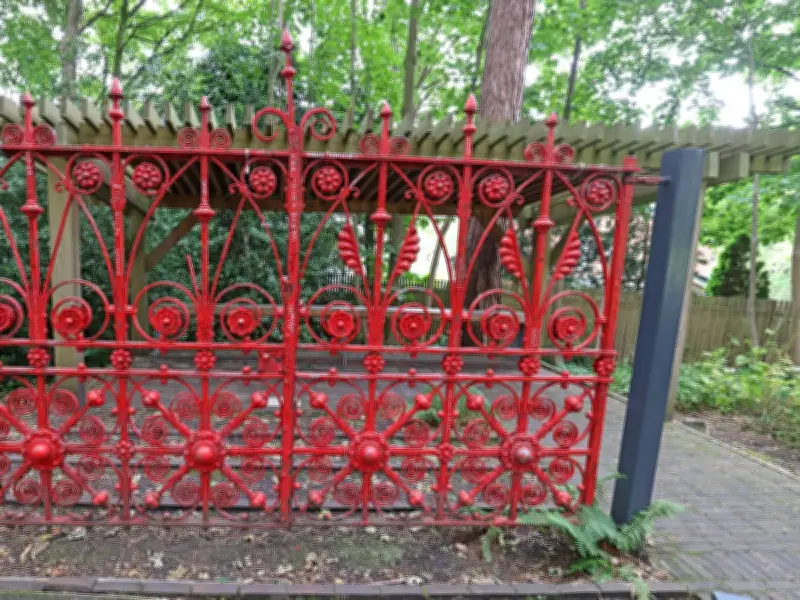
Thousands of people make the pilgrimage to Strawberry Field every year, pausing outside the iconic red gates to snap a photograph and retrace the footsteps of John Lennon. His childhood memories of the Woolton sanctuary inspired one of The Beatles' most famous songs. But beyond those gates lies a story many visitors never realise they're walking past.
Salvation Army's 90-Year Custodianship
For 90 years, Strawberry Field has belonged to the Salvation Army. Long before it became a destination for Beatles fans from across the world, it was a children's home, offering safety and support to young people. Today, while the music legacy continues to draw crowds, the charity continues to help young adults with learning differences, neurodiversity, and mental health challenges build confidence and find employment.
Mission Director Michelle Lovegrove-Huggins believes that's the part of Strawberry Field's story people are often most surprised to discover. She told the ECHO: "I think what surprises people is that it's owned by the Salvation Army. We're always trying to communicate that we are all about mission, ministry, and service."

Funding the Steps to Work Programme
Every visitor buying a ticket or stopping for a coffee helps fund the site's Steps to Work programme, supporting young people aged between 18 and 25 who face barriers to employment. Michelle said: "The visitor attraction is part of that. Every pound people spend here goes towards supporting those young people who need encouragement and support into employment. It's ethical, responsible tourism that enables us to support young people in our community."
This year marks 90 years since the Salvation Army first took ownership of Strawberry Field, transforming the Victorian mansion into a children's home. While that chapter ended in 2005, Michelle says the organisation never considered letting go of a place that had become woven into Liverpool's identity. She said: "There was no telling what it would become if we sold the property. This was a valid asset not just to the Salvation Army, but to the community as a whole."
A Place of Sanctuary in a Chaotic World
That sense of community is something she believes remains as important today as it was during John Lennon's childhood. She said: "I think Strawberry Field is more important than ever. The world is crazier than ever. We're bombarded with information all the time. I think well-being and wholeness are more important than they've ever been. We're still providing a space where people can come away from it all, sit in the gardens, have a coffee, read a book, reflect, and just rebuild a little bit."
It was those peaceful gardens that famously drew a young John Lennon, who would climb over the walls to escape the chaos of everyday life. Rather than seeing Beatlemania as something separate from Strawberry Field's mission, Michelle believes the two are inseparable. She said: "People like to walk in the footsteps of The Beatles, so knowing John Lennon came here and visited regularly is obviously a huge draw, but it also helps us tell the story of why Strawberry Field exists. I think the two go hand in hand. Without the custodianship of Strawberry Field, we wouldn't be able to do what we're doing today."
John Lennon's Legacy and the Charity's Mission
"Obviously, the story of John Lennon is what brings people here, and the money that we raise from that is what supports that program. So, the two have to go hand in hand. The story is as important as the work that we do. John Lennon used to sneak into the gardens because he had a troubled background and could probably relate to a lot of the children who lived here at the time, and saw it as a place of sanctuary and peace and a space away from the chaos. So that's why our gardens are still free for anyone to visit. It still remains a place of sanctuary and peace."
"John came here because it was an escape for him. Being able to tell his story enables us to say: just as it was available for John, it's available to you as well."

While thousands still stop outside the famous red gates every year for a photograph opportunity, Michelle hopes more people choose to step beyond them. She said: "I'd encourage them to come inside the gates. Come inside and find out what's really here and discover the true story. There is much more to Strawberry Field than just the story of John Lennon."
Liverpool's Cultural Fabric
For Michelle, who returned to Liverpool after decades serving the Salvation Army around the country, Strawberry Field also reflects something deeper about the city itself. She said: "Scousers are always going to be the same. I love them, and it's why I love being here. The whole sense of community, the fabric of the city, the message of the city - I'm really proud to be back in Liverpool, the cultural offer that we have to the city, the travel and tourism industry is booming, seeing people coming into the docks at the Pier Head from all over the world - we have so much to offer in Liverpool. To be part of that industry at Strawberry Field is an absolute privilege, and to work alongside so many businesses within that industry that are showing Liverpool at its best is an absolute honour."
Ninety years after the Salvation Army first opened its gates, Strawberry Field remains one of Liverpool's most recognisable landmarks. But beyond the red-gate selfies and Beatles nostalgia, Michelle hopes people leave with an understanding of something more. She said: "It's definitely one of those places that you have to experience to understand. It's hard to describe the atmosphere that you find within the gardens. There can be hundreds of people in the building or building work going on all around it, but there's this sense of solitude and peace. It's like it's built into the fabric of the ground. I think people are a little bit blown away by this genuine piece of history."
"The heart of Strawberry Field is about peace, which was John Lennon's message to the world. There's still space for people to come and find what John Lennon found all those years ago. It's a place of belonging. Strawberry is a family. There is a welcome here for everybody."