Ghent Exhibition Shines Light on Overlooked Female Baroque Masters
A groundbreaking exhibition at the Ghent Museum of Fine Arts (MSK) is challenging centuries of art historical oversight by celebrating more than 40 female artists who flourished in the Low Countries during the Baroque period. Titled Unforgettable: Women Artists from Antwerp to Amsterdam, 1600-1750, the show represents a significant rediscovery of talents long obscured by male-dominated narratives.
Judith Leyster: From Obscurity to Recognition
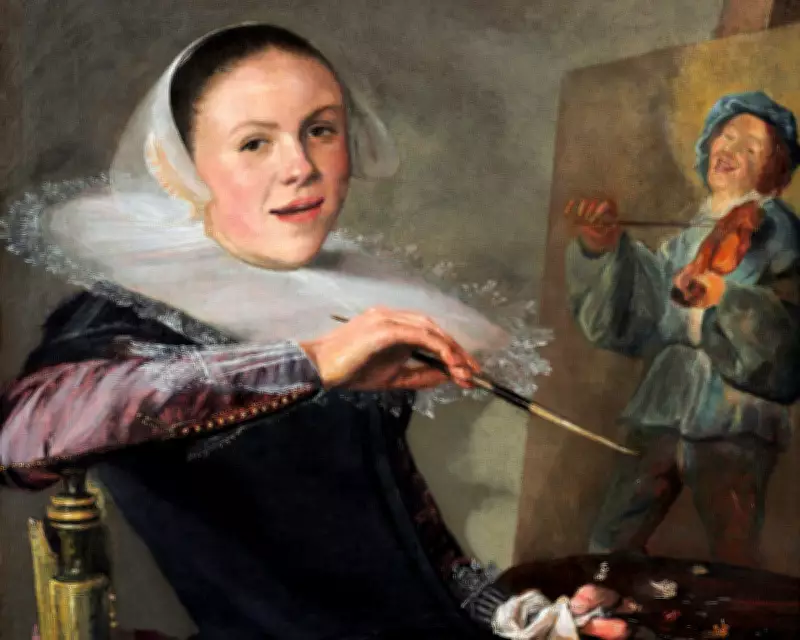
The exhibition prominently features Judith Leyster, a Dutch Golden Age painter whose 1630 self-portrait boldly announced her professional arrival upon her admission to Haarlem's painters' guild. This work stands as one of the earliest self-portraits by any artist in the Dutch Republic, predating similar efforts by male contemporaries by years. Despite contemporary acclaim, Leyster's legacy suffered posthumous erasure, with inventories attributing her works to "the wife of the deceased"—referring to her husband, artist Jan Miense Molenaer. Many paintings were subsequently misattributed to Frans Hals or labeled simply "unknown master."
Co-curator Frederica Van Dam emphasizes the exhibition's mission to provoke critical reflection: "Why haven't we seen artworks by women before? Why has no one ever questioned this?" The accompanying catalogue identifies 179 women active in the art economy of the region encompassing modern-day Netherlands and Flanders.

Rediscovering Artistic Contributions and Economic Impact
Many featured artists enjoyed considerable success during their lifetimes. Maria van Oosterwijck's still-life paintings adorned European palaces, while paper-cutting specialist Johanna Koerten received commissions from royalty. Remarkably, Koerten earned more than twice what Rembrandt made for The Night Watch for a single work created for the Holy Roman Empress. The exhibition also includes Italian Baroque artist Artemisia Gentileschi and southern Netherlands contemporary Michaelina Wautier, representing a broader rediscovery of women omitted from art historical canons.
Van Dam notes that systematic exclusion began in the 19th century as art history formalized as an academic discipline. Male scholars established criteria for "good art" that marginalized women's contributions, often dismissing them as mere imitators. This fate affected even celebrated artists like Rachel Ruysch, whose exquisite floral still-lifes were later deemed derivative despite contemporary admiration.
Beyond Painting: Celebrating Applied Arts
The exhibition challenges the traditional hierarchy that elevates painting above applied arts—domains where women frequently excelled. Paper-cutting, calligraphy, and lace-making represented significant artistic and economic contributions, though practitioners often remained anonymous, signing records with an "X." While lace commanded premium prices, the women, nuns, and orphaned girls who crafted these items typically earned minimal compensation.
Personal Stories of Artistic Determination
Individual narratives highlight women's extraordinary efforts to pursue artistic careers. Louise Hollandine abandoned royal privilege to enter a French Benedictine convent, exchanging portrait painting for religious genre scenes to maintain creative autonomy. The exhibition contrasts her early self-portrait—resplendent in silks and ribbons—with a later depiction showing her in austere monastic habit, yet still radiating presence.
Recent scholarship continues to uncover lost artists. Dutch art historian research in 2025 reattributed works from Lodewijk Tieling to his sister Catrina, whose Italianate landscape of shepherdesses now features in the exhibition.
Van Dam advocates for ongoing research and accessibility efforts, asserting that these artists played crucial roles in the period's artistic and economic flourishing. This exhibition not only restores visibility but also invites a fundamental reconsideration of Baroque art history, proving definitively that old masters were indeed women too.