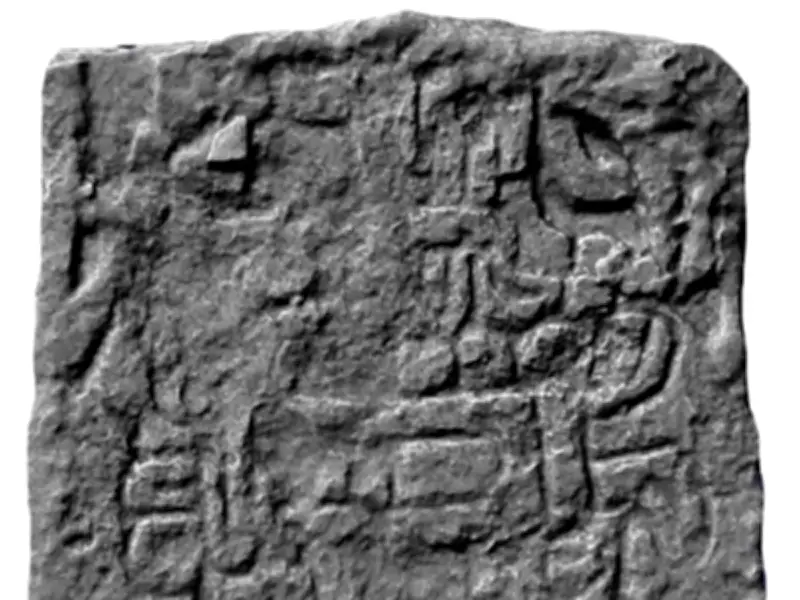
Archaeologists have uncovered a hidden Mayan city buried beneath the jungle at the Calakmul Biosphere Reserve in Mexico, featuring a 13-foot pyramidal temple with well-preserved stone carvings and a monument engraved with a decapitation scene.
Discovery Using LiDAR Technology
The team, led by Dr Ivan Šprajc, used airborne laser scanning (LiDAR) to penetrate the dense forest canopy. They cleared 5 km of terrain to get a clearer view, revealing a 15-hectare settlement that thrived during the Late Classic period (AD 600–900). The expedition was authorized by Mexico’s National Institute of Anthropology and History (INAH).
Unique Findings
“It’s a unique, unprecedented finding,” INAH archaeologist Lino Espinoza Garcia told Agence France-Presse. “There were plazas, palatial and religious structures, terraces and wetlands with hydraulic channels, as well as a 13-foot pyramidal temple that is so well preserved that the writings on the stone can still be seen.” The temple is one of the best-preserved structures found in the region.

Stela 1 and the Decapitation Scene
Among the artifacts, archaeologists identified a monument called Stela 1, which features a carved scene of a decapitation. This stela is part of a group of 14 stelae and altars, many bearing glyphs and scenes. The stela is carved with the date 849 CE, indicating when the stelae were likely created.
Naming the Site
Dr Ivan Šprajc commented: “Compared to other places where we did surface surveys, access here was much more difficult; however, in the last three years, this is the first one we’ve found intact, with no signs of looting. It was a discovery, a great surprise for us.” The site was named Minanbé, from Yucatec Maya (mina’an, ‘there is no’, and be, ‘path’), following the tradition of naming sites after characteristics of the discovery.