Museum Faces Backlash Over Victorian Gender Fluidity Interpretation
A museum has been strongly criticised for allegedly rewriting historical narratives after suggesting that Victorian-era boys wearing dresses could be interpreted as evidence of gender fluidity in the 19th century. The Bowes Museum in Barnard Castle, County Durham, has come under fire from campaigners who accuse the institution of distorting historical facts to align with contemporary gender ideologies.
Controversial Claims About Victorian Childhood Fashion
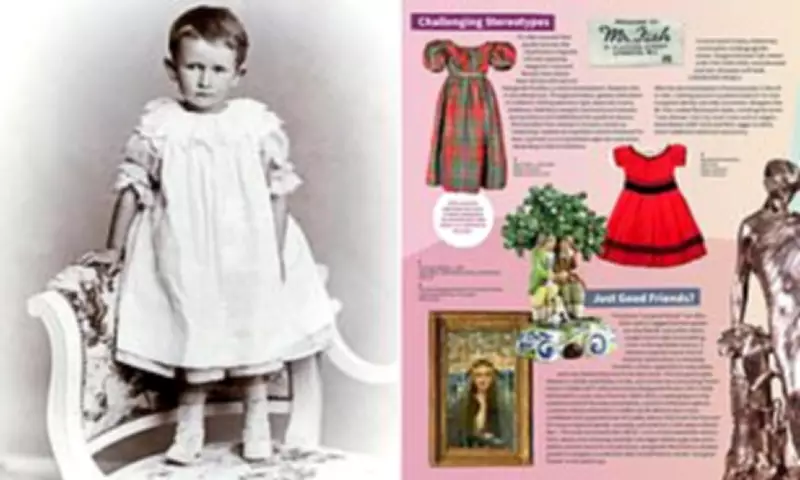
In its LGBTQIA+ educational leaflet titled 'Challenging Stereotypes,' the museum asserts that gender fluidity is not a recent development, citing the historical practice of boys aged four to seven wearing dresses during the Victorian period. The museum acknowledges these outfits were primarily worn for practical reasons, yet draws parallels between this fashion trend—known as breeching—and modern concepts of gender nonconformity.
The leaflet explicitly states: 'It's often assumed that gender binaries have always been strictly enforced and that gender fluidity is a recent development. However, this is not true. Throughout history, gender distinctions in children's clothing were less rigid, especially in early childhood.' It further explains that both boys and girls commonly wore dresses during infancy for practical purposes, with the transition to trousers marking a significant cultural milestone typically occurring between ages four and seven.

Critics Condemn Historical Revisionism
Campaigners have vehemently opposed the museum's interpretation, branding the pamphlet as absolute nonsense and accusing the institution of desperately rewriting history to present new gender ideologies as having ancient roots. Helen Joyce, director of advocacy at Sex Matters, argued: 'The so-called opposing categories of male and female are to do with biology and have nothing to do with little boys wearing dresses instead of trousers because elastic was a brand new invention and not widely used.'
Alka Sehgal Cuthbert, director of Don't Divide Us, criticised the museum for what she described as an identity crisis, stating: 'It seems to think its job is to reflect back lived experience of particular groups. It might be what a therapist would do, but a museum's job is surely to curate and care for artefacts that shed light on Britain's past.'
Museum's LGBTQIA+ Initiatives and Responses
The 134-year-old museum has established an LGBTQIA+ working group comprising staff and volunteers dedicated to uncovering untold stories related to sexuality and gender within their collection. This group has developed a trail offering fresh perspectives on artworks, which has been available to visitors for over a year. A spokesperson for The Bowes Museum defended their approach: 'As part of our commitment to equity, we established an LGBTQIA+ community working group to explore the stories and emotions held within the collection through lived experience.'
The controversial leaflet also references Greek mythology, mentioning Hercules and suggesting his legends often downplay romantic relationships with both women and men, though it notably omits discussion of pederasty—an ancient practice involving sexual relations with adolescent boys. This selective presentation has further fueled criticism about the museum's historical accuracy and narrative choices.
This incident highlights ongoing tensions between traditional historical interpretation and modern inclusive approaches in cultural institutions, raising questions about how museums balance factual accuracy with contemporary social perspectives.