New Museum Reopens with Major $82 Million Expansion in New York
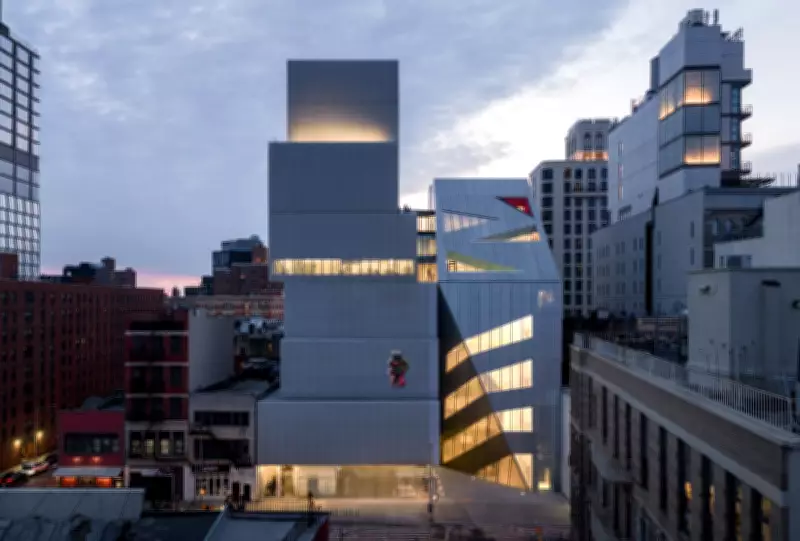
After a two-year closure, New York's New Museum has reopened this month with a significant $82 million expansion that dramatically transforms its presence on the Bowery. The architectural enhancement effectively doubles the museum's footprint to 119,700 square feet, introducing three new levels of gallery space that integrate seamlessly with existing floors.
Architectural Innovation and Artistic Integration
Designed by renowned architect Rem Koolhaas and his OMA partner Shohei Shigematsu, the expansion attaches a striking glass structure to the original building. Shigematsu described the architectural relationship between the two buildings as akin to finding a perfect romantic partner, noting the challenge of aligning what he called the "vertical and introverted" original with the "more horizontal and extroverted" new addition.
The connection point between the buildings features a public spine with an atrium staircase, currently showcasing a flax-based textile installation by Czech artist Klára Hosnedlová. Outside, a site-specific sculpture titled Art Lovers by Harlem-born artist Tschabalala Self marks the architectural "kiss point" between the structures, depicting two oversized lovers embracing against the museum's industrial mesh exterior.

Landmark Exhibition: New Humans: Memories of the Future
The reopening coincides with the launch of New Humans: Memories of the Future, a sprawling exhibition featuring 732 objects spanning art, artifacts, and visual culture. The exhibition occupies the entire museum and represents one of the most ambitious thematic shows in recent museum history.
Artistic director Massimiliano Gioni describes the exhibition as a "capacious" gathering that traverses historical periods, from Renaissance-era myths about the "homunculus" to contemporary artificial intelligence. The show includes new commissions from prominent artists including Camille Henrot, Wangechi Mutu, Ryan Gander, and Alice Wang.
Technology and Humanity in Dialogue
While the exhibition features technological elements, some of the most impactful works are decidedly analog. Swedish photographer Lennart Nilsson's images of human fetuses, captured with innovative endoscopic techniques dating back to 1965, provide a mesmerizing historical perspective on human development.
The exhibition includes a small selection of images compiled and annotated by Google's Gemini AI, featuring stills from science fiction films like Blade Runner and Ex Machina, along with images of Ai-da, the painting robot. The AI's commentary on its own selections offers a thought-provoking perspective on machine autonomy and aesthetic judgment.
Interactive Art and Public Spaces
Anicka Yi's aerobes—helium-filled translucent machines inspired by mushrooms and aquatic life—float through the museum's fourth floor gallery, creating an intimate relationship with visitors. Yi notes that the vulnerability of these imposing machines creates a powerful connection with viewers.
The expansion also introduces the museum's first full-service restaurant, designed by OMA and operated by Henry Rich of the Oberon Group. Executive chef Julia Sherman, who is also an artist and cookbook author, describes the menu as an intuitive response to ingredients and market produce that engages in conversation with the surrounding art.
Leadership Transition and Institutional Vision
The reopening marks a significant moment for director Lisa Phillips, who has led the institution since 1999 and will depart this spring after 27 years. Phillips has overseen the museum's growth from a Soho loft to its current two-building campus on the Bowery.
Reflecting on the exhibition's themes, Phillips stated, "I think we're on the threshold of a seriously new age. I think it's more dramatic than the Industrial Revolution was, and we're just at the dawn of it. We're unprepared. We don't know what's coming, but it's coming and fast."
The New Museum's expansion and landmark exhibition represent a major cultural moment for New York, offering visitors expanded gallery space, innovative architectural design, and a profound exploration of humanity's evolving relationship with technology.