Cees Nooteboom: Dutch Literary Titan and European Witness Dies at 92
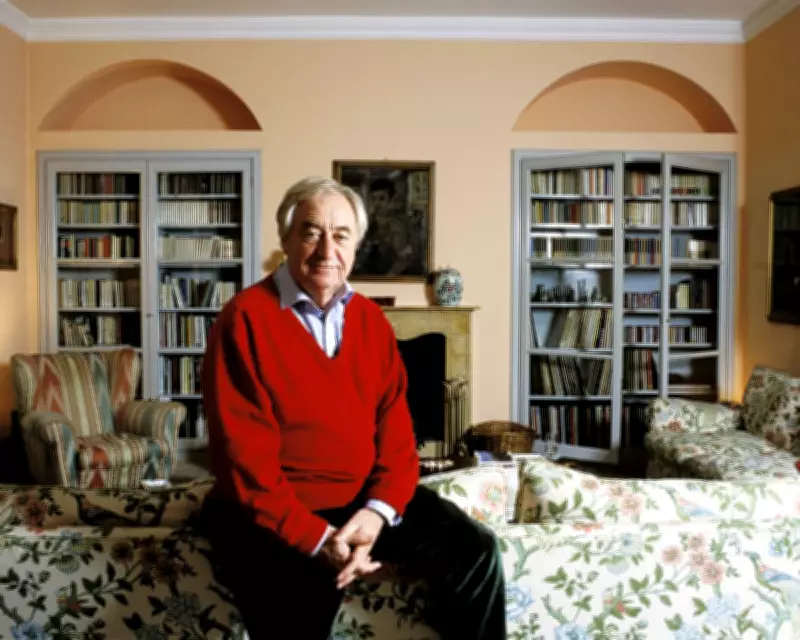
The Dutch writer Cees Nooteboom, a celebrated novelist, poet and travel writer who reported on pivotal European events from the Hungarian revolution to the fall of the Berlin Wall, has died at the age of 92. In his later years, Nooteboom embodied the suave and cosmopolitan man of letters, living in an elegant 1731 merchant's house in Amsterdam while spending summers on the island of Menorca.
A Life Shaped by War and Wanderlust
Nooteboom published almost 60 books across fiction, poetry and travel writing, earning a shelf of major awards including the prestigious Prijs der Nederlandse Letteren in 2009. Yet he described himself as "a child of the war, and after that the cold war." In 1940, he watched from his family's apartment in The Hague as nearby Rotterdam burned in air raids. In early 1945, misdirected RAF bombs killed his father during the Dutch "hunger winter," a period when over 20,000 people died of starvation.
He built his urbanity and seeming serenity amid ruin and trauma, once stating: "I have not remembered chaos. I found my way out of all that in my books." Born in The Hague, Nooteboom moved eight times during early childhood as his parents separated and remarried. His Catholic stepfather sent him to strict schools run by Franciscan and Augustinian monks, where he rebelled but cherished the Latin and Greek literature they taught.

From Banking to Budapest: A Writer's Journey
After the war, Nooteboom recalled: "Everything in our country was grey, sad, poor. I felt this great need for the south, for life and for light." Hitchhiking adventures in Italy and Provence resulted in his debut novel, Philip and the Others (1954). After its success, he moved to Amsterdam and began writing journalism.
At short notice, he rushed to Budapest in 1956 to witness the crushing of Hungary's revolution by Soviet tanks for the newspaper Het Parool. The child who had seen Rotterdam blitzed became a serial eyewitness at European history's turning points, including Paris in 1968 and Berlin in 1989. His wanderlust took him farther afield, with a 1957 stint as a sailor on a freighter to Suriname helping fund his marriage to first wife Fanny Lichtveld.
Literary Accolades and Cosmopolitan Recognition
As a reporter and editor, his career flourished with Elsevier magazine, De Volkskrant, and Avenue. His 1963 novel The Knight Has Died showcased the playful, ingenious narrative techniques that marked his fiction. His ambitious poetry also won plaudits across a dozen volumes, with Nooteboom noting that poetry "ventures into unknown territory, much more than the novel does."
From the mid-1960s, he spent half the year in Menorca, where closely observed natural and social life provided refuge from history's storms. Spain and its art became an abiding passion, with this voluntary exile from mild, watery Holland feeling at home on its parched mainland plains. He divorced in 1964, and for 15 years his partner was Dutch pop star and actor Liesbeth List, before marrying photographer Simone Sassen in 2016.
International Acclaim and European Ideals
His voyages yielded abundant books and articles stretching from Brazil and Bolivia to Tunisia and Iran. After a 17-year break, he returned to fiction with the prize-winning Rituals (1980), which combined immersion in Japanese culture with narrative intricacy and melancholy lyricism. This inaugurated a series of novels that elevated his European and international profile, including In the Dutch Mountains (1984), The Following Story (1991), All Souls' Day (1998) and Lost Paradise (2004).
His sophisticated artifice as a storyteller did not preclude popular success, with The Following Story reaching over half a million readers when chosen as the featured free title during Dutch Book Week. However, his globe-trotting worldliness did not always resonate at home initially. Jane Fenoulhet, emerita professor of Dutch studies at University College London, notes that while he is now read in 38 languages, "the Dutch themselves were wary of this cosmopolitan, ironic and meditative writer until the international recognition he received brought acclaim at home."

Later Works and Legacy
On the global stage, Roads to Santiago (1992) proved his signature title: a learned, colourful, digressive journey through Spain in 25 "detours." He taught in the US at Berkeley and in Berlin, where his dispatches as the Wall fell in 1989 confirmed his talent as a reporter on history's frontlines. In 2002, Nomad's Hotel collected highlights from his travelogues.
Tombs (2007) mingled cultural memory, global adventures and visual arts, with his words accompanying 80 images of writers' graves by Sassen. Later books like Letters to Poseidon (2012) took on an elegiac, valedictory tone. In 2020, he won Spain's Formentor prize, with the citation noting his "consciousness of belonging to the great European cultural tradition."
Yet this supreme upholder of the European ideal saw that it still often failed outsiders. Commenting on the iconic 2015 photos of a drowned two-year-old Syrian refugee, he wrote that "the child was too heavy for Europe." No writer embodied more eloquently postwar hopes for a shared European home; yet he came to fear that the dream was "broken before it was truly whole."
He is survived by his wife Simone Sassen. Cees (Cornelis Johannes Jacobus Maria) Nooteboom, writer, was born 31 July 1933 and died 11 February 2026.