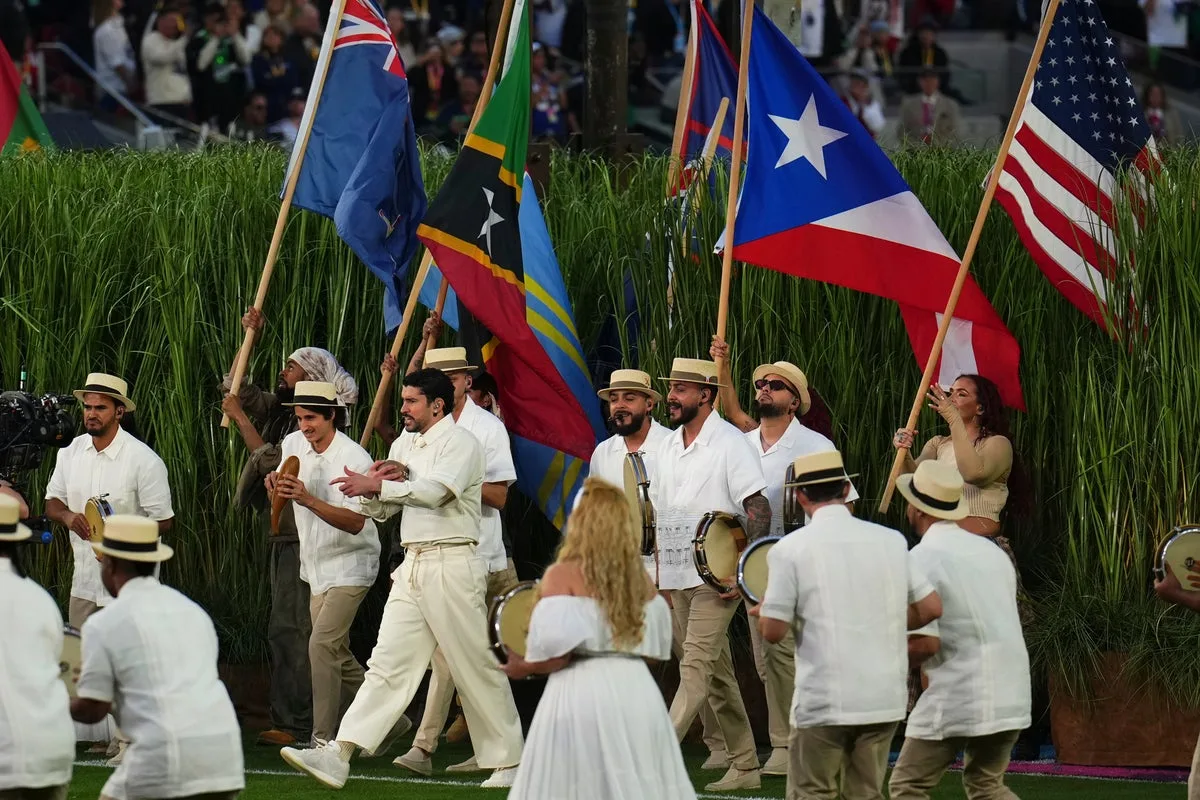
When Bad Bunny said “God bless America” during the Super Bowl halftime show and then began naming countries across the continent, the line landed as both wordplay and statement. In Spanish, América often means the entire hemisphere, not a single nation, and the distinction mattered to millions watching from afar.
In a packed bar in Mexico City, the moment drew cheers loud enough to cut through the music. “It really moved me,” said Laura Gilda Mejía, a 51-year-old schoolteacher and longtime NFL fan. “With everything that’s going on politically in the United States, and all the hostility toward Latinos ... seeing a Latino come out and sing in Spanish at the biggest show in the world was incredible.”
Across Mexico, Puerto Rico and Latino communities in the United States, Bad Bunny’s halftime performance was received as more than entertainment. Many fans described it as a moment of pride and recognition: a Spanish-language artist commanding one of the most watched stages in American pop culture without translating himself, at a time when Latinos say cultural visibility and political vulnerability exist side by side.

U.S. President Donald Trump railed against the performance on Truth Social, calling it “absolutely terrible” and “an affront to the Greatness of America.”
Chrystian Plata, a 33-year-old singer and New York Giants fan, said the halftime show was the emotional high point of the game for him with the way it tried “to unite the traditions of all the people who migrated there and also made the United States rich.”
In Puerto Rico, watch parties treated the game as a prelude. Alexandra Núñez, a resident of Caguas, said: “This is an achievement. Music has no borders. Language has no borders. ... You don’t have to speak our language to enjoy our culture. This is global.”